

Cat Tien National Park Wildlife Guide: Cat Tien National Park is one of the best places in southern Vietnam for a first serious wildlife experience. The park is especially valuable for lowland forest birdwatching, primate encounters, night walks, reptiles and amphibians, nocturnal mammals, forest interpretation and multi-day nature journeys from Ho Chi Minh City.
Unlike open safari destinations, wildlife in Cat Tien is found within dense tropical forest, riverine habitats, forest edges, wetlands and nocturnal environments. Birds are often heard before they are seen. Gibbons may call from the canopy at dawn while remaining hidden from view. Many mammals, reptiles and amphibians are seasonal, nocturnal or opportunistic encounters.

The best wildlife experiences in Cat Tien come from early starts, patient observation, responsible guiding and realistic expectations rather than guaranteed sightings.
Why Cat Tien Matters for Go-WILD
Cat Tien is one of the core Go-WILD destinations because it combines easy access, strong lowland forest value and a wide variety of wildlife experiences within a single protected landscape.
For many travelers, Cat Tien is where Vietnam’s forest wildlife becomes tangible. Dawn bird calls, primate vocalizations, night sounds, frogs, insects, river habitats and tropical forest ecology create a wildlife experience that differs greatly from open-country wildlife viewing.
Within the Go-WILD system, Cat Tien supports several wildlife interests, including birdwatching, bird photography, primate observation, herping, night walks and broader nature interpretation. It also serves as an important lowland forest component within larger South Vietnam wildlife routes, particularly when combined with highland destinations such as Da Lat and Bidoup or wetland systems in the Mekong region.
What Kind of Wildlife Experience Is Cat Tien Best For?
| ✨Traveler Goal | ✅Cat Tien Fit | 📝Expectation Note |
|---|---|---|
| First Wildlife Trip in Vietnam | Very Strong Fit | Good introduction to lowland forest wildlife, birds, primates, night wildlife and forest interpretation. |
| Birdwatching | Strong Fit | Best experienced through early mornings, multiple field sessions and realistic target planning. |
| Bird Photography | Strong but Demanding | Forest light, patience and ethical photography practices are important. |
| Primate Watching | Good as Part of a Broader Wildlife Route | Gibbons may be heard at dawn, but sightings are not guaranteed. |
| Herping / Night Wildlife | Strong Fit | Guided night activities can be highly rewarding when conducted responsibly. |
| Large Mammal Safari-Style Travel | Weak Fit | Dense forest conditions make large mammal viewing difficult and unpredictable. |
| Wild Harmony / Slow Nature Experiences | Very Good Fit | Strong for forest soundscapes, interpretation, wellbeing and conservation-focused travel. |
Main Habitats in Cat Tien
Understanding habitats is one of the most effective ways to understand wildlife in Cat Tien. Different habitats support different wildlife communities, and animal activity often changes throughout the day depending on weather, light conditions and seasonal patterns.
| 🌳Habitat | 🍃Wildlife Value | 🔎Field Reality |
|---|---|---|
| Lowland Evergreen Forest | Core habitat for birds, primates, squirrels, insects, reptiles and forest interpretation. | Dense, shaded and humid. Wildlife is often heard before it is seen. |
| Forest Edge and Secondary Growth | Good visibility for mixed bird activity, butterflies, mammals and general wildlife watching. | Often useful for orientation and introductory wildlife sessions. |
| Riverine Habitats | Important for kingfishers, forest-edge birds, reptiles, amphibians and landscape interpretation. | Activity varies according to water levels, timing and route conditions. |
| Wetland, Lake and Grassland Areas | Waterbirds, crocodile conservation stories and open-habitat wildlife opportunities. | Wildlife activity depends heavily on season and water conditions. |
| Night Forest | Frogs, geckos, insects, nocturnal mammals, owls and nightjars. | Best explored through guided activities that prioritize safety and low disturbance. |
| Hide and Patient Observation Areas | Potential opportunities for forest-floor birds and photography. | Ethical wildlife practices remain essential and sightings cannot be guaranteed. |

Cat Tien is best experienced as a collection of interconnected habitats rather than a checklist of target species. Successful wildlife watching often comes from understanding where animals live, how habitats function and how conditions change throughout the day.
Wildlife Groups to Expect in Cat Tien
🐦Birds
Birds are among the strongest wildlife assets of Cat Tien National Park. The park is widely recognized as one of southern Vietnam’s most important lowland forest birding destinations and often serves as the lowland component of broader South Vietnam birdwatching routes.
Cat Tien birdwatching can include a wide range of forest species associated with tropical lowland habitats. Birders and photographers may encounter forest-floor birds, pittas, broadbills, woodpeckers, barbets, hornbills, kingfishers, owls, nightjars and many other forest specialists depending on season, habitat and field conditions.

(Buceros bicornis)

(Hydrornis elliotii)
However, birdwatching in Cat Tien should never be approached as a guaranteed-target experience. Forest birds are often detected first through calls, movement or habitat clues rather than direct views. Wildlife encounters remain dependent on timing, weather, habitat conditions and patience in the field.
For many visitors, the value of Cat Tien birdwatching lies not only in individual species but also in experiencing an intact lowland forest ecosystem and learning how birds interact with different habitats throughout the park.
Cat Tien National Park checklist – Update 2025 by Avibase
🐒Primates
Cat Tien can offer meaningful primate experiences, especially around dawn listening sessions and lowland forest interpretation. For many guests, hearing gibbons calling through the forest at first light can become one of the most memorable moments of their visit, even when the animals remain hidden high in the canopy.
Visual primate sightings should never be promised. Gibbons, doucs, macaques, lorises and other primates move through a complex forest environment where visibility is often limited. Responsible primate watching focuses on understanding behavior, habitat and ecological roles rather than pursuing close encounters or guaranteed photographs.

A common field experience in Cat Tien begins before sunrise, when visitors walk quietly to a listening area and wait as the forest gradually becomes active. On some mornings, gibbon calls can be heard clearly across the canopy without any visual sighting. Although first-time visitors sometimes arrive hoping to see the animals immediately, many later describe the experience of listening to wild gibbons in their natural habitat as more meaningful than a brief visual encounter. Guides often use these moments to explain the realities of wildlife observation in tropical forests, where hearing an animal, understanding its behavior and recognizing its presence can be just as valuable as seeing it.
Maintaining a respectful distance, minimizing noise and accepting uncertain outcomes are essential parts of ethical primate watching. The goal is not simply to find animals, but to experience the forest on its own terms while minimizing disturbance to wildlife.
🫎Mammals and Night Wildlife
Mammals form an important part of the broader Cat Tien wildlife experience, although they should not be viewed through a safari-style lens.
Many forest mammals are naturally shy, nocturnal or difficult to observe in dense vegetation. Depending on conditions, wildlife encounters may involve direct sightings, eye-shine observations, sounds, tracks or brief movements through the forest.
Night activities can reveal a very different side of the park. Forest sounds become more prominent, nocturnal species become active and visitors gain a deeper appreciation of tropical forest ecology after dark.
Night wildlife experiences are most successful when they focus on observation and interpretation rather than actively searching for specific animals. Responsible wildlife viewing should always take priority over close encounters or photography opportunities.

(Rusa unicolor)

(Paguma larvata))
![Itinerary - [14 Days] The Best Vietnam Wildlife Photography Tour](https://wanee.asia/wp-content/uploads/2025/03/Gaur-1442-1067x800.webp "Cat Tien National Park Wildlife Guide 8")
(Bos gaurus)
🐍Reptiles, Amphibians and Herping
Cat Tien and the broader Dong Nai forest landscape support a rich community of reptiles and amphibians. Frogs, geckos, lizards, snakes, turtles and other herpetofauna contribute significantly to the park’s biodiversity.
For naturalists interested in herping, Cat Tien offers opportunities to observe tropical forest ecology in ways that differ from traditional birdwatching or mammal-focused trips. Amphibian activity often becomes especially noticeable during humid conditions and after rainfall, while reptiles may be encountered in a variety of habitats throughout the park.

(Trimeresurus rubeus)
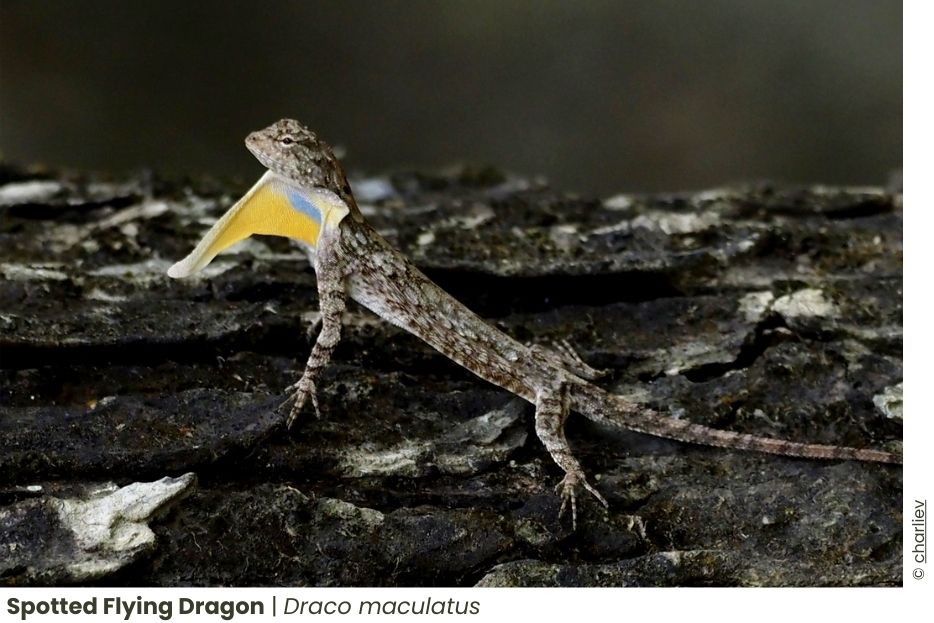
(Draco maculatus)

(Micryletta erythropoda)
Responsible herping practices are essential. Wildlife observation should focus on viewing and learning rather than handling animals or disturbing habitats. Conservation-sensitive behavior helps protect both wildlife and visitor safety.
🍃Insects, Plants and Forest Interpretation
A complete Cat Tien National Park wildlife guide should extend beyond birds, mammals and reptiles.
Insects, butterflies, fungi, trees, lianas, forest layers, river systems and seasonal ecological processes are all part of the wildlife experience. These elements help explain how tropical forests function and why wildlife occurs where it does.


Forest interpretation often reveals connections between species, habitats and ecological processes that may otherwise go unnoticed. For many travelers, understanding these relationships becomes just as meaningful as individual wildlife sightings.
Cat Tien rewards visitors who are willing to slow down, pay attention to details and appreciate the wider ecosystem rather than focusing exclusively on a species checklist.
Best Time for Wildlife Watching in Cat Tien
There is no single perfect season for all Cat Tien wildlife experiences. The best time to visit depends on individual interests, target wildlife groups, weather preferences and travel objectives.
Different seasons can influence access conditions, wildlife activity, photography opportunities and overall comfort in the field.
| 🌦️Season / Condition | ✨What It Can Mean | 📝Planning Note |
|---|---|---|
| Drier Months | Easier walking conditions, more predictable trail access and greater comfort. | Suitable for mixed wildlife experiences and first visits to Cat Tien. |
| Hot Dry Periods | Wildlife activity may decrease during the middle of the day. | Early morning and late afternoon sessions become increasingly important. |
| Rainy or Humid Periods | Frogs, insects and some herpetofauna may become more active. | Visitors should prepare for rain, mud and changing trail conditions. |
| Seasonal Transition Periods | Conditions may combine relatively easy access with changing wildlife activity. | Flexible planning can be particularly valuable. |
| Photography-Focused Trips | Success depends on light, behavior, distance and field conditions. | Photography goals should guide trip timing and route design. |


Rather than focusing on a single “best month,” wildlife travelers are generally better served by matching travel dates with their primary interests and maintaining flexibility in the field.
How Many Days Do You Need in Cat Tien?
The ideal trip length depends on wildlife goals, experience level and expectations.
| 🗓️Trip Length | 👍Best For | ✨What It Can Realistically Do | ⚠️Limitation |
|---|---|---|---|
| 1 Day | Light Nature Escape | Provides a brief introduction to forest habitats and wildlife. | Too short for a comprehensive wildlife experience. |
| 2 Days / 1 Night | Quick Introduction | Includes one evening session and one early morning field session. | Limited flexibility if weather or wildlife activity is poor. |
| 3 Days / 2 Nights | First Proper Wildlife Journey | Allows multiple sessions for birds, primates, night wildlife and interpretation. | May still be insufficient for highly specific wildlife goals. |
| 4 Days / 3 Nights | Stronger Wildlife Focus | Provides more flexibility and repeated opportunities in the field. | Requires greater time commitment. |
| 5+ Days | Specialist Birding, Photography or Herping | Supports deeper observation and a more natural field rhythm. | Requires careful pacing to avoid fatigue. |
For most travelers, three days and two nights provides a balanced introduction to wildlife in Cat Tien. Longer stays generally improve opportunities for birdwatching, photography and specialist wildlife interests.
Suggested Field Rhythm in Cat Tien
Wildlife activity in tropical forests often follows daily patterns. Building a schedule around those patterns can significantly improve the overall experience.
| ⏱️Time | 🔎Main Focus | ✨Guest Expectation |
|---|---|---|
| Early Morning | Birds, gibbon calls, forest soundscape and cooler conditions. | Often the most important wildlife session of the day. |
| Mid-Morning | Forest walks, trail birding, habitat interpretation and selected targets. | Wildlife activity can remain productive but temperatures begin to rise. |
| Midday | Rest, meals, interpretation, travel or photo review. | Often quieter and less comfortable for wildlife observation. |
| Afternoon | Forest edge habitats, riverine areas, birding and photography opportunities. | Activity varies according to weather and field conditions. |
| Evening and Night | Night walks and nocturnal wildlife observation where appropriate. | Safety and low-disturbance practices remain essential. |
A successful Cat Tien wildlife experience is often less about covering long distances and more about spending time in the right habitats at the right moments.
Core Go-WILD Product Angles in Cat Tien
Cat Tien supports a wide range of wildlife interests, making it one of the most versatile destinations within a South Vietnam wildlife itinerary. Different travelers may experience the same landscape in very different ways depending on their goals, pace and interests.
| 👍Product Angle | ✅How Cat Tien Supports It | ✨Public Message |
|---|---|---|
| Wildlife Watching | Broad opportunities for birds, primates, mammals, reptiles, amphibians and habitat interpretation. | A strong introduction to tropical forest wildlife in southern Vietnam. |
| Birdwatching | Important lowland forest habitat within South Vietnam birding routes. | Best experienced through multiple early morning sessions and habitat-focused exploration. |
| Bird Photography | Forest birds, patient observation opportunities and lowland forest environments. | Rewarding for photographers who are comfortable with challenging light and realistic expectations. |
| Primates | Dawn listening opportunities and tropical forest primate interpretation. | Meaningful wildlife encounters that do not depend on guaranteed sightings. |
| Herping | Night walks and observation of reptiles and amphibians in tropical forest habitats. | Guided experiences that prioritize safety and conservation. |
| Wild Harmony | Forest soundscapes, ecological interpretation and slower nature experiences. | Suitable for travelers seeking a deeper connection with nature beyond species lists. |


The strength of Cat Tien lies in its ability to combine these experiences within a single protected landscape while maintaining a strong conservation focus.
Responsible Wildlife Watching in Cat Tien
Responsible wildlife watching should be central to every visit to Cat Tien National Park. Wildlife encounters occur within a protected forest ecosystem, and observation should always take place on the animals’ terms rather than the visitor’s.
The goal is not simply to see wildlife, but to experience and understand it while minimizing disturbance to animals and habitats.
Key principles include:
- No guaranteed sightings.
- No feeding, touching or provoking wildlife.
- No disturbance of nests, roosts, dens or other sensitive locations.
- No sharing of sensitive wildlife locations.
- No habitat modification for photography.
- Careful and responsible use of playback where permitted.
- Guided night activities that prioritize safety and low disturbance.
- Quiet observation and respectful behavior throughout the park.
- Acceptance that missed sightings are part of ethical wildlife travel.
Wildlife watching in Cat Tien is often most rewarding when expectations focus on the overall forest experience rather than a checklist of target species.
What to Bring for a Cat Tien Wildlife Trip
Conditions in Cat Tien can vary considerably depending on season, weather and wildlife activity. Appropriate preparation can improve both comfort and field performance.
| Item | Why It Matters |
|---|---|
| Binoculars | Important for birdwatching, primate observation and distant wildlife. |
| Camera and Lens | Useful for photography, provided wildlife welfare remains the priority. |
| Lightweight Long-Sleeved Clothing | Helps protect against insects, sun exposure and vegetation. |
| Neutral-Colored Clothing | Supports quieter wildlife observation. |
| Closed Walking Shoes | Important for forest trails and night activities. |
| Rain Protection | Useful during wet periods and changing weather conditions. |
| Insect Repellent | Improves comfort during field sessions. |
| Refillable Water Bottle | Helps maintain hydration in hot and humid conditions. |
| Headlamp or Flashlight | Useful during guided night activities. |
| Dry Bag or Gear Protection | Protects equipment from humidity and rainfall. |
| Patience | Often the most valuable tool for wildlife observation in tropical forests. |
Many wildlife encounters in Cat Tien develop slowly. Comfort, preparation and patience are often more important than specialized equipment.
Common mistakes when planning Cat Tien wildlife trips
- Expecting safari-style viewing ➡️ Cat Tien is dense forest, not open savanna.
- Trying to do too much in too little time ➡️ Birds, primates, herps and mammals need different timing.
- Treating sightings as guaranteed ➡️ A responsible operator should never promise wild animals.
- Choosing a birding tour when the real goal is photography ➡️ Photo trips need slower pacing.
- Skipping early mornings ➡️ Dawn is often central to birds and gibbon listening.
- Ignoring heat and humidity ➡️ Midday rest is not wasted time; it protects field quality.
- Forgetting ethics ➡️ Getting closer is not always better, especially for primates, birds and herps.
Suggested Go-WILD Cat Tien Journey Types
Cat Tien can support a variety of wildlife-focused journeys depending on visitor interests, available time and desired field intensity.
| 🍃Journey Type | ✅Best For | ✨Suggested Angle |
|---|---|---|
| Cat Tien Signature | First-time wildlife travelers and visitors interested in a broad wildlife experience. | Combines birds, forest walks, dawn wildlife activity, night observation and habitat interpretation. |
| Cat Tien Birdwatching Focus | Birders seeking a dedicated lowland forest birding experience. | Multiple early morning sessions, habitat-based exploration and realistic target planning. |
| Cat Tien Bird Photography | Photographers interested in documenting forest wildlife. | Focus on patience, field conditions, light management and ethical photography practices. |
| Cat Tien Herping and Night Walk Focus | Naturalists interested in reptiles, amphibians and nocturnal wildlife. | Guided observation with an emphasis on safety, conservation and low-disturbance practices. |
| Cat Tien Wild Harmony | Travelers seeking slower nature experiences and ecological understanding. | Forest soundscapes, interpretation, wellbeing and deeper engagement with natural processes. |
| Cat Tien and Da Lat / Bidoup Combination | Birders and wildlife photographers seeking habitat diversity. | Combines southern Vietnam’s lowland forests with montane habitats and species assemblages. |
Each journey type emphasizes different aspects of Cat Tien wildlife while maintaining the same underlying principles of responsible wildlife observation and realistic expectations.
Plan a Cat Tien Wildlife Journey
Plan a Cat Tien Wildlife Journey
A successful wildlife journey begins with matching expectations to field realities.
When planning a visit, consider:
Travel dates and season.
Primary wildlife interests.
Birdwatching versus photography priorities.
Interest in night walks or herping.
Fitness level and walking preferences.
Available travel time.
Cat Tien can be experienced as a standalone wildlife destination or as part of a broader South Vietnam wildlife route that includes highland forests and wetland ecosystems.
For first-time visitors, a three-day wildlife itinerary often provides the best balance between field opportunities, flexibility and comfort.
WANEE Support for Your Journey


WANEE helps translate these planning factors into a guided wildlife experience in Cat Tien, aligning seasonality, habitats and field conditions with your personal interests. Each journey is designed to balance wildlife observation, safety and responsible field practice rather than fixed schedules or guaranteed sightings.
👉 Plan your Cat Tien Wildlife Journey with WANEE
Frequently Asked Questions
Is Cat Tien National Park good for wildlife watching?
Yes. Cat Tien is one of the strongest wildlife destinations in southern Vietnam and is particularly well known for birds, primates, reptiles, amphibians, nocturnal wildlife and tropical forest interpretation.
What animals can I see in Cat Tien National Park?
Wildlife in Cat Tien may include birds, primates, reptiles, amphibians, insects, nocturnal mammals and a wide variety of forest species. Encounters depend on season, weather, habitat conditions and time spent in the field.
Is Cat Tien good for birdwatching?
Yes. Cat Tien birdwatching is one of the park’s strongest wildlife experiences. The park is an important lowland forest birding destination and is frequently included in South Vietnam birding routes.
Can I see gibbons in Cat Tien?
Gibbons may be heard calling before sunrise and are sometimes observed visually. However, sightings are never guaranteed, and many visitors find that hearing dawn calls is itself one of the most memorable wildlife experiences in the forest.
Is Cat Tien good for bird photography?
Yes, but it can be demanding. Forest light is often challenging, wildlife may remain distant and successful photography frequently requires patience and repeated field sessions.
Can I do herping in Cat Tien?
Cat Tien supports guided herping and night-walk experiences focused on reptiles, amphibians and nocturnal wildlife. These activities should always prioritize safety, conservation and responsible wildlife observation.
How many days do I need in Cat Tien?
Three days and two nights is a strong introduction to wildlife in Cat Tien. Longer stays generally provide better opportunities for birdwatching, photography and specialist wildlife interests.
What is the best season to visit Cat Tien for wildlife?
The best season depends on individual goals. Drier periods often provide easier access and more comfortable conditions, while wetter periods can increase activity among amphibians and some other wildlife groups.
Is Cat Tien like a safari?
No. Cat Tien is a tropical forest destination. Wildlife observation is based on habitat awareness, early starts, listening, patient observation and time spent in the field rather than open-country wildlife viewing.
Do I need a guide in Cat Tien?
A knowledgeable guide can significantly improve the experience by helping visitors understand habitats, identify wildlife, interpret animal behavior and navigate changing field conditions responsibly.
Related Reading
To build a deeper understanding of wildlife in Cat Tien and southern Vietnam, readers may also explore:
WANEE Internal Knowledge Connections
These links connect this guide to other core wildlife and travel planning Knowledge Assets within the WANEE system:
- Vietnam Wildlife Tours: What to Expect Before You Book → Cat Tien National Park wildlife guide
- How to Choose a Wildlife Tour in Vietnam → Cat Tien for a first wildlife trip
- Best Places for Birdwatching in Vietnam → Cat Tien lowland forest birding
- Birdwatching in Cat Tien National Park → wildlife in Cat Tien
- Herping in Vietnam → Cat Tien herping and night walks
- Primates of Vietnam → gibbons and primates in Cat Tien
Outbound Reference Topics
These external or thematic references provide broader context for wildlife behavior, ethics, and regional comparisons:
- Birdwatching in Cat Tien National Park → Cat Tien birdwatching
- Bird Photography in Cat Tien National Park → Cat Tien bird photography
- Birding in Da Lat Plateau and Bidoup → combine Cat Tien with Da Lat
- Responsible Wildlife Tourism in Vietnam → responsible wildlife watching
Conclusion
This Cat Tien National Park wildlife guide is intended to help travelers understand what wildlife watching in a tropical forest actually looks like. Cat Tien is not defined by guaranteed sightings or safari-style encounters. Instead, its value comes from lowland forest habitats, diverse wildlife communities, dawn bird activity, primate calls, nocturnal ecosystems and the opportunity to experience wildlife on nature’s terms.
For visitors willing to start early, move patiently and embrace realistic expectations, Cat Tien remains one of the most rewarding destinations for wildlife, birdwatching, primates and broader forest wildlife experiences in southern Vietnam.