

Reptiles & Amphibians of Vietnam: Habitats, Seasons & Field Expectations
Vietnam’s tropical forests, limestone landscapes, highlands, wetlands and seasonal climate support a remarkable diversity of reptiles and amphibians. This guide helps travellers understand where to look, when conditions may be suitable and how to plan a safe, responsible herping journey.
For wildlife travellers, herpetology enthusiasts and photographers planning responsible field experiences in Vietnam.

6
6
3–14
Days, by route
5
Regions, N→S
Vietnam's Herpetofauna at a Glance
Herping in Vietnam is shaped by rainfall, humidity, temperature, habitat and time of day. Conditions can change quickly, and each region offers a different field experience.
Six Main Herp Groups
Frogs, toads, geckos, lizards, snakes, turtles and other specialist groups.
Diverse Habitats
Lowland rainforest, montane forest, limestone, streams, wetlands and forest-edge landscapes.
Day & Night Fieldwork
Some reptiles are active by day, while many amphibians and geckos are best searched for after dark.
Weather-led Encounters
Recent rain, temperature, wind and water levels may matter more than the calendar alone.
Responsible Field Practice
Safety, minimal handling, careful light use and habitat protection guide every journey.
Why Vietnam Matters for Herp Travellers
Vietnam’s geography, tropical climate and varied elevations create strong differences in reptile and amphibian communities.
A journey may move from humid lowland forest and limestone karst to mountain streams, wetlands and cooler highland habitats.
Regional Diversity
Northern mountains, central limestone, highland forest and southern lowlands support herp communities.
Habitat Specialisation
Many reptiles and amphibians are linked to forest types, elevations, stream systems or limestone landscapes.
Seasonal Activity
Rainfall, humidity and temperature strongly influence when animals become active and visible.
Journey Flexibility
Travellers can choose short night-field extensions, regional herping routes or specialist multi-habitat journeys.
Understanding Vietnam's Main Herp Groups
Different reptiles and amphibians require different searching methods, weather conditions and levels of field caution.

Frogs & Toads
Amphibian activity is strongly influenced by rain, humidity, water availability and breeding cycles. Calls may reveal animals before they are seen.
Encounter style: Night searching and call-based locating

Geckos
Geckos occur across forest, limestone, buildings and rocky habitats. Many species are highly localised and require careful habitat reading.
Encounter style: Searching trunks, rocks, walls and vegetation
Typical conditions: Mostly nocturnal
Photography: Variable

Lizards
Vietnam’s lizards include forest, arboreal and open-habitat species with activity patterns shaped by sunlight, temperature and vegetation structure.
Encounter style: Day and night observation
Typical conditions: Species-dependent
Photography: Often movement-sensitive
Key requirement: Slow approach

Snakes
Snakes are unpredictable and often encountered opportunistically. Safe observation depends on distance, guide judgement and calm field behaviour.
Encounter style: Night roads, trails and habitat edges
Key requirement: Safety first

Turtles & Tortoises
Wild encounters are uncommon and highly sensitive. Observation must avoid disturbance, handling and disclosure of vulnerable locations.
Encounter style: Rare and incidental
Key requirement: Sensitive-site protection

Caecilians & Specialist Amphibians
Some lesser-known amphibians are difficult to observe and closely linked to local moisture, soil conditions and seasonal changes.
Encounter style: Specialist habitat searching
Vietnam's Main Herping Regions
No single destination represents herping in Vietnam. Each region offers different habitats, seasonal conditions and field demands.

Northern Vietnam
Montane forests, limestone, wetlands
Key habitats:
Herp character: Cool-climate species, forest specialists
Typical duration: 4–6 days
Seasonal considerations: Apr–Oct most active
North Central
Karst, caves, moist forests, streams
Key habitats:
Herp character: Limestone specialists, forest endemics
Seasonal considerations: May–Sep seasonal
Central Vietnam
Lowland forests, rivers, wetlands
Key habitats:
Herp character: Lowland diversity, mixed habitats
Seasonal considerations: Apr–Oct best
Central Highlands
Montane forests, pine, streams
Key habitats:
Herp character: Cool-climate species, montane endemics
Seasonal considerations: May–Oct seasonal
Southern Vietnam
Rainforests, swamps, mangroves, plains
Key habitats:
Herp character: High diversity, tropical specialists
Seasonal considerations: May–Nov best
Habitats
The Habitats That Shape a Herping Encounter
Habitat determines moisture, visibility, terrain and the species groups most likely to become active.

Lowland Rainforest
Warm, humid forests alive at night, offering diverse natural habitats for frogs, reptiles, and other tropical wildlife species.

Montane Forest
Cool, misty mountain forests where rocky slopes and dense vegetation shelter unique highland reptiles and amphibians alike.

Limestone & Karst
Dramatic limestone landscapes, caves, and rocky terrain provide specialized habitats for rare and endemic species.

Forest Streams
Clear mountain streams and wet forest floors create ideal conditions for spotting frogs, reptiles, and aquatic species at night.

Wetlands & Floodplains
Water-rich landscapes that support abundant amphibian life, especially during warm and heavy rainy nights.

Forest Edge & Agricultural Mosaics
Where forests meet farms and open land, diverse habitats create opportunities to encounter both forest and adaptable species.
Vietnam's Signature Reptiles and Amphibians
Vietnam’s herpetofauna includes forest frogs, geckos, arboreal lizards, snakes and highly localised limestone or mountain species.

Forest Frogs
Frogs are often located through calls and careful searching around vegetation, streams and temporary water.

Montane Amphibians

Geckos
Vietnam’s geckos occupy forest, limestone and rocky habitats, with species restricted to specific regions.

Arboreal Lizards
Tree-dwelling lizards may be found during daylight or night searches, depending on species and conditions.
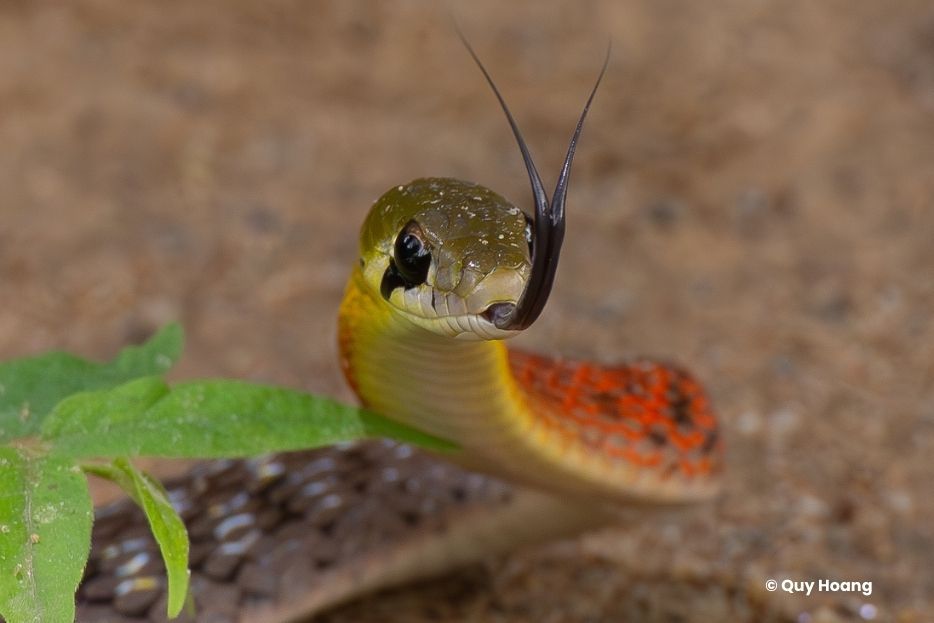
Forest Snakes
Snake encounters are often unpredictable and should be approached with safe distance and calm field behaviour.

Limestone Specialists
Karst habitats support distinctive reptiles and amphibians closely tied to caves, rocks and forested limestone.
When to Go Herping in Vietnam
There is no single best season for every region. Recent rainfall, temperature, humidity, wind and water levels can change activity from one night to the next.
November – February
March–April
May–August
September–October
Herping conditions depend on more than the month. Recent weather, local rainfall, temperature and habitat moisture matter greatly.
What Herping in Vietnam Is Really Like

Night Work
Most sessions take place after dark and may continue for hours.

Rain & Humidity
Wet conditions can improve activity but also increase slippery trails.

Slow Searching
Scanning leaves, trunks, stream edges and floor, not covering distance.

Unpredictability
A productive night depends on recent rain, temperature and chance.

Terrain & Access

Equipment & Light
Headlamps, spare batteries and responsible light use are essential.
Different Species Require Different Field Approaches
Night Forest Walks
Best suited to frogs, geckos, many snakes and other nocturnal reptiles.
Daytime Habitat Searching
Best suited to sun-active lizards, basking reptiles and habitat study.
Stream & Wetland Searching
Best suited to amphibians, aquatic reptiles and breeding activity.
Road & Forest-edge Observation
Best suited to opportunistic encounters during warm nights.
Choose the Right Herping Journey
The right route depends on season, habitat, target groups, night-field intensity and physical comfort.
First Herping Experience
duration
Route logic
Travel intensity
Best suited for
Seasonal Herping Route
duration
Route logic
Travel intensity
Best suited for
Specialist Multi-region Journey
duration
Route logic
Travel intensity
Best suited for
Field Safety Comes First
Most field risks come from terrain, low visibility, weather and poor judgement rather than from wildlife itself.
Follow Guide Instructions
Do not approach, block or attempt to handle an animal without explicit guidance.
Maintain Safe Distance
Observation distance should reflect the species, terrain and potential risk.
Avoid Routine Handling
Observation and photography should be prioritised over handling.
Watch the Terrain
Slippery trails, stream edges, road traffic and darkness require constant attention.
Wear Appropriate Equipment
Closed footwear, long trousers, weather protection and reliable lighting.
Share Medical Information
Relevant allergies, medical conditions and mobility limitations should be shared beforehand.
Herping with Care
Responsible herping protects animals, microhabitats and sensitive information while allowing meaningful observation.
Minimise Handling
Animals should not be handled for convenience, entertainment or photography.
Control Light & Flash
Artificial light should be limited, especially for amphibians and nocturnal reptiles.
Protect Microhabitats
Rocks, bark, leaf litter and shelter objects should not be damaged or left displaced.
Avoid Repeated Disturbance
An animal should not be repositioned repeatedly or surrounded by multiple observers.
Protect Sensitive Information
Vulnerable species locations, breeding areas and sensitive taxa should not be shared.
Never Collect Wildlife
No animal, egg, skin, specimen or habitat material should be removed from the field.
Choose How You Explore Vietnam's Herpetofauna
Go-WILD offers private tailor-made herping journeys and selected small-group departures.
Private & Tailor-made
• Specific species groups
• Private dates
• Photographers
• Flexible pace
• Mixed wildlife journeys
Fixed Departures
• Solo travellers
• Fixed dates
• Shared costs
• Established routes
• Compatible expectations

FIND YOUR ROUTE
Herping Journey to explore
Structured by route scope and herp & amphibian intensity, from southern introductions to deeper regional and national birding journeys.
Southern Vietnam Herping Journey
A lowland forest route combining night walks, amphibians, reptiles and broader wildlife experiences.
Private or small group
Da Lat Highland Herping
A cooler montane route focused on forest streams, amphibians and highland reptiles.
Private or small group
3-5D
Central Vietnam Herp Extension
A specialist extension combining tropical forest, seasonal rain and regional reptile and amphibian diversity.
Private or small group
3-6D
Mixed Wildlife & Herping Journey
A wider wildlife route adding selected night-field sessions to birding, primates or nature travel.
Private or small group
Tailor-made Herping Journey
A private route designed around season, habitat, target groups and realistic field conditions.
Private

Go Deeper
Continue Exploring Vietnam’s Reptiles and Amphibians
FAQ
Planning a Herping Journey in Vietnam
When is the best time for herping in Vietnam?
Rainfall, humidity and recent weather are often more important than the calendar alone. Suitable conditions vary by region and habitat.
Can specific reptiles or amphibians be guaranteed?
No. Activity can change nightly according to rain, temperature, habitat and chance.
Is herping dangerous?
Responsible herping is based on safe distance, guide instructions, appropriate equipment and careful movement through the terrain.
Do guests handle animals?
Routine handling is not part of responsible Go‑wild practice. Observation and photography are prioritised.
Is herping physically demanding?
The level varies from accessible roadside or forest‑edge searches to steep, muddy, stream‑based or limestone routes.
Can I photograph reptiles and amphibians?
Yes, but light use, distance, time and animal welfare shape realistic opportunities.
Are private herping tours available?
Yes. Go‑wild offers private tailor‑made routes and selected small‑group departures.
What equipment should I bring?
A reliable headlamp, spare batteries, waterproof protection, closed footwear, long trousers and suitable camera equipment where relevant.
Get Started
How Would You Like to Explore Vietnam's Wildlife?
Choose a private journey shaped around your own interests, or join one of our carefully planned small-group departures. Share your travel dates, wildlife priorities and preferred field experience, and we will help you identify the most suitable way to travel.
Prefer WhatsApp?
We usually reply within 48 hours with practical, honest advice.