

Primates of Vietnam: Species, Habitats and Field Expectations
Vietnam is home to gibbons, doucs, langurs, macaques and lorises living across lowland forest, limestone landscapes, coastal forest and mountain habitats. This guide helps travellers understand where primates occur, how encounters differ and how to choose a realistic, responsible journey.
For wildlife travellers, primate enthusiasts and photographers planning responsible encounters in Vietnam.

5
6
3–16
Days, by route
N→S
Full-country range
Vietnam's Primates at a Glance
Primate watching in Vietnam is shaped by species behaviour, habitat, distance, light, terrain and local access.
Five Main Primate Groups
Gibbons, doucs, langurs, macaques and lorises.
Diverse Habitats
Lowland rainforest, limestone, coastal forest, island forest and montane habitats.
Different Encounter Styles
Dawn listening, forest tracking, viewpoint observation and patient photography.
Watching & Photography
Choose a broader wildlife route or a specialist primate-focused journey.
Responsible Field Planning
Shaped by distance, animal behaviour, habitat conditions and low-disturbance practice.
Why Vietnam Matters for Primate Travellers
Vietnam supports a distinctive mix of gibbons, doucs, langurs, macaques and nocturnal primates across very different forest systems nationwide.
These animals are not evenly distributed, and each species group requires a different combination of habitat, timing, terrain and field methods in practice.
Regional Diversity
Different primate communities occur across northern mountains, limestone forests, coastal habitats, highlands and southern lowlands.
Distinctive Species Groups
Vietnam is especially important for doucs, crested gibbons and several regionally restricted langurs.
Habitat Variety
Primate journeys may include lowland rainforest, limestone, coastal forest, island habitats and montane systems.
Journey Flexibility
Travellers can choose short regional extensions, target-focused routes or longer multi-region journeys.
Understanding Vietnam's Main Primate Groups
Different primates require different ways of observing. There is no single standard method for every species, habitat or region.

Gibbons
Known first by their dawn calls, gibbons require early starts, patient listening and careful positioning in forest habitat. Visual encounters may be brief, distant or partly obscured.

Doucs
Vietnam’s doucs are among the country’s most visually distinctive primates. Observation conditions vary by forest structure, light, distance and visitor pressure.
Encounter style: Canopy and forest-edge observation
Typical conditions: Variable distance · Changing light
Photography: Possible with suitable conditions

Langurs
Langurs occur across limestone, forest and island landscapes. Different species require very different routes, terrain and observation methods.
Encounter style: Limestone slopes · Forest · Open viewpoints
Typical conditions: Uneven terrain · Often distant observation
Photography:Highly location-dependent
Key requirement: Regional specialist knowledge

Macaques
Macaques may be more adaptable than other primates, but responsible observation remains important, especially where animals have become accustomed to people.
Encounter style: Forest and mixed habitats
Key requirement: No feeding or behavioural manipulation

Slow Lorises
Slow lorises are nocturnal and difficult to observe responsibly. Any search must consider light use, habitat sensitivity and realistic expectations.
Encounter style: Nocturnal observation
Vietnam's Main Primate Regions
No single destination represents primate watching in Vietnam. Each region offers different species groups, habitats and field conditions.

Northern Vietnam
Lowland and montane Forest
Key habitats:
Primate groups: Old-world, divers, langurs, macaques, lorises
Typical duration: 4–7 days
North Central
Limestone karsts and forests
Key habitats:
Primate groups: Langurs, macaques
Central Coast
Coastal forests and hills
Key habitats:
Primate groups: Langurs, macaques, lorises
Central Highlands
Montane forests and valleys
Key habitats:
Primate groups: Langurs, macaques
Southern Vietnam
Lowland forests and wetlands
Key habitats:
Primate groups: Langurs, macaques, lorises
Habitats
The Habitats That Shape a Primate Encounter
Habitat influences visibility, terrain, observation distance and the way a primate journey should be planned.

Lowland Rainforest
Warm, dense forests with high wildlife activity, varied canopy layers, and longer field sessions across lowland terrain.

Montane Forest
Cooler highland forests with steep terrain, specialist primates, and restricted-range species requiring patient fieldwork.

Limestone Forest
Karst forests shaped by rugged terrain, cliffs, and isolated habitats where primates often depend on specific forest pockets.

Coastal Forest
Forests influenced by coastal conditions, offering open views, varied habitats, and important primate areas near the coast.

Island Forest
Isolated forests with restricted access and sensitive populations, where conservation-led viewing is especially important.

Forest Edge & Mixed Landscapes
Open forest edges and mixed habitats where human activity meets wildlife, requiring careful observation and responsible positioning.
Vietnam's Signature Primates
Many travellers come to Vietnam for doucs, gibbons and regionally restricted langurs. These primates require different routes, habitats and expectations.

Doucs
Among Vietnam’s most recognisable primates, doucs are associated with selected central forest systems and can offer strong visual encounters under suitable conditions.

Crested Gibbons
Gibbon journeys often begin with sound rather than sight. Dawn listening, forest access and patient positioning are central to the experience.

Limestone Langurs
Limestone langurs are closely linked to karst landscapes and often require regional knowledge, distant observation and careful route planning.

Island & Restricted-range Langurs
Some langurs occur within highly restricted ranges and sensitive conservation contexts. Access and information must be handled carefully.

Macaques & Lorises
Macaques may be more visible in some habitats, while lorises require nocturnal searching and stricter low-disturbance practice.
When to Plan a Primate Journey
There is no single best month for every primate route. Weather, food availability, animal movement, habitat access and visitor pressure all affect encounters.
November – February
March–April
May–August
September–October
Primate activity is not controlled by a simple calendar. Daily movement, food availability, group behaviour, weather and human pressure all influence an encounter.
What Primate Watching in Vietnam Is Really Like

Very Early Starts
Gibbon-focused mornings may begin before sunrise to listen and locate calls.

Canopy Distance
Many primates remain high in the canopy; views may be brief or partly obscured.
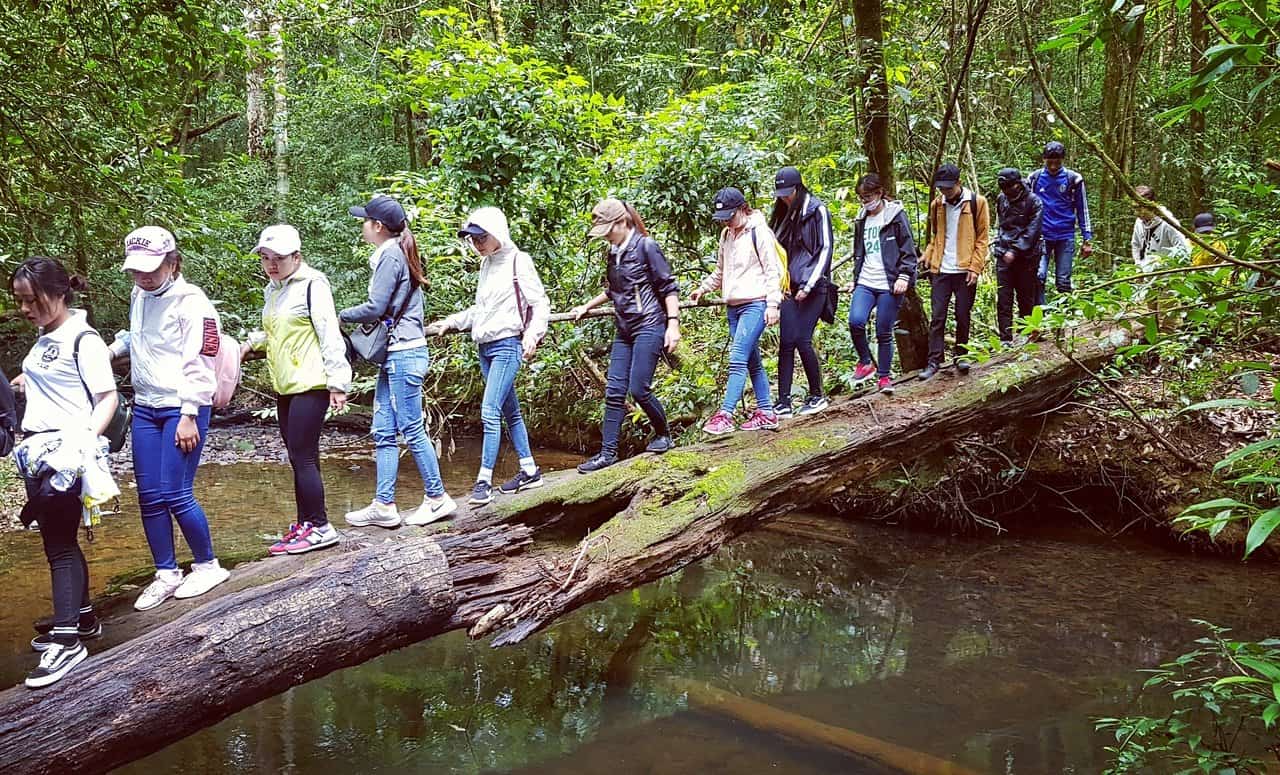
Waiting and Tracking
An encounter may require slow movement and periods when no primates are visible.

Terrain
From accessible roads and forest edges to steep limestone trails and humid forest walking.

Light and Photography
Canopy shade, backlighting and animal movement can make photography demanding.

Flexible Daily Planning
Guides adjust timing and viewpoints according to calls, weather and animal movement.
What Primate Watching in Vietnam Is Really Like
Dawn Listening
Best suited to gibbons, behavioural observation and travellers comfortable with very early starts.
Forest Tracking
Best suited to mobile groups, patient wildlife watchers and travellers comfortable with variable walking.
Viewpoint Observation
Best suited to limestone or open-canopy habitats where primates may be watched from a distance.
Patient Photography
Best suited to travellers prepared to wait and work with variable light, distance and movement.
Choose the Right Primate Journey
The right journey depends on target species, preferred encounter style, photography priorities, travel time and physical comfort.
First Primate Experience
duration
Route logic
Travel intensity
Best suited for
Target-focused Primate Route
duration
Route logic
Travel intensity
Best suited for
Comprehensive Photography Journey
duration
Route logic
Travel intensity
Best suited for
Watching Primates with Care
Responsible primate watching protects natural behaviour, reduces stress and helps keep encounters meaningful.
Keep Appropriate Distance
Distance should reflect species behaviour, terrain, local rules and signs of discomfort.
Never Feed Wildlife
Feeding changes natural behaviour, increases conflict and can expose primates to disease and injury.
Control Noise & Group Pressure
Quiet behaviour and small groups reduce stress and allow more natural observation.
Avoid Blocking Movement
Travellers should not surround animals, block escape routes or repeatedly reposition to force a closer view.
Use Light Responsibly
Flash and artificial light require particular caution, especially for nocturnal primates.
Protect Sensitive Information
Current locations, sleeping sites and information about vulnerable groups may not be shared publicly.
Choose How You Bird Vietnam
Go-WILD offers both private tailor-made birding journeys and selected small-group departures.
Private & Tailor-made
• Custom pace, focus & comfort
• Ideal for families, photographers or small groups
• Flexible dates and routes
Fixed Departures
• Expert local guides
• Like-minded travellers
• Carefully planned itineraries

FIND YOUR ROUTE
Primate Journey to explore
Structured by route scope and primate intensity, from southern introductions to deeper regional and national birding journeys.
Vietnam Primate Photography Expedition
A long-form specialist journey connecting several primate regions, habitats and photographic conditions across Vietnam.
Private or small group
Cat Tien Gibbons & Wildlife
An accessible southern forest journey combining dawn gibbon listening with birds, macaques and broader wildlife.
Private or small group
3-5D
Son Tra Primate Experience
A short Central Vietnam extension focused on responsible observation of Red-shanked Doucs in coastal forest.
Private or small group
7D
Central Vietnam Primates
Private or small group
5-8D
Tailor-made Primate Journey
A private route assessed around target species, timing, field expectations and travel logistics.
Private

Go Deeper
Continue Exploring Vietnam’s Primates
FAQ
Planning a Primate Journey in Vietnam
Can primate sightings be guaranteed?
No. Animal movement, weather, habitat conditions and access affect every encounter.
Where can I see primates in Vietnam?
Primates occur across northern mountains, limestone forests, central coastal habitats, highlands and southern lowland forest. Suitable regions depend on the species group and travel conditions.
When is the best time?
Timing varies by region and species. No single month is suitable for every primate route.
Is primate watching physically demanding?
The level varies from accessible roadside or viewpoint observation to steep limestone and forest trails.
Can I photograph Vietnam’s primates?
Yes, but distance, canopy light, movement and responsible practice shape realistic opportunities.
How close can we approach?
Appropriate distance depends on animal behaviour, local rules, terrain and guide judgement.
Are private primate tours available?
Yes. Go‑wild offers tailor‑made private routes and selected small‑group departures.
How many days should I allow?
Two to four days can cover one destination. Seven to twelve days works for a regional or multi‑species route. Twelve to sixteen days is more suitable for broader specialist photography coverage.
Get Started
How Would You Like to Explore Vietnam's Wildlife?
Choose a private journey shaped around your own interests, or join one of our carefully planned small-group departures. Share your travel dates, wildlife priorities and preferred field experience, and we will help you identify the most suitable way to travel.
Prefer WhatsApp?
We usually reply within 48 hours with practical, honest advice.