

Primates of Vietnam are among Asia’s most remarkable wildlife stories. Vietnam is one of Asia’s most important countries for primate diversity, with gibbons, douc langurs, leaf monkeys, macaques, lorises and several highly threatened species found across forests, limestone landscapes and protected areas.
Responsible primate watching in Vietnam is possible, but it must be planned carefully because many primates are rare, sensitive, canopy-dwelling, localized, threatened by hunting or habitat loss, and easily disturbed by poor visitor behavior.
Travelers may hope to experience primates in places such as Cat Tien, Son Tra, Bach Ma, Phong Nha-Ke Bang, Van Long, Cuc Phuong and selected northern or central conservation landscapes. However, exact sites, troop locations, roosts and sensitive access details should not be shared publicly.


The best primate journey in Vietnam is not the one that promises the most species. It is the one that respects distance, avoids disturbance, works with ethical local knowledge, sets honest expectations and helps travelers understand why these animals matter for conservation.
Why Primates of Vietnam Matter for Wildlife Travelers
Vietnam is internationally significant for primates. The country supports a remarkable diversity of gibbons, douc langurs, leaf monkeys, macaques, lorises and other primates across lowland forests, montane forests, limestone karst, coastal forests and protected areas.
For travelers, this creates a unique opportunity. Hearing gibbons calling at dawn, watching douc langurs moving through coastal forest, seeing limestone cliffs where langurs survive, or learning about primate conservation can be more powerful than simply adding a species to a checklist.
But this opportunity also creates responsibility.
Many primates in Vietnam are not common wildlife attractions. They are conservation-sensitive animals. A good primate experience should never be built around guaranteed sightings, close approaches, feeding, chasing or intrusive photography.
What Kinds of Primates Can Travelers Hope to Encounter?
The primates of Vietnam are best understood through broad groups rather than as a simple checklist. For most travelers, primate watching in Vietnam is about understanding habitats, behavior and conservation rather than collecting species names.
| 🐒Primate Group | ⁉️Why Travelers Care | ✨Field Reality | ✅Responsible Viewing Note |
|---|---|---|---|
| Gibbons | Dawn calls, canopy movement and emotional forest experiences | Often heard before seen | Keep distance and avoid playback pressure |
| Douc Langurs | Colorful, charismatic and conservation-significant | Canopy-dwelling and often distant | Never crowd or chase troops |
| Leaf Monkeys & Langurs | Highly threatened forest and limestone specialists | Often localized and sensitive | Avoid sharing exact locations |
| Macaques | More adaptable and easier to observe | Human behavior can influence them | Never feed wildlife |
| Lorises | Nocturnal and rarely observed | Highly sensitive to disturbance | Avoid strong light and handling |
| Other Mammals | Civets, squirrels and flying squirrels may appear in primate habitats | Opportunistic encounters | Treat as bonus wildlife sightings |
Where to See Primates in Vietnam Responsibly
| 📍Region | 🐒Primate Focus | 👍Best For | ⚠️Sensitivity Note |
|---|---|---|---|
| Cat Tien National Park | Gibbons, macaques, lowland forest primates | First primate and wildlife experience | Visual sightings are never guaranteed |
| Son Tra Peninsula | Red-shanked Douc | Ethical primate watching and photography | High visitor pressure requires caution |
| Bach Ma National Park | Gibbons, doucs and macaques | Central Vietnam wildlife routes | Access and weather influence opportunities |
| Phong Nha–Ke Bang | Limestone forest primates | Specialist wildlife journeys | Sensitive habitats require discretion |
| Van Long | Delacour’s Langur | Northern conservation-focused travel | Habitat interpretation is essential |
| Cuc Phuong | Conservation education and forest ecology | Learning-focused wildlife journeys | Different from wild primate encounters |
| Cat Ba | Cat Ba Langur conservation | Specialist conservation interest | Extremely sensitive species |
| Ha Giang Region | Tonkin Snub-nosed Monkey context | Conservation awareness | Conservation-first approach required |
Understanding where to see primates in Vietnam is less about finding exact locations and more about choosing the right habitat, season and guiding approach.
Cat Tien: Dawn Calls, Lowland Forest and Realistic Expectations
Cat Tien can be a meaningful first destination for travelers interested in primate watching in Vietnam. It is also one of the most accessible places to experience the forest soundscape associated with gibbons in Vietnam.
For many visitors, the most memorable moment is not seeing a primate clearly but hearing gibbons calling through the forest before sunrise. Their calls travel across the canopy and create an unforgettable sense of place.
Cat Tien’s primate experience is best understood as part of a broader lowland forest journey that may include birds, night wildlife, reptiles, mammals and forest interpretation.
![[Species_profile] - A-yellow-cheeked-crested-gibbon-swinging-gracefully-from-a-tree-branch-in-tropical-rainforest.](https://wanee.asia/wp-content/uploads/2025/09/Yellow-cheeked-crested-Gibbon.jpg "Primates of Vietnam: Where to See Them Responsibly 4")


Best For
- First wildlife trip in Vietnam
- Travelers from Ho Chi Minh City
- Birding and primate combinations
- Mixed wildlife experiences
- Travelers comfortable with early starts
Expectation Note
Cat Tien is not a destination for guaranteed close primate photography. The forest is dense, animals may remain high in the canopy, and encounters depend on weather, food availability and timing.
One of the most common reactions from first-time visitors is surprise at how meaningful a gibbon experience can be even without a clear sighting. Guests often arrive expecting photographs but leave remembering the soundscape of the forest at dawn. The experience becomes less about seeing an animal and more about understanding its place within the ecosystem.
Son Tra: Red-shanked Douc and Responsible Photography
Son Tra is strongly associated with the Red-shanked Douc in Vietnam, one of the country’s most iconic and conservation-significant primates.
Its striking appearance makes it a dream species for many wildlife photographers. However, this popularity also creates pressure on both the animals and the habitat.

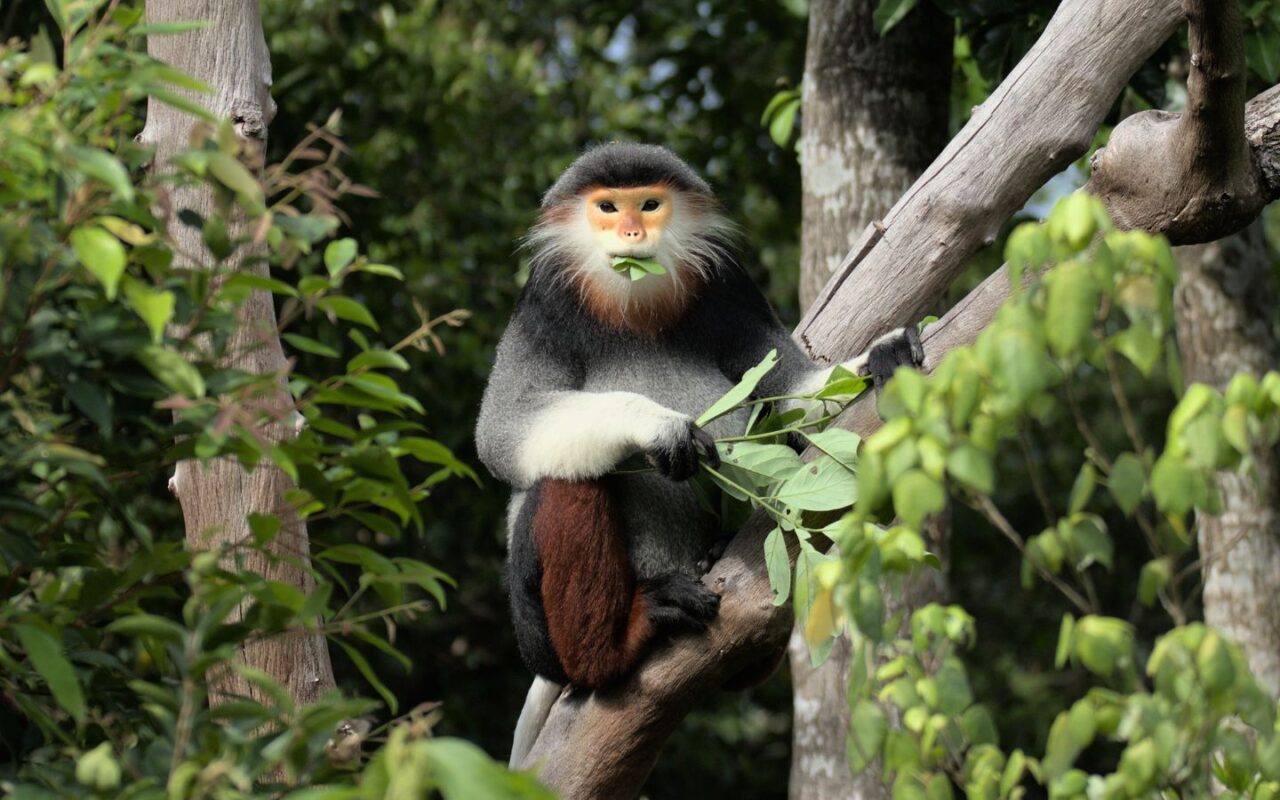

Responsible viewing should emphasize:
- Keeping a respectful distance
- Remaining quiet
- Never feeding wildlife
- Avoiding crowding
- Avoiding interference with movement
- Respecting local conservation regulations
- Prioritizing observation over photographs
A successful Son Tra experience is measured by the quality of observation, not the closeness of the image.
Bach Ma and Central Vietnam: Primates in a Broader Wildlife Route
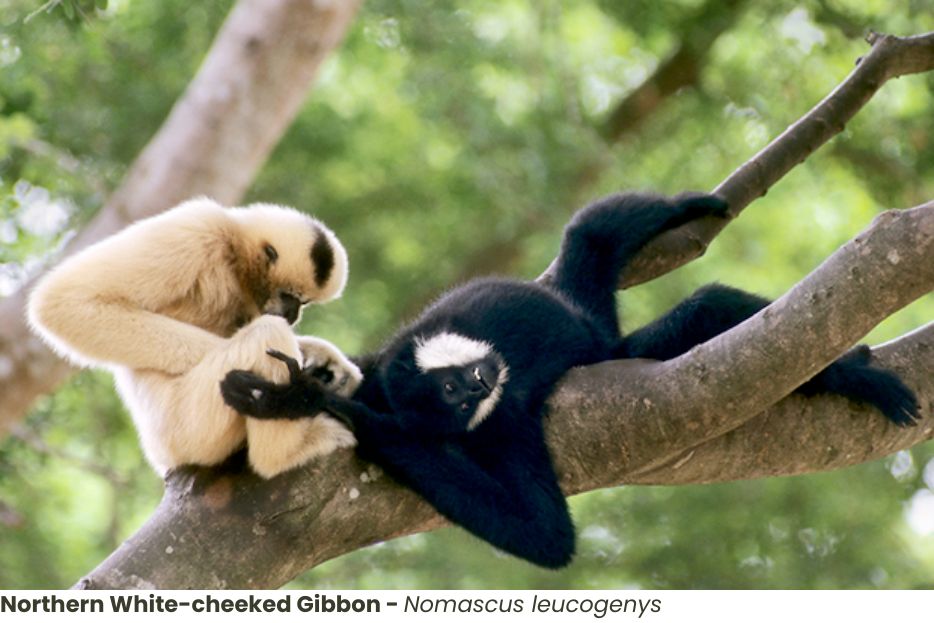
Bach Ma and surrounding Central Vietnam landscapes support primates as part of wider wildlife journeys.
Travelers may combine primate watching with birding, mammal observation, forest ecology and conservation interpretation. Conditions vary considerably depending on weather, terrain and access.
Best For
- Specialist wildlife travelers
- Longer Central Vietnam routes
- Birding and primate combinations
- Guests comfortable with early starts and uncertain outcomes
Phong Nha–Ke Bang and Limestone Landscapes
Vietnam’s limestone landscapes are among the country’s most important conservation areas.
These habitats support several conservation-sensitive primate populations and broader biodiversity values. Because many species are localized and vulnerable, public information should focus on conservation importance rather than access guidance.
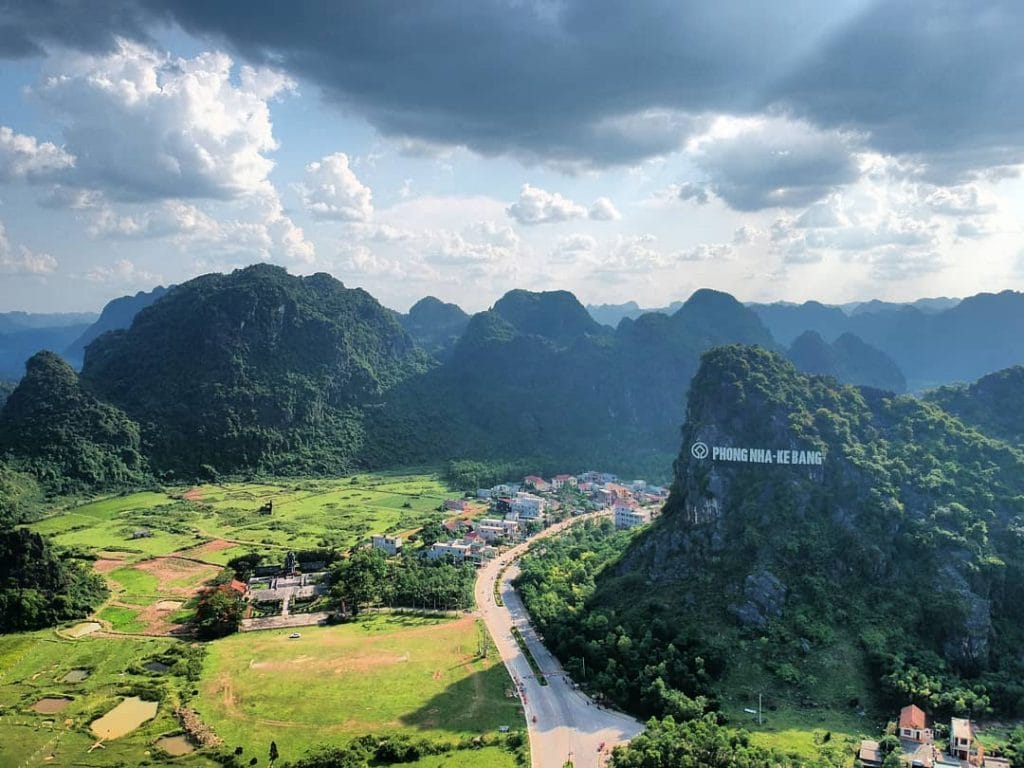


For wildlife travelers, these landscapes are best understood as specialist conservation destinations rather than mass-tourism attractions.
Van Long and Northern Limestone Primate Context
Van Long is widely associated with Delacour’s Langur and limestone ecosystem conservation.


The experience often combines landscape appreciation, habitat interpretation and wildlife observation. Rather than focusing solely on sightings, visitors gain insight into the relationship between endangered primates and the fragile ecosystems they depend on.
Cuc Phuong: Conservation Education and Forest Context
Cuc Phuong offers a valuable perspective on primate conservation.
It helps visitors understand the challenges facing Vietnam’s primates through conservation education, forest interpretation and broader biodiversity stories.

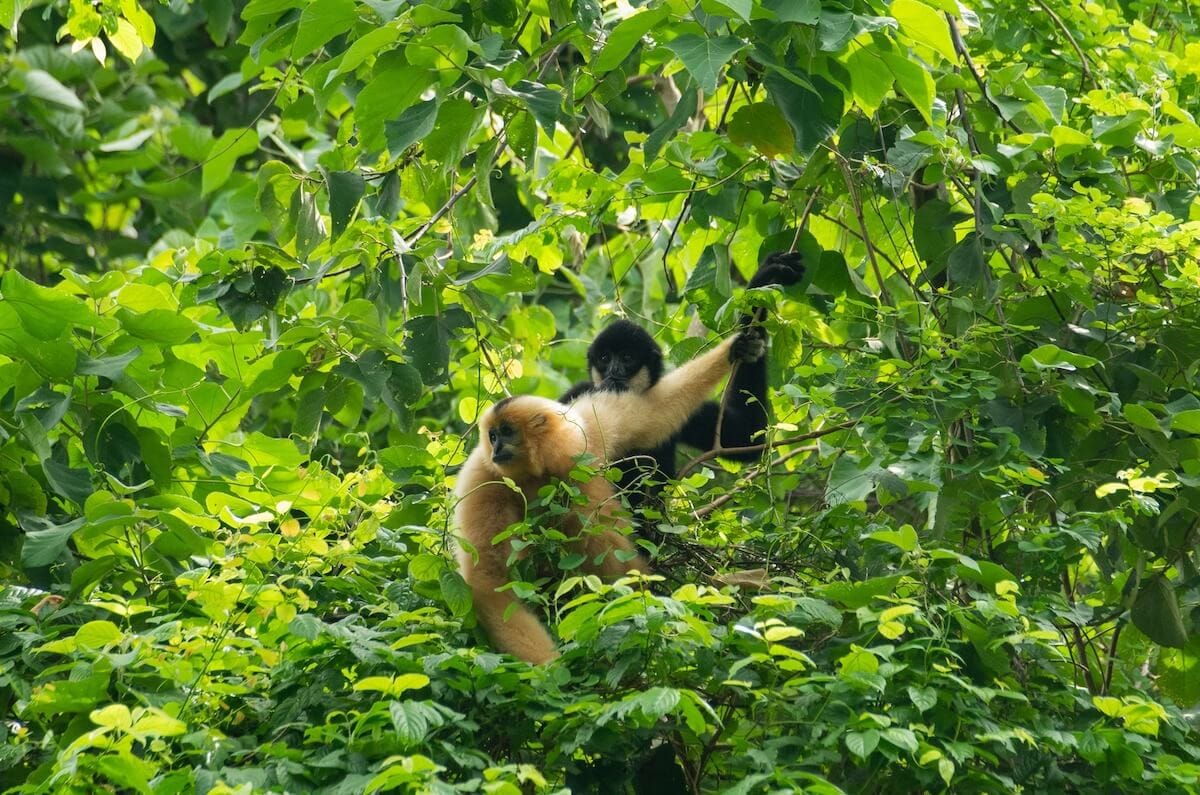

Wild primate watching and conservation education are different experiences, but both contribute to a deeper understanding of wildlife protection.
Highly Sensitive Primate Contexts
Some primate populations require particularly careful treatment.
Examples include:
- Cat Ba Langur
- Tonkin Snub-nosed Monkey
- Certain Grey-shanked Douc populations
- Sensitive Hatinh Langur populations

(Rhinopithecus avunculus)
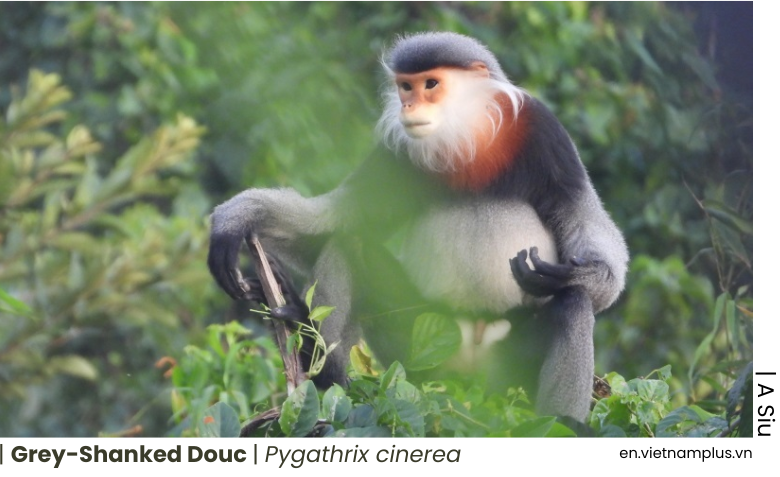
(Pygathrix cinerea)
![Itinerary - The Hatinh Langur by the cliff during the [7-Day] Vietnam Primate Watching & Photo Tour (Hanoi–>Danang).](https://wanee.asia/wp-content/uploads/2025/06/7-day-primate-watching-3-1067x800.jpg "Primates of Vietnam: Where to See Them Responsibly 22")
(Trachypithecus hatinhensis)

(Trachypithecus poliocephalus poliocephalus)
For these species, responsible communication means avoiding:
- Detailed access instructions
- Troop locations
- GPS coordinates
- Tracker information
- Photography-focused promotion
- Guaranteed viewing claims
In some cases, protecting wildlife means deliberately limiting public information.
Primate Watching vs Primate Photography
| ✨Goal | 👍Better Approach | ‼️Field Reality | ⚠️Ethical Note |
|---|---|---|---|
| Hear gibbons | Dawn listening | Visual sightings not guaranteed | Avoid playback pressure |
| Observe doucs | Distance-based observation | Canopy movement affects views | Never crowd animals |
| Photograph doucs | Dedicated photography sessions | Light and distance matter | Welfare comes first |
| See limestone langurs | Habitat-focused interpretation | Often viewed from distance | No location sharing |
| Observe lorises | Guided night activities | Highly sensitive species | Avoid repeated disturbance |
Wildlife photography always demands patience, light, positioning and cooperation from natural conditions. A responsible guide should never compromise primate welfare for a photograph.
Best Time for Primate Watching in Vietnam
There is no single best season for all primates.
| 🐒Primate Focus | ⏱️Timing Logic | 📝Planning Note |
|---|---|---|
| Gibbons | Dawn activity and calling behavior | Early starts are essential |
| Douc Langurs | Daytime canopy observation | Distance and calm conditions help |
| Limestone Langurs | Depends on site and conditions | Local knowledge matters |
| Lorises | Night viewing only | Minimize light disturbance |
| Primate Photography | Depends on light and behavior | Patience improves opportunities |
In many cases, time of day is more important than the month of travel.
How Many Days Do You Need?
| 📆Trip Length | ✅Best For | ✨What It Can Realistically Do |
|---|---|---|
| 1 Day | Introduction | Basic wildlife context |
| 3 Days | First primate experience | Cat Tien and mixed wildlife |
| 5–8 Days | Regional route | Multiple habitats |
| 10–15 Days | Specialist journey | Greater primate diversity |
| 15+ Days | Extended wildlife expedition | Deep habitat coverage |
For most travelers, primates work best as part of a broader wildlife journey rather than a species-focused expedition.
Responsible Primate Watching Rules
Responsible primate watching in Vietnam should always include:
- No guaranteed sightings
- No feeding
- No touching or handling
- No chasing or crowding
- No blocking movement routes
- No playback pressure
- No excessive spotlighting
- No disturbance of sleeping sites
- No sharing sensitive locations
- No support for illegal wildlife trade
- Respect for local regulations and conservation staff

The goal is not simply to see primates. The goal is to observe them without making their survival harder.
When guests ask about primates, we begin by discussing expectations rather than species lists.
In Cat Tien, hearing gibbons calling through the forest at dawn can become the highlight of the journey even when visual encounters remain brief. In Son Tra, excellent douc sightings are possible, but only when observation remains calm and respectful.
The most rewarding primate experiences usually happen when travelers focus on understanding behavior, habitat and conservation rather than pursuing close photographs.
Common Mistakes in Primate Watching
Expecting Close Encounters
Wild primates should be viewed from a respectful distance.
Treating Sightings as Guaranteed
Wildlife remains unpredictable.
Photographing Too Aggressively
No image is worth disturbing an animal.
Sharing Sensitive Locations
Location sharing can increase pressure on vulnerable species.
Confusing Rescue Centers with Wild Watching
Education and wild observation are different experiences.
Ignoring Local Rules
Conservation regulations exist for a reason.
Suggested Go-WILD Primate Journey Types
Cat Tien Primate and Wildlife Introduction
A first introduction to primates, birds and lowland forest ecosystems.
Son Tra Responsible Douc Watching
Focused on ethical observation and photography of Red-shanked Doucs.
Central Vietnam Primate and Wildlife Route
A broader wildlife route combining primates, birds and forest ecosystems.
Northern Limestone Primate Journey
Focused on langurs, limestone habitats and conservation stories.
Primate Photography Journey
Designed for photographers who understand ethical wildlife observation and realistic field conditions.
Plan a Responsible Primate Journey in Vietnam
Vietnam’s primates are among the country’s most remarkable wildlife experiences, but they deserve patience, respect and realistic expectations.
Tell us your travel dates, primate interests, photography goals, preferred comfort level and available time. The WANEE Team can help design a journey that balances meaningful wildlife encounters with responsible conservation practices.

Related Knowledge
Learn More About Primates of Vietnam
- Where to See Red-shanked Douc in Vietnam
- Gray-shanked Douc Langur
Plan a Responsible Wildlife Journey
- How to Choose a Wildlife Tour in Vietnam
- Vietnam Wildlife Tours: What to Expect
- Responsible Wildlife Tourism in Vietnam
- Cat Tien National Park Wildlife Guide
Frequently Asked Questions
Is Vietnam good for primate watching?
Yes. Vietnam is one of Asia’s most important countries for primate diversity and conservation.
Where can I see primates in Vietnam?
Broad regions include Cat Tien, Son Tra, Bach Ma, Phong Nha–Ke Bang, Van Long and Cuc Phuong.
Can I see gibbons in Vietnam?
Yes. Gibbons are often experienced through dawn calls, although visual sightings are never guaranteed.
Where can I see Red-shanked Douc in Vietnam?
Son Tra is the region most closely associated with responsible Red-shanked Douc observation.
Can I photograph primates in Vietnam?
Yes, but ethical standards should always take priority over photographic opportunities.
Are primate sightings guaranteed?
No. Wildlife sightings should never be guaranteed.
Is it ethical to watch primates in Vietnam?
Yes, when conducted responsibly and with respect for wildlife welfare.
Can I see primates in Cat Tien?
Yes. Cat Tien provides meaningful opportunities to experience primates within a broader forest ecosystem.
What is the best time of day for primate watching?
Dawn is often important for gibbons, while other species vary depending on habitat and behavior.
Should I choose a primate tour or a general wildlife tour?
Choose a primate-focused journey if primates are your primary interest. Choose a broader wildlife journey if you want primates as part of a wider nature experience.