

Birdwatching in Cat Tien National Park is one of the best starting points for birdwatching in southern Vietnam, especially for lowland forest birds, forest-edge species, pittas, broadbills, woodpeckers, barbets, kingfishers, night birds and mixed wildlife encounters. It is a strong first birding destination because it combines accessible lowland forest, early morning bird activity, possible hide-based birding, night wildlife, and a clear route connection from Ho Chi Minh City to the Da Lat Plateau.
Cat Tien is not an easy “see everything quickly” birding site. The forest is dense, light can be low, birds may be heard before they are seen, and some targets require patience, timing and repeated attempts. A good Cat Tien birding trip should be planned around early starts, enough field time, realistic expectations and responsible birding practice.

Why Cat Tien Matters for Vietnam Birdwatching
Cat Tien National Park is one of Vietnam’s most important lowland forest birding destinations. For many international birders, it is the first serious forest birding site after arriving in southern Vietnam. Its value comes from a combination of lowland forest habitat, riverine areas, forest edge, wetlands, grassland patches, night activity and relatively practical access from Ho Chi Minh City.
In a broader Vietnam birding route, Cat Tien often works as the lowland forest anchor. From here, birders can continue toward Ma Da / Dong Nai, the Da Lat Plateau, Di Linh, Bidoup and other highland sites. This lowland-to-highland sequence is one of the clearest ways to understand birdwatching in southern Vietnam.
Many Vietnam birding trip reports from commercial operators, independent birders and wildlife observers include Cat Tien as a core site. Its repeated appearance across South Vietnam birding routes reflects an important field reality: the site rewards patience, early mornings, good local knowledge and enough time.
What Kind of Birding Is Cat Tien Best For?
Cat Tien is best understood as a lowland forest birding site. It is especially suitable for birders who want a practical introduction to tropical forest birding in Vietnam, with the possibility of combining birds, mammals, primates, reptiles, amphibians and night wildlife in one destination.

(Polyplectron germaini)

(Ahaetulla prasina)

(Pygathrix nigripes)
Cat Tien is good for:
- First-Time Birders In Southern Vietnam;
- Birders Starting A South Vietnam Route;
- Lowland Forest Birding Vietnam Experiences;
- Birders With 3 To 4 Days Available;
- Bird Photographers Who Understand Patience And Forest Light;
- Wildlife Travelers Who Want Birding Plus Primates, Night Walks And Forest Interpretation;
- Travelers Who Want To Connect Cat Tien With Da Lat / Bidoup For Habitat Contrast.
Cat Tien is not ideal for:
- Travelers Expecting Open Safari-Style Wildlife;
- Birders Who Want All Targets In A Short Visit;
- Photographers Expecting Guaranteed Close-Range Images;
- Guests Who Dislike Early Mornings, Heat, Humidity Or Patient Waiting;
- Birders Who Want A Full Vietnam Bird List From One Site.
The strength of Cat Tien is not that it gives everything easily. Its strength is that it introduces the real rhythm of lowland forest birding in Vietnam.
Main Birding Habitats in Cat Tien
Cat Tien birdwatching works best when the trip is planned by habitat, not only by trail name. Different parts of the park and surrounding landscape can support different bird communities. Public birding information should describe habitats broadly and avoid revealing sensitive locations for vulnerable species, nests, roosts or photography setups.
| 🌳Habitat type | 🐦Birding value | 💡Field reality |
|---|---|---|
| Lowland evergreen forest | Core forest birds, pittas, broadbills, woodpeckers, barbets, forest babblers and mixed flocks | Dense vegetation, low light, birds often heard first |
| Forest edge and secondary growth | Easier visibility, sunbirds, bulbuls, drongos, woodpeckers, open-edge activity | Good for warm-up sessions and mixed wildlife watching |
| Riverine habitat | Kingfishers, forest-edge birds, raptors and dawn/dusk activity | Depends on water level, access and timing |
| Wetland / lake / grassland context | Waterbirds, open-country birds, seasonal variation | Best treated as part of a broader Cat Tien wildlife experience |
| Night habitat | Owls, nightjars and nocturnal wildlife context | Requires guided night activity and strict safety/ethics rules |
| Hide / patient waiting sites | Potential for forest-floor birds and photography | Requires patience, ethical standards and realistic expectations |
Birds You May Hope for in Cat Tien
Cat Tien is often associated with several charismatic lowland forest bird groups. Depending on the season, route, weather and field time, birders may target or encounter pittas, broadbills, woodpeckers, barbets, hornbills, kingfishers, drongos, bee-eaters, babblers, parakeets, owls, nightjars and other forest or edge species.
A strong Cat Tien birdwatching experience should not be approached as a guarantee list. Instead, the focus should be on understanding which bird groups make the site attractive, while recognizing that sightings depend on conditions, timing and patience.

(Cymbirhynchus macrorhynchos)

(Hydrornis elliotii)

(Meiglyptes jugularis)
| 🐦Bird group | ⁉️Why birders care | ✨Expectation note |
|---|---|---|
| Pittas | Iconic forest-floor birds and major lowland forest targets | Often require patience, quiet behavior and sometimes hide-based observation |
| Broadbills | Colorful forest birds linked to mature forest and mixed flocks | Visibility depends on timing, canopy level and guide skill |
| Woodpeckers | Important forest bird group, often detected by sound and movement | Better with early starts and quiet scanning |
| Barbets and hornbills | Strong forest character species | Some may be heard before being seen |
| Kingfishers and riverine birds | Add habitat diversity around waterways | Depends on route and water-level conditions |
| Owls and nightjars | Night birding interest | Requires ethical night activity and no disturbance |
| Mixed flocks and forest birds | Represent the broader lowland birding experience | Best with slow walking and good listening |
On a typical Cat Tien birding morning, the most productive period often starts before the forest becomes hot and quiet. Guests may first notice calls, movement in the canopy, or guide signals before seeing birds clearly. This is why we explain to guests that Cat Tien birding is a patient forest experience, not a quick checklist stop.
How Many Days Do You Need for Birdwatching in Cat Tien?
For most birders, 3 to 4 days is a sensible starting point for Cat Tien. This gives enough time for multiple early mornings, different forest sessions, possible hide-based birding, night activity and flexibility for weather or missed targets.
| 🗓️Trip length | ✅Best for | 🌳What it can realistically do | ⚠️Limitation |
|---|---|---|---|
| 1 day | Light birding from nearby areas or a very short nature visit | A small taste of forest birding | Too short for serious Cat Tien birding |
| 2 days / 1 night | Short introduction | One early morning and one evening/night session | Limited backup time if weather or activity is poor |
| 3 days / 2 nights | First proper Cat Tien birding experience | Multiple field sessions, birding + night wildlife + forest interpretation | Still not enough for every target |
| 4 days / 3 nights | Stronger Cat Tien focus | More chances for forest birds, hides, dawn sessions and missed targets | Better for serious birders or photographers |
| 5+ days | Specialist birding or photography focus | More patient attempts and slower field rhythm | Better if combined with a broader South Vietnam birding route |
A short trip can still be rewarding, but it should have a clear focus. If the goal is serious birding or bird photography in Cat Tien, it is better to avoid rushing.
Best Time for Birdwatching in Cat Tien
The best time for birdwatching in Cat Tien depends on the balance between comfort, bird activity, trail access, photography goals and broader route planning.


Many birders prefer the drier months because trails are usually easier, mornings can be more comfortable and general forest access may be more predictable. However, the wet or transition seasons can bring different forest sounds, amphibian activity, lush habitat and unique wildlife conditions. Birding and photography should therefore be planned by goal, not by a single “best month” statement.
| 🌈Season / condition | ✅Birding implication | 📝Planning note |
|---|---|---|
| Drier months | Easier walking, better general access, often preferred for mixed wildlife and birding comfort | Good for first-time Cat Tien birdwatching trips |
| Hot dry periods | Midday can be slow and uncomfortable | Plan early starts and midday rest |
| Rainy / humid periods | Forest can be active in different ways; herps and night activity may improve | Trails may be slippery; gear protection matters |
| Transition periods | Can offer mixed conditions | Build flexibility into the schedule |
| Photography-focused trips | Depend on light, hides, distance and target behavior | Ask for realistic photo opportunities, not just species lists |
Suggested Cat Tien Birding Field Rhythm
☀️Early morning
This is usually the most important field session. Bird activity is higher, temperatures are more comfortable and forest sounds are clearer. Early starts are important for forest birds and any chance of hearing or seeing primates as part of the broader wildlife context.
⛅Mid-morning
This can still be productive depending on trail, weather and target. It is often a good time for slower forest walking, checking edges, returning to promising areas or working specific habitats.
🌤️Midday
Midday can be hot and quieter. For many guests, this is the best time to rest, review sightings, protect energy and prepare for afternoon or evening activity.
🌥️Afternoon
Afternoon sessions may focus on forest edge, riverine areas, photography setups, hides or easier birding depending on the day’s conditions.
🌙Evening and night
Cat Tien can be interesting after dark, but night activity must be guided responsibly. Owls, nightjars, nocturnal mammals, reptiles and amphibians may become part of the wider wildlife experience. For birders, night birding should avoid disturbance and should follow park and guide rules.
Cat Tien as Part of a South Vietnam Birding Route
Cat Tien is powerful on its own, but it becomes even more valuable when connected with other southern birding sites.
A common route logic is:
- Cat Tien for lowland forest birding;
- Ma Da / Dong Nai or Tan Phu for additional lowland forest or near-HCMC birding, depending on route design;
- Da Lat / Bidoup / Di Linh for highland forest and endemic-rich birding;
- Mekong wetlands or Can Gio / Go Cong / Tram Chim for wetland and waterbird contrast where seasonally appropriate.
This route logic helps birders understand that Vietnam birding is habitat-based. Cat Tien is not the whole story. It is the lowland forest foundation.
A strong first South Vietnam birding route often combines Cat Tien with the Da Lat Plateau. Cat Tien introduces lowland forest species and forest birding rhythm, while Da Lat and nearby highland sites bring a different set of montane birds and cooler field conditions. Together, they give birders a clearer picture of why habitat sequence matters in Vietnam.
Birdwatching vs Bird Photography in Cat Tien
Birdwatching and bird photography are related, but they are not the same product.
A birdwatching trip may prioritize finding and identifying more species across different habitats. A bird photography trip may focus on fewer targets, better light, patient waiting and realistic image opportunities.

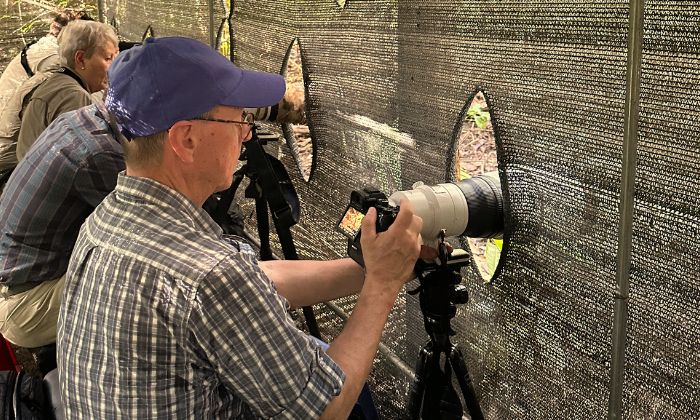
In Cat Tien, bird photography can involve forest-floor birds, hides, low light, patient waiting and careful ethics. Photographers should understand that a general birding itinerary may move too quickly for strong image-making. If photos are the main goal, the trip should be designed differently.
| ✨Goal | 👍Better approach | ⁉️Why |
|---|---|---|
| See and identify more birds | Birdwatching route | More movement, habitat coverage and target searching |
| Photograph pittas or forest-floor birds | Bird photography session / hide-based planning | Needs patience, light, distance and ethical setup |
| Combine birds and wildlife | Mixed wildlife watching | Allows broader nature experience but fewer photo guarantees |
| Serious bird photography | Tailor-made photo itinerary | Better pacing and realistic photo planning |
Responsible Birding in Cat Tien
Responsible birding is not an optional extra. It is part of the quality of the experience.
Cat Tien is a protected area and a living forest. Birders and photographers should avoid behavior that puts pressure on birds, nests, roosts, sensitive species or habitats.
Responsible Cat Tien birding should include:
- No Guaranteed Sightings Language;
- No Crowding Sensitive Birds;
- No Disturbance Of Nests Or Roosts;
- No Habitat Clearing For Better Views Or Photographs;
- Careful And Limited Use Of Playback Where Allowed And Appropriate;
- No Public Sharing Of Sensitive Micro-Locations;
- Respect For Park Rules And Local Guides;
- Small-Group Field Behavior;
- Honest Expectation-Setting Before The Trip.
This also makes the experience better. Quiet, patient, respectful birding often produces better encounters than rushed, high-pressure searching.
How to Prepare for Birdwatching in Cat Tien
Cat Tien birding is more enjoyable when guests prepare for tropical forest conditions.
What to bring
- Binoculars;
- Camera If Photography Is Important;
- Lightweight Long-Sleeved Clothing;
- Neutral Colors;
- Comfortable Walking Shoes;
- Rain Protection Depending On Season;
- Insect Repellent;
- Refillable Water Bottle;
- Small Notebook Or Checklist App;
- Dry Bag Or Camera Protection;
- Patience.
What to expect
- Early Starts;
- Heat And Humidity;
- Low Forest Light;
- Quiet Walking;
- Waiting Periods;
- Birds Heard Before Seen;
- Possible Leeches Or Wet Trails Depending On Season;
- Wildlife Misses As Part Of The Experience.
Who Should Choose a Cat Tien Birding Tour?
Choose Cat Tien if you:
- want a strong first birding site in southern Vietnam;
- are starting from Ho Chi Minh City;
- want lowland forest birding;
- want to combine birds with mixed wildlife;
- have 3 to 4 days for a focused forest trip;
- want to connect to Da Lat or other South Vietnam sites;
- understand that forest birding needs patience.
Choose another route or combine Cat Tien with other sites if you:
- want highland specialties;
- want wetland or shorebird targets;
- are a serious birder with a longer target list;
- are a photographer needing dedicated time and setup;
- want a comprehensive Vietnam birding tour.
Suggested Go-WILD Cat Tien Birding Options
✨Cat Tien Signature – Mixed Wildlife and First Forest Experience
Best for first-time wildlife travelers, general nature lovers and guests who want birding as part of a wider Cat Tien journey. This can include forest birding, primate listening, night wildlife and interpretation.
✨Cat Tien Birdwatching Focus
Best for birders who want a stronger lowland forest focus over 3 to 4 days. This should include multiple early mornings and enough time for repeated attempts.
✨Cat Tien Bird Photography
Best for photographers who want patient sessions, realistic image opportunities and an itinerary designed around light and waiting rather than fast movement.
✨South Vietnam Birding Route
Best for birders who want to connect Cat Tien with Da Lat, Bidoup, Di Linh or other southern sites for lowland-to-highland habitat contrast.
Tell us your travel dates, birding level, target birds, photography needs and available time. WANEE can help design a Cat Tien birding journey or connect Cat Tien with Da Lat and other South Vietnam birding sites.

FAQ
Is Cat Tien good for birdwatching?
Yes. Cat Tien is one of the best lowland forest birding destinations in southern Vietnam and a strong first site for birders starting from Ho Chi Minh City. It is especially useful as the lowland forest anchor in a South Vietnam birding route.
How many days do I need for birdwatching in Cat Tien?
Three to four days is a sensible starting point. This allows multiple early mornings, different field sessions and more flexibility if weather or bird activity is difficult. One day is usually too short for serious birding.
What birds can I see in Cat Tien National Park?
Cat Tien is associated with lowland forest bird groups such as pittas, broadbills, woodpeckers, barbets, kingfishers, hornbills, night birds and mixed forest species.
Is Cat Tien good for bird photography?
Yes, but it requires realistic expectations. Forest light can be low, birds may be shy and good photographs often require patience, hides or carefully planned sessions. A photography-focused itinerary should be different from a general birding tour.
When is the best season for birdwatching in Cat Tien?
The best season depends on comfort, bird activity and your goals. Drier months are often easier for walking and general forest access, while wetter periods may bring different wildlife activity. A detailed recommendation should be based on your dates and target interests.
Can beginners go birdwatching in Cat Tien?
Yes. Cat Tien can be a good first birding destination if the pace is appropriate and expectations are clear. Beginners should be prepared for early mornings, forest conditions and the fact that many birds are heard before they are seen.
Can I combine Cat Tien with Da Lat for birding?
Yes. Cat Tien and Da Lat make a strong South Vietnam birding combination because they connect lowland forest with highland habitats. This route gives better habitat contrast than visiting only one site.
Are bird sightings guaranteed in Cat Tien?
No. Bird sightings are never guaranteed. A good guide improves your chances through timing, local knowledge, habitat selection and field skill, but birds remain wild and conditions can change.
Is Cat Tien better for birdwatching or general wildlife watching?
It can be good for both. Serious birders may want a focused birding itinerary, while general wildlife travelers may prefer a mixed Cat Tien journey including birds, primates, night wildlife and forest interpretation.
Do I need a guide for birdwatching in Cat Tien?
A knowledgeable local guide can greatly improve the experience by reading habitat, identifying calls, choosing the right timing and helping guests avoid disturbance. Cat Tien’s forest birding is much harder without local field knowledge.