
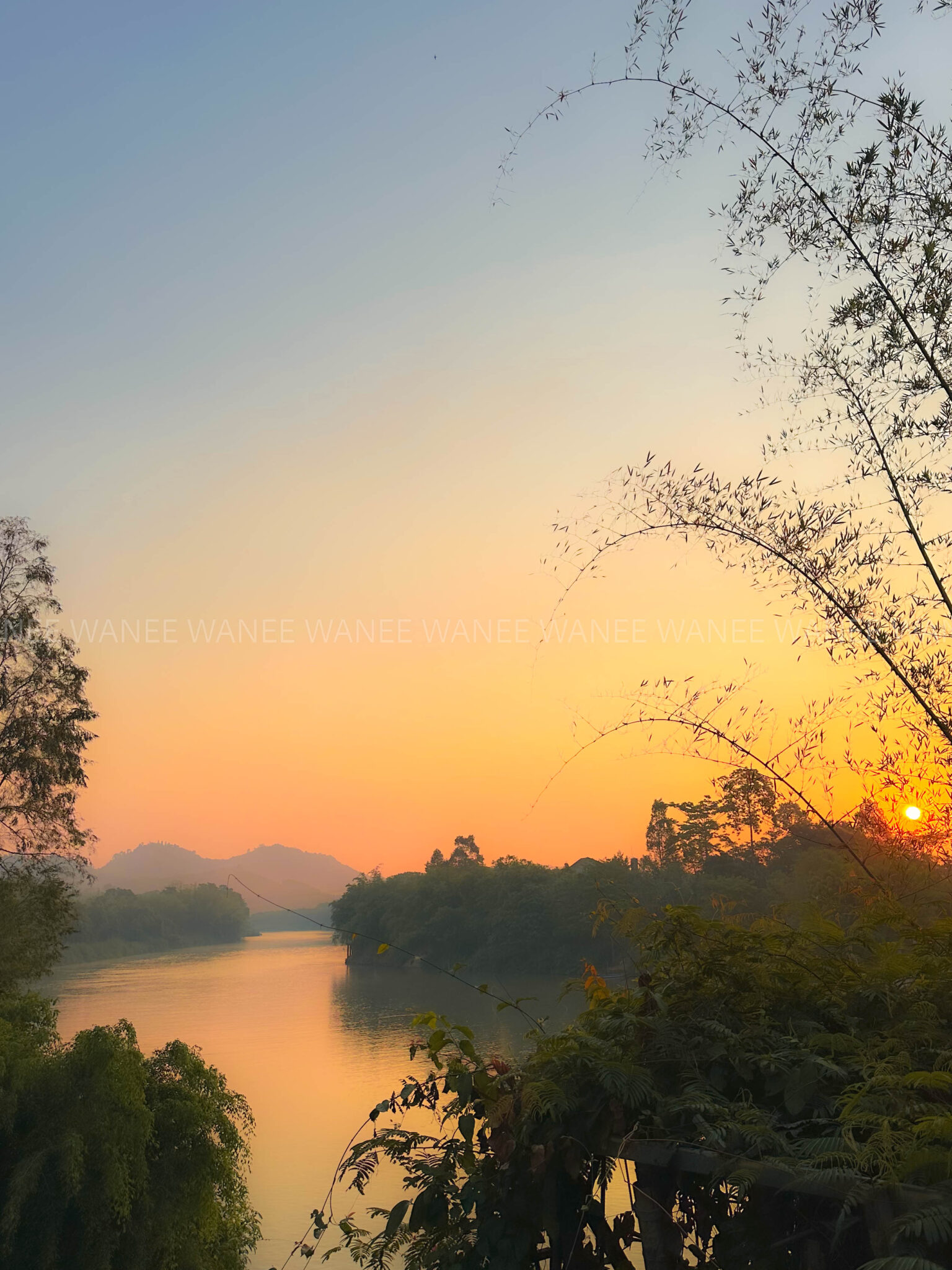

Successful birding in Cat Tien is shaped less by a fixed schedule than by target species, weather, forest structure, and the observer’s own pace. Some mornings begin at 05:30, when the first light filters through the canopy and birds become active. Photography-focused sessions may start closer to 06:30, when the light becomes more suitable. Rather than following one universal departure time, we adjust the morning around what we hope to find and the conditions the forest gives us.
A Morning in the Lowland Forest
Our mornings often begin along wider forest roads, where early light and better visibility make it easier to scan the canopy and roadside vegetation. As the sun climbs, we may move into narrower trails and denser understory, where more secretive species are likely to be encountered. The strongest mornings are not necessarily those in which we cover the most ground. They are the ones in which the route and timing match the birds.


Once inside the forest, however, seeing a bird is often harder than hearing one. Calls travel through the vegetation long before a bird gives us a clear view. A Scaly-breasted Partridge, for example, can remain almost invisible in the leaf litter despite its distinctive, long, soaring whistle. Gray-faced Tit-Babblers (Mixornis kelleyi) may move quickly and low through dense vegetation, while Black-and-buff Woodpeckers (Meiglyptes jugularis) can leave us searching for the right trunk or canopy section after hearing their calls or drumming.
So we stop, listen, and scan again.
When Waiting Becomes the Experience
Forest birding in Cat Tien is often a slow exercise. We walk short distances, stop frequently, and sometimes remain completely still for long periods. Moving closer to a calling bird can make it retreat, while staying quiet can give us the chance to see it on its own terms.
We experienced this particularly clearly one morning in early May, when we were guiding four guests from Singapore who were hoping to see a Bar-bellied Pitta. We heard its calls along a quiet trail and stopped. After about 15 minutes of waiting in the humid forest, the group was becoming restless and suggested moving on. We decided to wait a little longer.

Then a male Bar-bellied Pitta emerged from the leaf litter. Step by careful step, it moved through the shadows, flicking through fallen leaves with its beak in search of food. The bird was there only on its own terms, but the wait had given us the opportunity to see it.
Moments like this are why a quiet forest session should not be mistaken for an unsuccessful one. Heavy cicada noise, unsettled weather, intense midday heat, or the natural feeding rhythm of a species can all reduce visible activity. In Cat Tien, patience is not simply a virtue—it is part of the field method.
When the Forest Suddenly Comes Alive
Sometimes the opposite happens. A quiet stretch of trail can suddenly erupt into a mixed-species flock, with several birds moving through the vegetation at once. Amidst the flurry of activity and overlapping calls, a low, subtle note catches our attention.
Not every bird offers the same kind of opportunity. Orange-breasted Trogons (Harpactes oreskios) and bulbuls may be easier to observe where the canopy opens, along wider roads or on exposed branches. Pittas and partridges tend to require more patience because they remain low and secretive; hides can therefore be useful for selected targets where current operations and permissions allow.

(Harpactes oreskios)
Scanning a clear gap in the canopy, a vibrant flash of yellow stands out against the dense green leaves. It is an Orange-breasted Trogon (Harpactes oreskios), having just snagged a plump caterpillar and now contentedly enjoying its catch on an exposed branch. Unlike secretive ground species like pittas or partridges that demand endless patience or a dedicated hide, trogons often grant these vivid, open encounters—if you know where to look.
We pause, quietly bringing up our cameras to capture this unscripted moment. Every step, movement, and shutter press is kept slow and deliberate, careful not to startle such a timid bird.
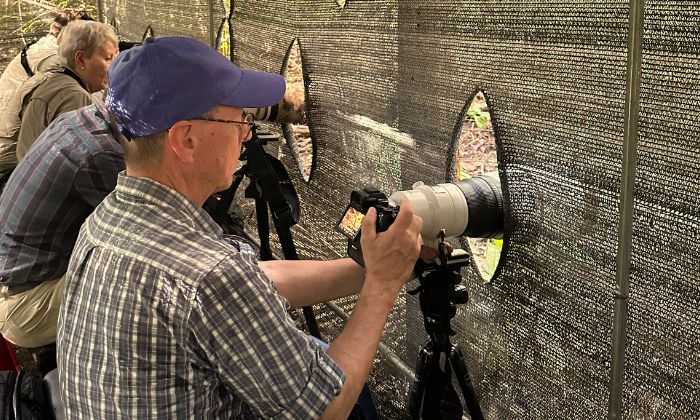

After spent the morning letting our feet and bodies tune into the forest’s rhythm, we transitioned into an afternoon that tested our patience.
A hide, however, remains just one specialized observation method. It cannot replace the experience of moving through the forest and learning to locate birds by sound, movement, habitat, and behavior. Canopy species generally require active scanning of roads, gaps, exposed branches, and suitable trees rather than waiting at ground level.

Lophura diardi
Yet for our guests focused on bird photography, a hide offers an energy-conserving option that boosts the chances of encountering key targets—where patience and a bit of luck are rewarded by a quiet, memorable appearance. It wasn’t until 16:30 that what we had all been waiting for finally emerged: a male Siamese Fireback step onto the trail, its strong legs vigorously turning over the leaf litter in what was likely its final feeding run before retreating for the evening.
Following the Conditions
Our journey happened to fall right during the shift between seasons, where the forest changed with every passing hour. Dense cloud cover flattened the light, while the intense heat and humidity made prolonged walking and standing demanding. Light showers periodically interrupted our observations, forcing us to pause under the canopy. Yet what initially felt like a setback quickly worked in our favor: as soon as the rain softened, the forest came alive again. Birds emerged to warm up and dry their wet plumage on dry, open perches, turning unpredictable weather into one of the most active moments of the trip—which is why our routes are adjusted according to field conditions, supported by observations recorded in the WANEE Seasonal Wildlife Guide.
Ethics also shape how we work. Playback is used sparingly and is completely off-limits during the breeding season. Outside sensitive periods, if used at all, it is only to assess presence or encourage a brief response, never to force an encounter. This reflects the broader approach outlined in our Responsible Wildlife Tourism in Vietnam principles.
The same consideration applies to physical comfort. Cat Tien’s trails are relatively flat, but heat and humidity can be relentless. For older guests or those with average fitness, we may shorten sessions, favour wider roads, and take more frequent breaks. A sustainable pace gives everyone a better chance to remain attentive when an unexpected bird finally appears.
Seeing the Forest Beyond the Checklist
By the end of a morning in Cat Tien, the most memorable moment is not always the rarest bird or the longest checklist. Sometimes it is the fifteen minutes spent waiting for a pitta to step into the open, the sudden appearance of a mixed flock, or the realisation that the bird we have been hearing all along is still somewhere beyond the leaves.
Cat Tien is a bird-rich forest, but that does not mean every species appears on demand. Encounters depend on timing, habitat, weather, patience, and sometimes luck. A successful morning is less about how many species we can collect and more about how well we learn to read the forest.
In Cat Tien, sometimes the best sighting begins with simply standing still.
Practical Takeaways
- Match timing to the target: Start times vary according to species, weather, group pace, and photography priorities.
- Listen before searching: Many forest birds are detected by call before they are seen.
- Slow down: Short walks, frequent stops, and waiting are essential to observing secretive species.
- Expect mixed flocks: Activity can appear suddenly and disappear just as quickly.
- Adapt to conditions: Weather, heat, humidity, cicada noise, and visitor pressure can affect observations.
- Use hides selectively: They can be valuable for selected pittas and partridges but are not a substitute for forest birding.
- Keep ethics first: Playback is restricted and never used simply to force an encounter.
- Keep the pace comfortable: Flat trails can still be demanding in Cat Tien’s heat and humidity.
- Keep expectations realistic: A species-rich forest does not guarantee a long personal checklist.
Continue Exploring
Plan Your Cat Tien Birding Time Around What Matters Most
Share your travel dates, target species, previous birding experience, photography priorities, and preferred pace. Go-WILD will assess which habitats, timing, and journey format are most realistic for your visit.
➔ Plan a Tailor-made Cat Tien Birding Journey
Explore Cat Tien Wildlife Tours
If you want to extend your trip beyond birding, you can also explore the broader wildlife of Cat Tien through a carefully paced Cat Tien wildlife tour.
