


No Guests, One Target
Not every afternoon in Cat Tien has guests on it. On October 23, 2026, it was just two WANEE guides, a long afternoon and a list of grassland species we wanted to find and learn better.
At the top of my list was the Asian Woolly-necked Stork. I had seen it in Cat Tien before, but only ever as a distant shape, very high and very far away. This time I wanted to see one properly.
Heat on the Forest Road
We set out at 3:05 p.m. from the grassland. It was 32°C (90°F), humid and heavy, with a harsh sun that had not yet started to soften.
For more than an hour, we walked slowly along the forest road, listening and scanning for the birds of open country. It was still the rainy season, and in Cat Tien that means a shower can arrive in the afternoon with very little warning. So at 4:12 p.m., instead of staying on the road, we cut across onto an overgrown trail that leads to a seasonally flooded grassland.
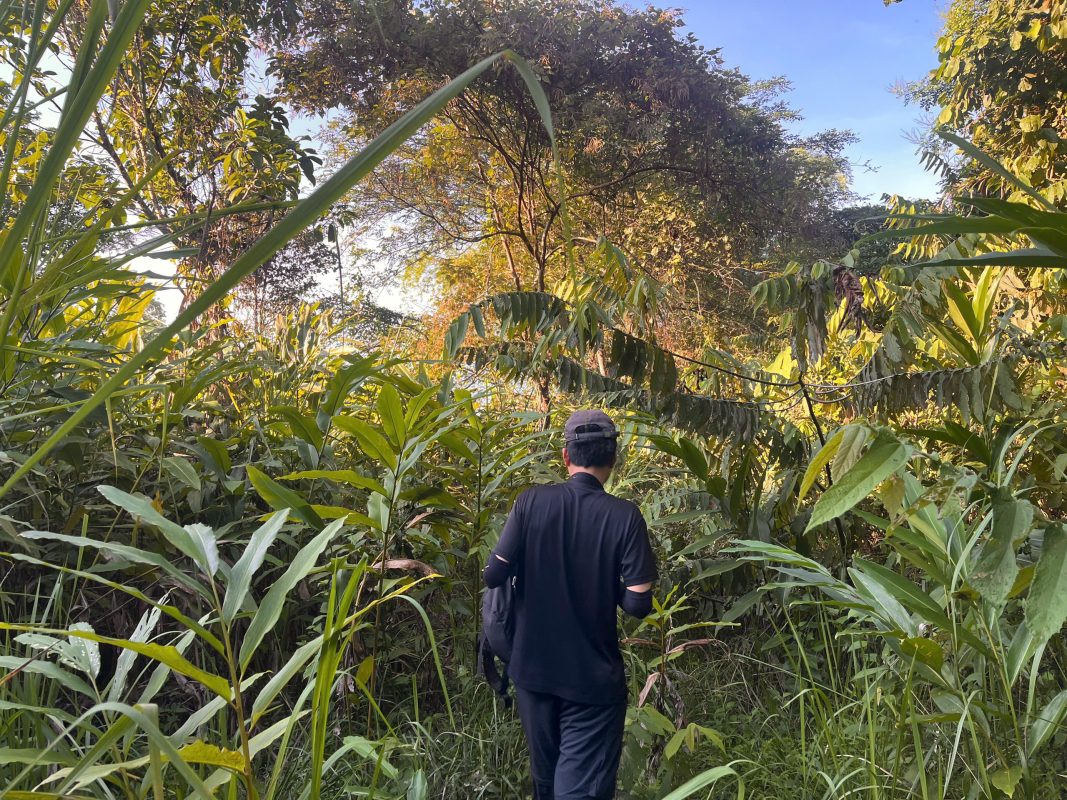
Most of Cat Tien, about 150 km north of Ho Chi Minh City, is forest and bamboo. Around a tenth of it is grassland and wetland that floods with the seasons, as water from the Dong Nai River spreads into the low ground of the park’s north. For storks and other large wading birds, that water means food.
Heads Above the Grass
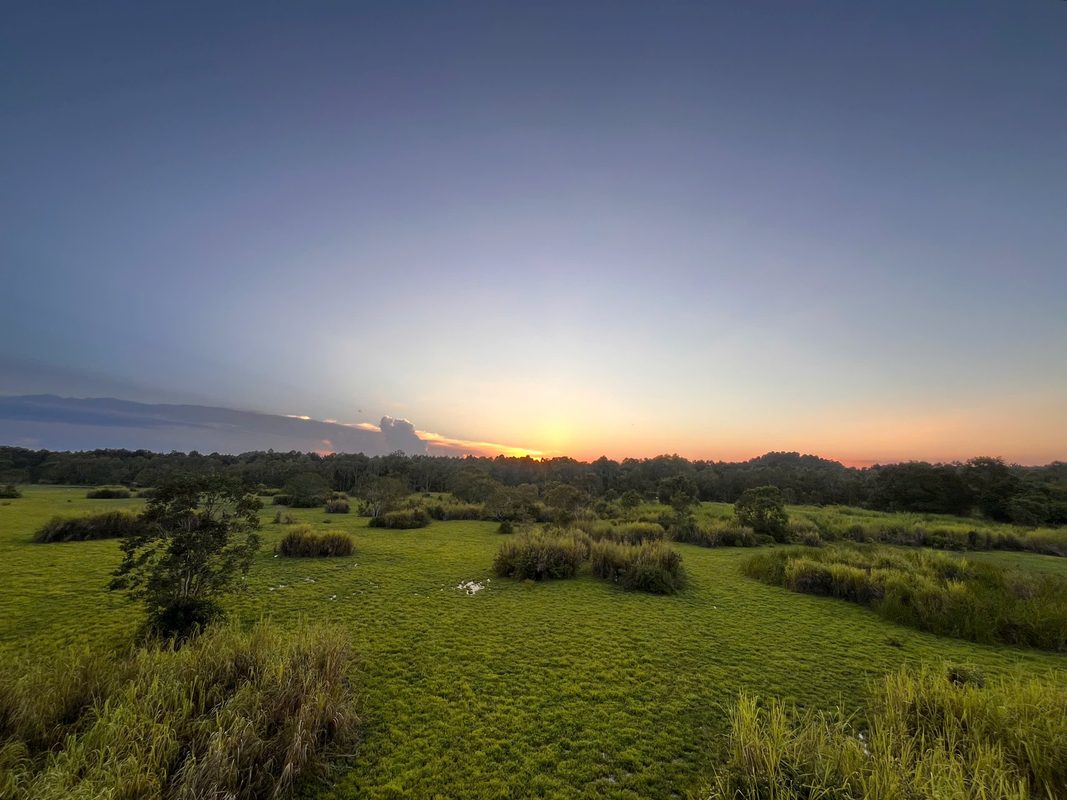
The flooded grassland opened in front of us. The grass stood so tall that the Sambar Deers feeding in it showed only their heads and backs, still grazing steadily. Great and Little Egrets rested on high branches along the edge.
This habitat was the reason for the route. My goal was to watch Lesser Adjutant and Asian Woolly-necked Stork walking and feeding at their own pace across the wet grass. I scanned the open ground. Then I scanned it again.
Nothing. No adjutant. No stork. Perhaps the sun was still too strong.
Waiting for the Evening Feed
We decided to stay. Late afternoon is when many birds try to fill up before they settle for the night. If storks were going to move through this landscape, the last hours of daylight were our best chance.
So we kept scanning. Each sweep of the binoculars came back empty. At 4:40 p.m., I made the call I had been putting off: we had given this place enough time, and it was time to move on.
My teammate lingered a little longer, still looking for something.
Breathless Beside the Lake
At 4:43 p.m., at a small lake beside the trail, two large birds came gliding in.
The first impression was of a bird of prey: big, black wings beating, with tips that looked as sharp as a raptor’s. Then they swung across in front of us, large-bodied, and I saw the neck. White, against all that dark.
We froze. For a few seconds neither of us moved, as if moving might end it. Then we raised our binoculars and checked everything we could: the way they flew, the white neck, the size. Asian Woolly-necked Storks. Both of them.
Just as I lowered my binoculars, they passed straight over our heads, only 3 to 4 m from where we stood looking up. Huge, and yet light in the air. They made no sound at all. The only sound was the two of us, quietly amazed.

From first sight to last, it lasted about 1 minute.
Seen that close, the Asian Woolly-necked Stork is mostly dark, a deep brown-black with a green-bronze sheen on the wings and breast, set off by a soft white neck and a white tail. It is a broad-winged bird that rides warm air to travel, and in Southeast Asia it tends to stay close to protected forests and wetlands. Males and females look alike, so I cannot say for sure whether these 2 were a pair, only that they moved together.
I have rarely felt so satisfied on a route. The whole afternoon had been planned around this one bird, and it arrived just 3 minutes after I had decided to give up. After hours under the Cat Tien sun, that single minute gave us all our energy back.
What a Scouting Afternoon Teaches
Afternoons like this are part of how we prepare for the days when guests are with us. We learn which trails reach which habitat, how the light and heat change what moves, and how long is long enough.
This one was a lesson in timing. The grassland looked empty in the hard afternoon sun, and it would have been easy to call it a day. The storks came late, low and silent, at the hour when birds feed before they roost. On a guided day in Cat Tien, those last hours of light are often worth staying for, even when the scope has shown nothing for a long time.
Out Into the Open Grassland
We kept walking toward the open grassland. Sambar were everywhere. More than 50 Red Collared-Doves moved through the open ground, 2 Green Peafowl were there, and the regular grassland birds were out too: Indochinese Rollers, Red-wattled Lapwings and Sooty-headed Bulbuls. We wrapped up at 6:06 p.m., 181 minutes after we had set out. It is the kind of habitat we love to share on our Vietnam birding tours.
But what I carried home was that one minute by the lake: 2 dark shapes, 2 white necks, and the silence as they passed above us.
I was the one ready to leave. The storks came for the one who stayed.
