
Standfirst
Responsible herp photography is not about creating a cleaner background or bringing the animal closer to the lens. It is about understanding the subject within its microhabitat, adjusting the photographer rather than the animal, and ending the encounter the moment behavior indicates stress. Across Vietnam, seasons and weather patterns vary by region, but the ethical principle remains absolute: the welfare of the wildlife always comes first.
Photographing the Animal—and Its Home
Vietnam supports an exceptional diversity of frogs, geckos, lizards, and snakes across its lowland rainforests, montane systems, karst formations, forest streams, and seasonal wetlands. A significant portion of these species are nocturnal, highly camouflaged, extremely weather-sensitive, and strictly restricted to highly specialized microhabitats.
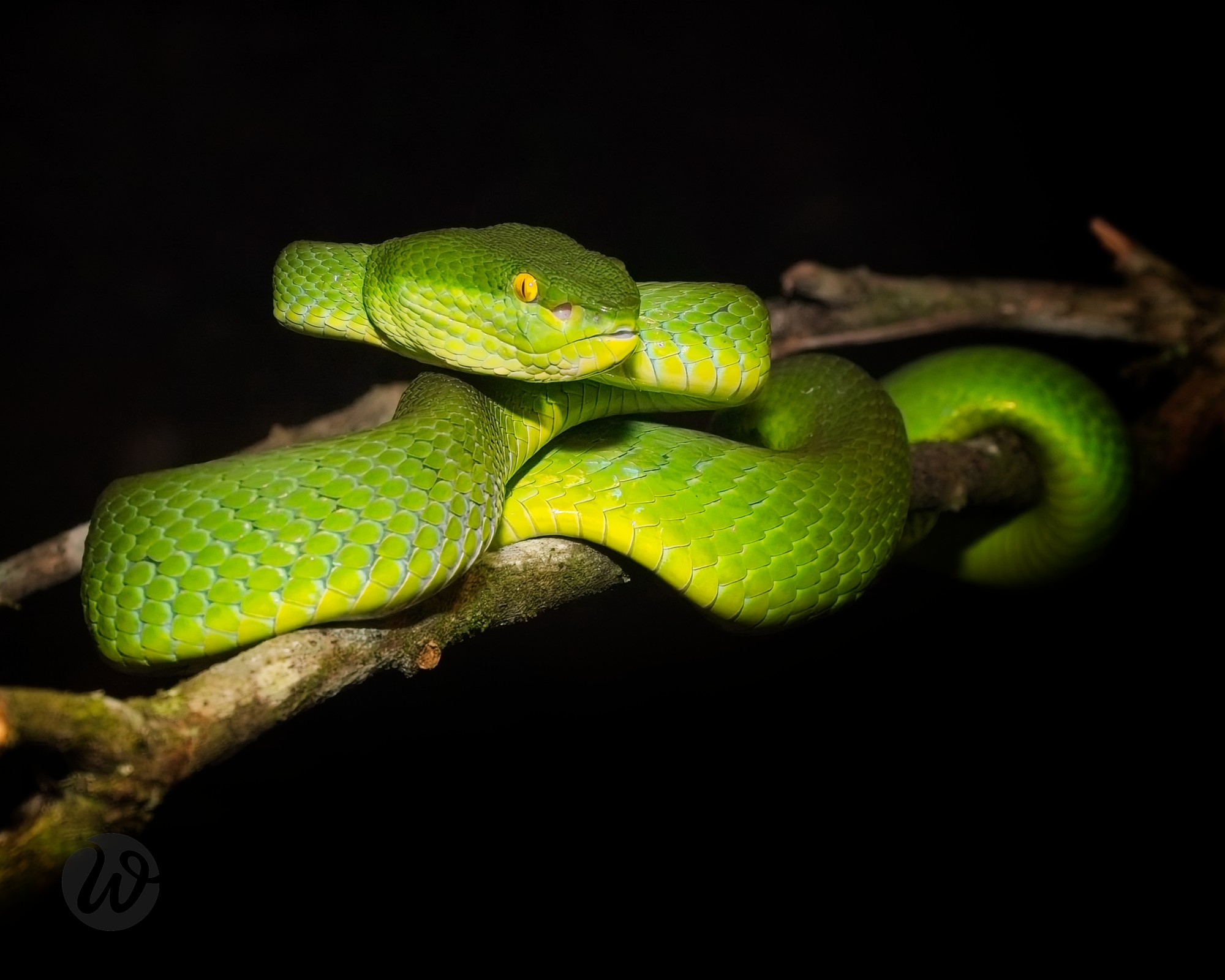
For photographers, this ecological reality creates an immediate temptation. A tree frog partially obscured by a broad leaf may seem easier to shoot if the leaf is clipped away. A pit viper coiled on the leaf litter might look more striking perched on a clean, lichen-covered branch. A gecko facing away from the lens might offer a better angle if nudged or turned. While these actions may enhance the immediate composition, they fundamentally alter the authenticity of the encounter. Responsible herp photography operates under a different directive: the image should document and help the viewer understand the animal’s natural home, never separate the animal from it.

A Nationwide Principle, with Regional Differences
While the ethical standards of herp photography are universal, their application must adapt to regional realities. Lowland parks like Cat Tien National Park provide structured environments where night walks are conducted along established trails, wet-season activity is high, and specialist guides can manage guest safety effectively. However, Vietnam does not experience a single, uniform herping season.
The country’s topography is divided into distinct climatic zones:
- The tropical southern lowlands, governed by the wet-and-dry monsoon cycle.
- The central coastal plains and high-altitude montane systems.
- The subtropical forests of the north, which experience cold, dry winters.
Consequently, “wet season” is a broad ecological concept rather than a national calendar event. Field trips must be calculated around local rainfall, elevation, night temperatures, target species, and specific breeding cycles.
Finding, Observing, and Photographing are Different Stages
A professional herpetological encounter is executed systematically through three distinct phases:
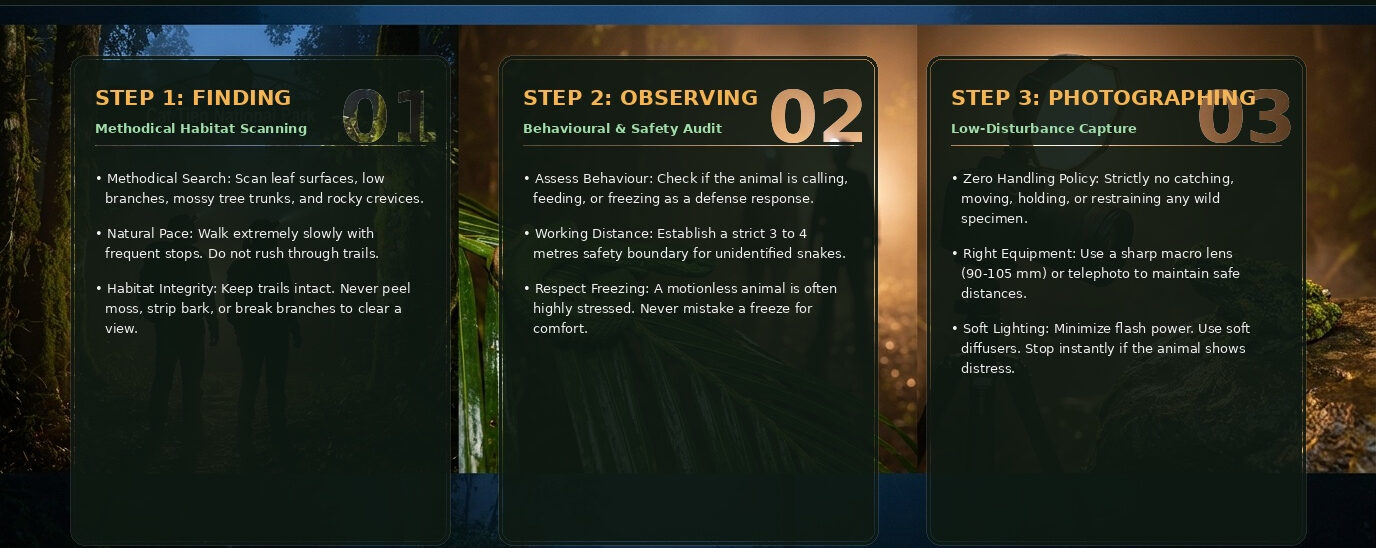
- Finding: The search is led slowly and methodically, using deep habitat knowledge to scan low branches, leaves, mossy tree trunks, rocky crevices, and wet depressions near stream banks.
- Observing: Once an animal is located, photography does not begin immediately. The guide and photographers must first assess the animal’s state. Is it resting, feeding, calling, or already vigilant? Is the footing safe for the observers, is the species venomous, and is it ethical to proceed?
- Photographing: Only after this baseline assessment is established do the cameras begin working. The animal’s natural position and behavior dictate the limits of the session. Some encounters permit a series of shots, while others offer only a fleeting look before the animal retreats into cover.


Zero Handling for Guests
Under no circumstances are travelers permitted to handle, catch, hold, touch, or move any reptile or amphibian. This zero-handling standard applies universally to frogs, geckos, lizards, and snakes.
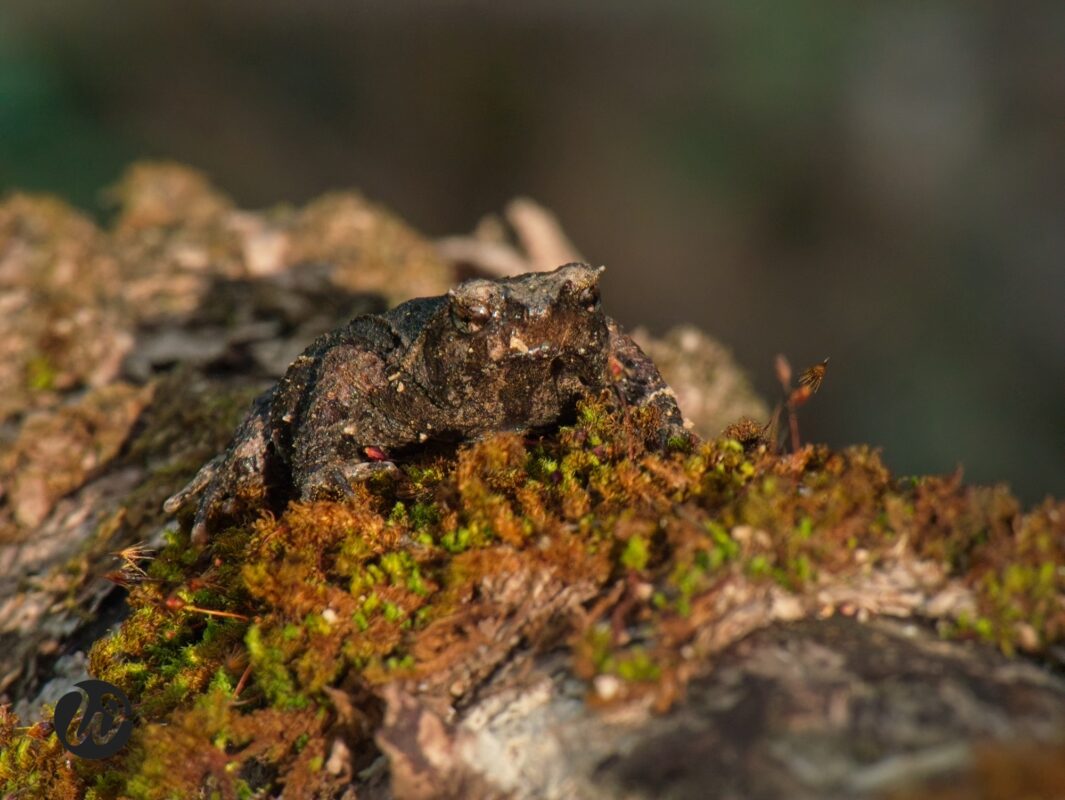
A common misconception in the field is that a motionless animal is relaxed or comfortable. For many herp species, remaining completely still (freezing) is a primary, stress-induced defensive response designed to avoid detection. The absence of a visible struggle or attempt to escape must never be misinterpreted as consent to touch or manipulate the subject.
Specialist Intervention is an Exception, Not an Attraction
There are rare, highly specific situations in which a qualified herpetologist may use professional equipment to interact with an animal. This includes removing an individual from an immediate physical hazard (such as a busy road), relocating a venomous snake from a high-use public area, or conducting authorized scientific and conservation research.
These interventions are operational necessities, not tourist attractions. Trained specialists perform them exclusively using specialized safety gear, strictly adhering to local park regulations. Such actions are never conducted to facilitate guest photography or to stage a dramatic shot.
Adjust the Camera, Not the Animal
When foliage blocks the line of sight, the burden of adjustment falls entirely on the photographer, not the subject. Ethical alternatives to moving the animal include:
- Lowering the camera angle to shoot through gaps in the leaves.
- Shifting the tripod slightly sideways.
- Using a different focal length.
- Waiting patiently for the animal to move or change posture naturally.
- Embracing a “habitat-rich” composition that tells a broader ecological story.
Underbrush must not be cleared, branches must not be broken, and shelter sites must not be dismantled. If a clean angle cannot be achieved without altering the environment, the correct professional outcome is to walk away without the photograph.
Natural Backgrounds are Part of the Record
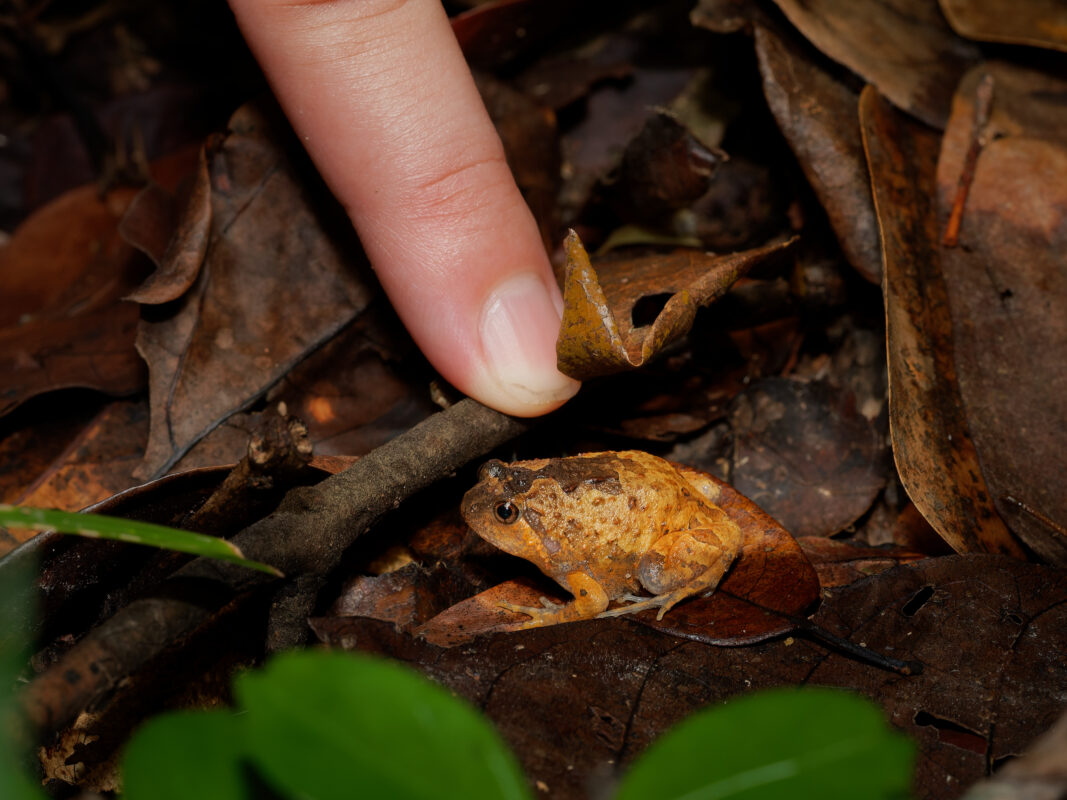
Damp leaves, decaying wood, mossy bark, tangled vines, and muddy stream banks are not visual distractions; they are vital scientific data. A natural image preserves crucial ecological context:
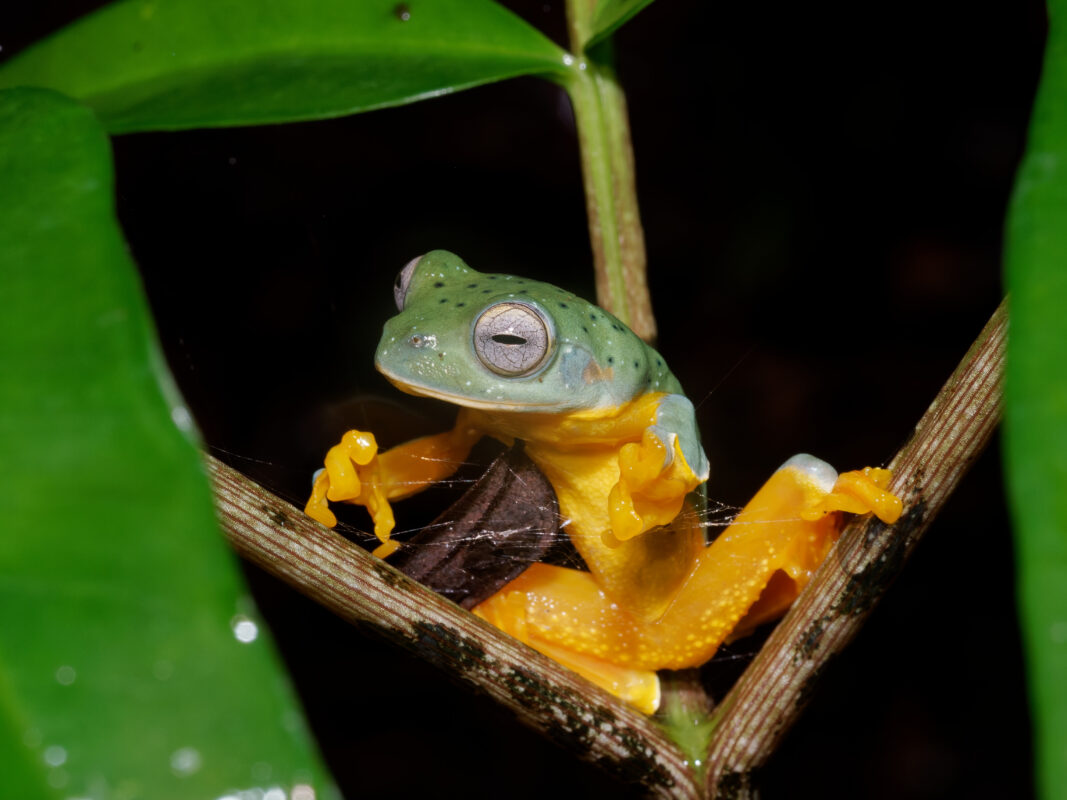
- How a tree frog selects a specific leaf surface to prevent desiccation.
- How a gecko’s skin texture replicates the bark of a particular tree genus.
- How a forest snake utilizes leaf litter to conceal itself from both prey and predators.
A clinically isolated portrait against a synthetic, staged background strips the animal of its biological identity. Genuine herp photography values the habitat as an inseparable extension of the subject.

Weather Shapes Opportunity, Not Certainty
Rain and high humidity are the lifeblood of amphibians and reptiles. Damp conditions trigger frog choruses, stimulate movement between feeding grounds, and initiate breeding cycles. However, weather is an indicator of potential, not a guarantee of sightings.
A night can remain completely quiet even after heavy rain. Factors such as a sudden drop in ambient temperature, strong winds that dry out the canopy, or regional seasonal shifts can keep wildlife inactive. Field operations must remain highly localized; a national dry-wet calendar is useless when navigating the microclimates of Vietnam’s mountain ranges.
Working Distance Comes Before Composition
There is no single “safe distance” that applies to every herpetological encounter. The appropriate boundary depends on the species, its size, toxicity, potential escape speed, and the complexity of the terrain.
When encountering an unidentified snake, safety dictates a highly conservative starting distance. A minimum starting boundary of three to four meters must be established immediately. From this position, the guide assesses the species and determines if observation can safely proceed, or if the group should back away.
Venomous Snakes Require a Different Standard
An encounter with a venomous species, such as a Malayan Krait (Bungarus candidus) or a Ruby-eyed Green Pitviper (Trimeresurus rubeus), is a safety operation, not a standard photography session.

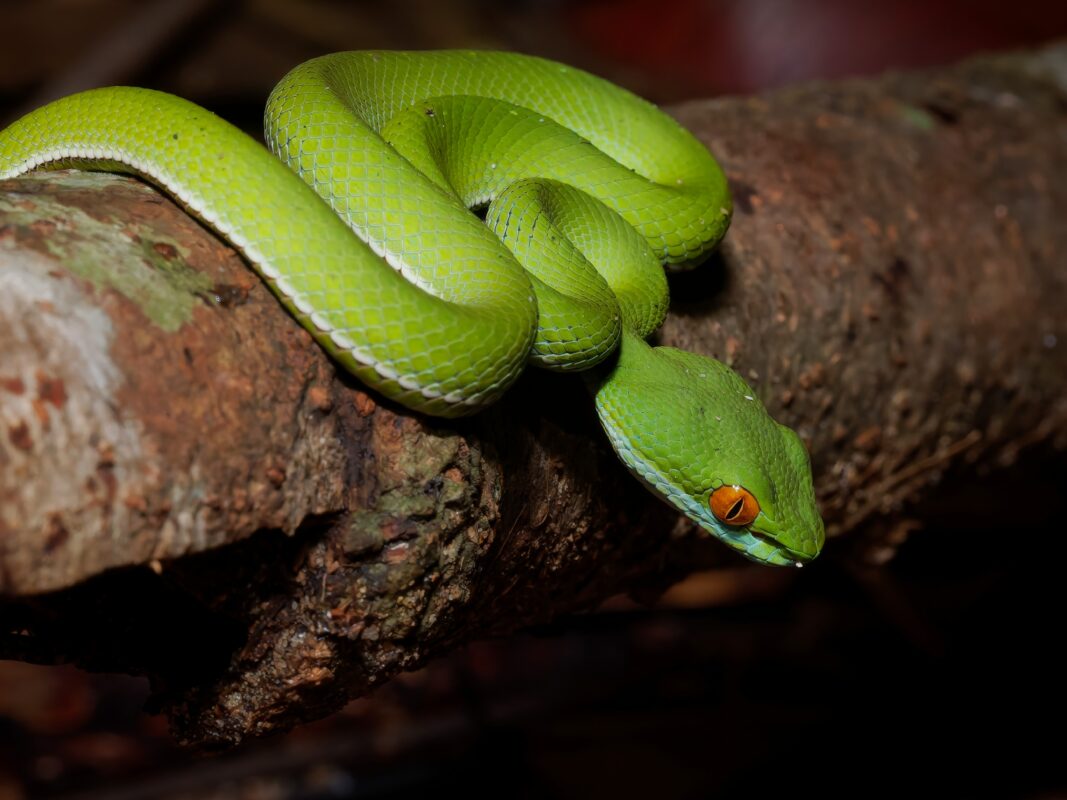
The guide maintains absolute control over the scene:
- Positioning guests strictly along the designated trail.
- Ensuring a clear, unobstructed escape route for both the snake and the observers.
- Managing light intensity to avoid triggering a defensive strike.
- Limiting the duration of the encounter.
Guests must never kneel beside an unidentified snake, block its path, attempt wide-angle close-ups, or provoke a defensive display for a more dramatic shot.
Equipment Should Remain Flexible
A dedicated macro lens in the 90–105 mm range is highly valued for its exceptional sharpness and close-focusing capabilities. It provides a comfortable working distance for harmless frogs and geckos.
However, equipment must adapt to the safety requirements of the subject, not the other way around. For venomous snakes or highly flighty lizards, telephoto lenses or zoom lenses are the correct choices, allowing the photographer to capture high-quality details from well outside the animal’s threat zone.
Artificial Light Should Be Minimized
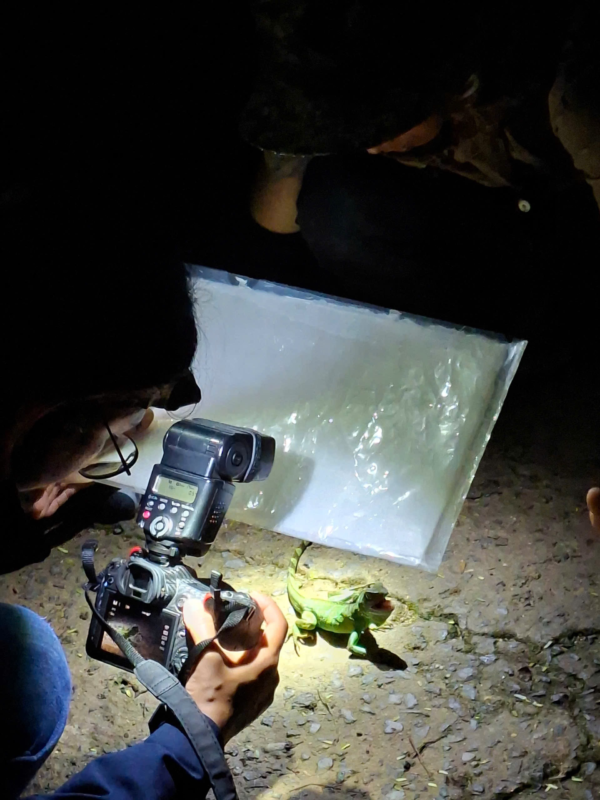
Night photography requires artificial light, but no illumination is entirely benign. Continuous high-intensity light can disrupt nocturnal vision, interfere with feeding, and expose camouflaged animals to predators.
The field team applies the following protocols:
- Utilize the lowest functional light intensity.
- Avoid focusing direct, unshielded beams onto the eyes of the subject.
- Incorporate diffusers to soften the flash.
- Coordinate flash use so the animal is not subjected to rapid, continuous strobe effects.
Red light may reduce immediate behavioral disturbance in some species, but it is not a universal shield. The intensity and duration of the light source remain the critical factors.
The Animal Decides the Duration
The session does not end when the photographer is satisfied; it ends when the animal says so. Cameras must be turned off immediately if the subject shows any of the following signs of stress:
- Repeated attempts to flee or find cover.
- Defensive posturing (coiling, body inflation, or opening the mouth).
- The interruption of natural calling or feeding behaviors.
Even when an animal remains perfectly still, observers must watch for subtle signs of stress, such as rapid throat movement (hyperventilating). The guide holds the final authority to terminate any session, regardless of whether guests have secured their images.
Habitat Integrity Matters
An ethical photographer protects the microhabitat as fiercely as the animal itself. Damage to the surrounding environment can destroy critical nesting, feeding, or sheltering sites.
The team must strictly avoid:
- Stepping into sensitive vernal pools or breeding streams.
- Trampling delicate riparian vegetation.
- Flipping rocks or logs without restoring them precisely to their original positions.
- Peeling back protective moss or stripping bark.
- Publishing high-precision GPS coordinates that could expose sensitive locations to illegal collectors.
Natural Encounters are Not Curated Encounters
A genuine field expedition is the antithesis of a controlled studio session. Travelers must enter the forest with realistic expectations. A typical night walk is characterized by:
- Animals partially concealed by thick foliage.
- Extremely short shooting windows before a subject moves.
- Saturated air, sudden rain, and fogged lenses.
- Long, exhausting searches that yield common species rather than rare endemics.
An imperfect, habitat-rich photograph is infinitely more valuable than a staged portrait. It stands as an authentic, ethical record of a wild animal living undisturbed in its natural world.
What Responsible Herp Photography Should Leave with You
The success of a night session is not measured by the pixel count of a portrait, but by the ecological understanding it inspires. An ethical photograph tells a story of relationships:
- The specific plant species chosen by a nesting frog.
- The moisture levels that make nocturnal activity possible.
- The safe distance required to observe wild behavior without causing fear.
By documenting animals exactly where they are found, photographers honor the integrity of Vietnam’s wild landscapes and support the conservation of these highly vulnerable species.


Practical Takeaways
- Zero-Handling Policy: Guests must never touch, catch, or move any reptile or amphibian.
- Camera Over Subject: Adjust the camera angle, focal length, or tripod position rather than manipulating the animal or its surrounding vegetation.
- Safety First: Maintain a minimum starting distance of three to four meters when encountering unidentified snakes.
- Low Impact Lighting: Minimize light intensity, avoid prolonged direct beams, and utilize diffusers to reduce flash harshness.
- Behavioral Boundaries: Immediately end the photography session if the animal displays signs of stress, defensive posturing, or repeated flight attempts.
- Habitat Preservation: Walk with care to avoid trampling breeding pools, crushing forest vegetation, or disturbing rock shelters.
Discover a More Responsible Wildlife Photography Experience in Vietnam
Responsible herp photography is about more than finding rare species or capturing the perfect image. Field conditions, animal behavior, habitat sensitivity, and the choices made by photographers and guides all shape the quality of an encounter. With Go-WILD, wildlife experiences are designed to prioritize observation, patience, and minimal disturbance while allowing guests to appreciate Vietnam’s remarkable reptiles and amphibians in their natural habitats.
If you want to explore Vietnam’s wildlife while respecting the species and ecosystems that make each encounter possible, discover our Explore Southern Vietnam Birding Tours and experience a field approach where responsible observation comes before the perfect photograph. And if you’d like some extra support in planning a smooth, well-guided trip, our team at WANEE is here to help you make it an unforgettable birding experience.