
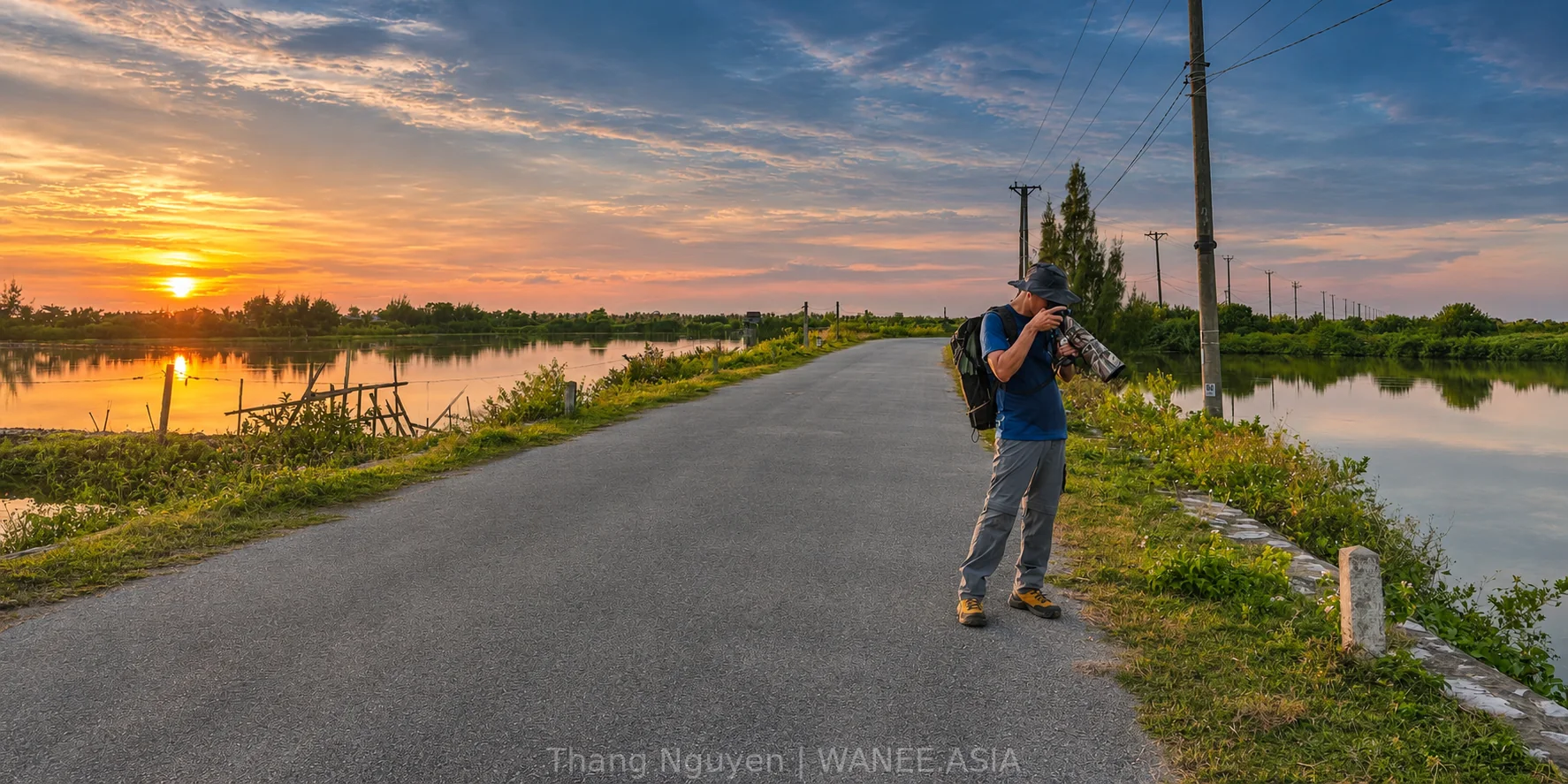

Four days between the wetlands of Xuan Thuy and the forests of Tam Dao
Conversations Along the Way
We left Hanoi early, although the city’s familiar traffic gave us plenty of time to talk.
Chew shared stories about rebuilding his family business, raising his children with opportunities to experience nature, and travelling to remote communities where he could connect more deeply with local people.
One story from his travels in Nepal stayed with me. It was a reminder of how unexpectedly life can change, and how deeply the people we meet along the way can remain in our memories
We talked about the uncertainties of life, and about the challenges of running a business while trying to pursue something meaningful and sustainable. I found myself recognising parts of my own journey in his.
After more than a decade guiding birding and wildlife trips across Vietnam, looking for birds has become a familiar part of my life. But the people I meet, and the stories they bring, continue to surprise me.
That morning, the drive felt shorter than expected.
Xuan Thuy – A Quiet Refuge for Migratory Birds
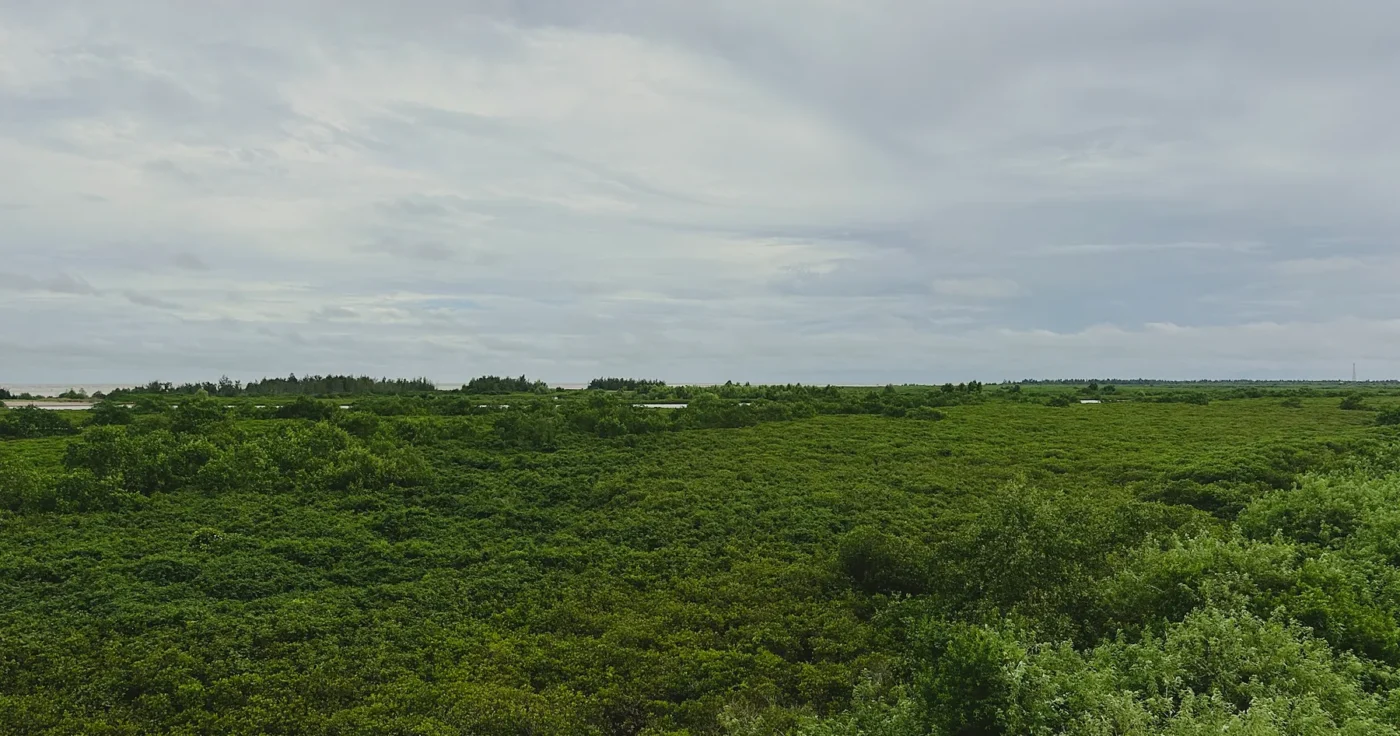
Xuan Thuy is not an obvious destination for most visitors to Northern Vietnam. Its landscape of fishponds, mudflats, mangroves, and waterways may seem rather ordinary at first.
But for migratory waterbirds travelling along the East Asian–Australasian Flyway, these wetlands are an important place to rest and feed.
I met my friend Truong, who has worked with birds and the wetlands for more than a decade. Over tea, we caught up on recent changes in the area and what the migration season might bring.
Chew and I had hoped to witness migrating raptors moving with the wind, perhaps a steady passage of birds overhead. But the sky was quiet. There were no impressive flocks, only waterbirds feeding across the wetlands.
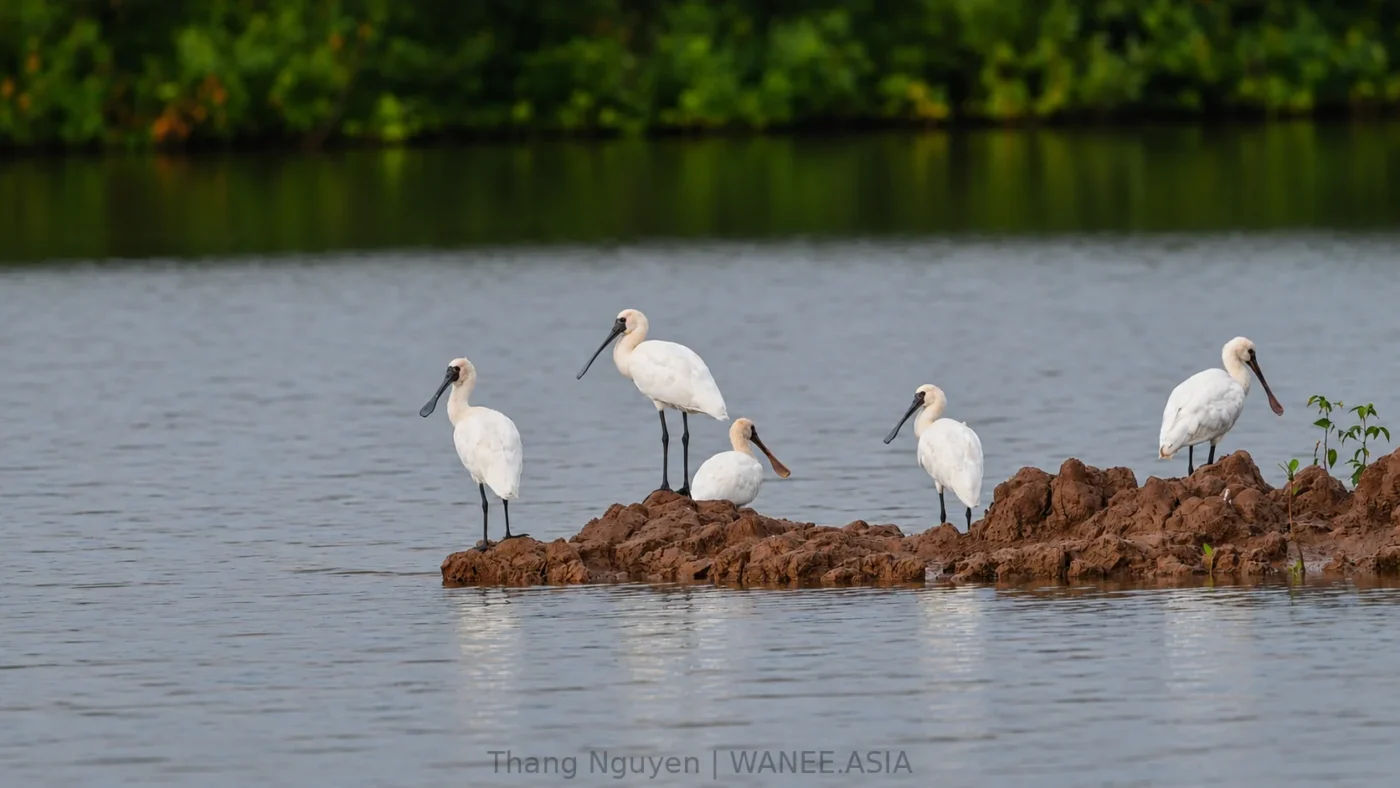
Our attention eventually turned to the Black-faced Spoonbill.
We spent much of the afternoon searching different wetland areas. Finally, we found five individuals resting together in a quiet part of the marsh.
They were surprisingly relaxed. For more than twenty minutes, we watched and photographed them before they took off towards the coast to feed.
After hours of searching, those few minutes felt particularly rewarding.
We recorded many other species, but what stayed with me was the peaceful atmosphere of the wetlands and the sight of those five spoonbills.
That evening, we stayed at a newly opened homestay with comfortable rooms, excellent food, and a welcoming owner. Although his background was in another business, he enthusiastically encouraged visitors to go birdwatching — even recommending places for us to visit.
It was nice to see someone so proud of the nature around his home.
Tam Dao – Fifteen Minutes Can Change an Afternoon
The next morning, after a short sunrise birding session in Xuan Thuy, we headed directly to Tam Dao, hoping to make use of the remaining daylight.
Tam Dao was crowded with weekend visitors, but we reached the forest with about an hour of light left.
Almost as soon as we stopped the car, we heard treepies and noticed small birds moving through the vegetation. Unfortunately, most were hidden behind branches, making photography difficult.
With the light fading, I suggested waiting beside a small stream where birds sometimes come to bathe.
For a while, nothing happened.
Then, during the final fifteen minutes, the birds arrived. Only four species, but enough to give us some lovely photographic opportunities.
We could hardly have asked for a better end to the afternoon.
Chew also enjoys landscape and street photography, but we decided to skip exploring the town and return to our accommodation. The following day would be a full day in the forest.
A Difficult Morning, Then a Little Luck
The next morning, we walked slowly through the forest, listening and watching for movement.
The weather was reasonably good, but the birds seemed unusually uncooperative. Instead of moving in large mixed flocks, many appeared individually or in small groups.
We found most of our target species, but getting satisfying photographs was another matter.
By lunchtime, we were tired. We stopped for a light meal and rested beside a quiet forest road, with little around us except the sounds of the forest.
Then we decided to try again.
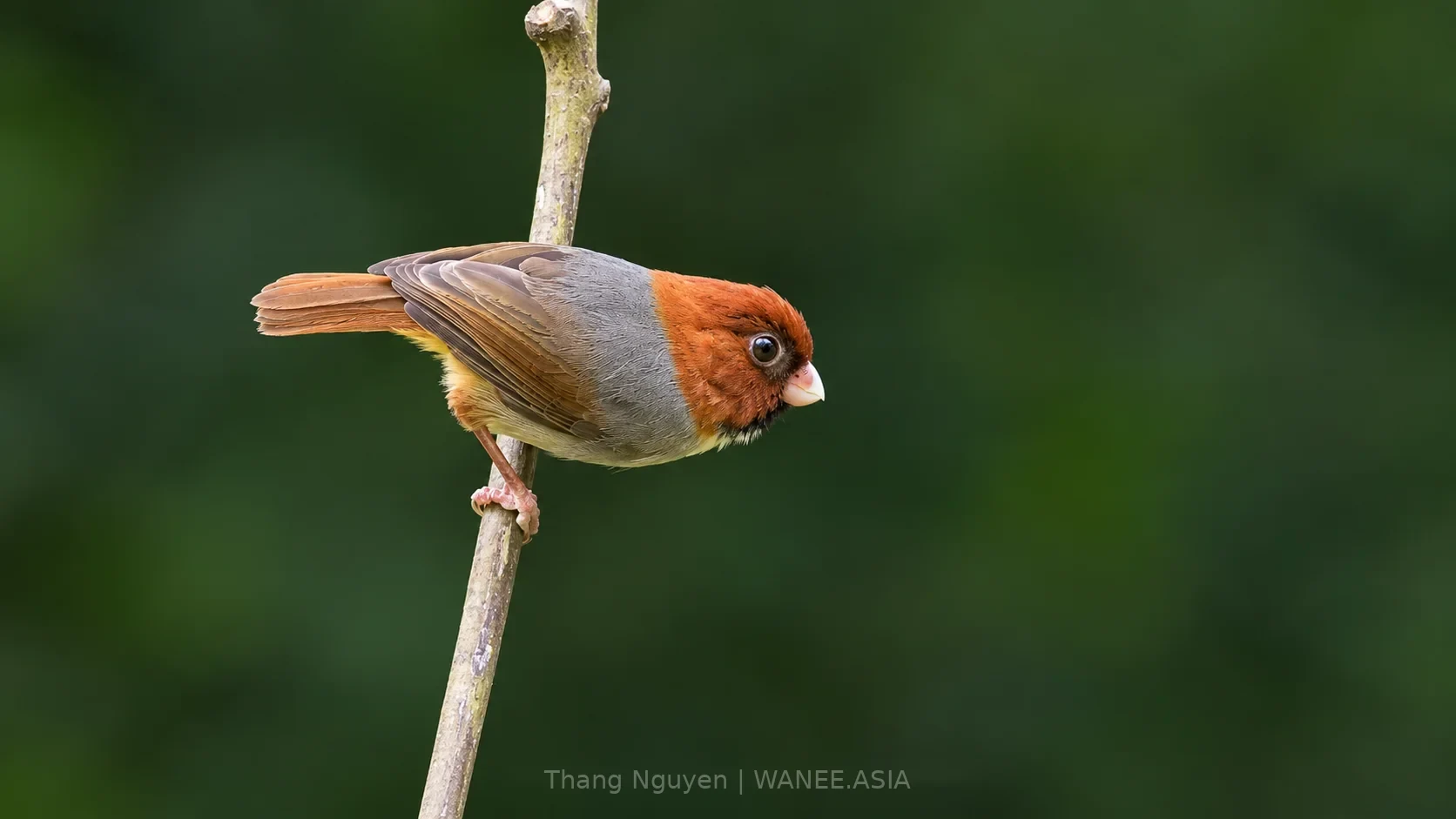
A group of parrotbills became active around a stream, feeding among the bamboo. We followed their movements, searching for a clear opening through the vegetation.
Finally, one gave us a beautiful full-body view.
I remember how quickly our mood changed. After a morning of difficult photography, that single opportunity brought our energy back. We went on to photograph several more species before the afternoon ended.
Sometimes, one cooperative bird is all it takes.
A Lively Farewell from the Forest
On our final morning, we had only about two hours before leaving for the airport.
We chose a nearby forest area, hoping to make the most of our limited time.
This time, Tam Dao was wonderfully lively.
Laughingthrushes moved through the vegetation, magpies appeared, and we had several opportunities to photograph birds in beautiful natural surroundings.
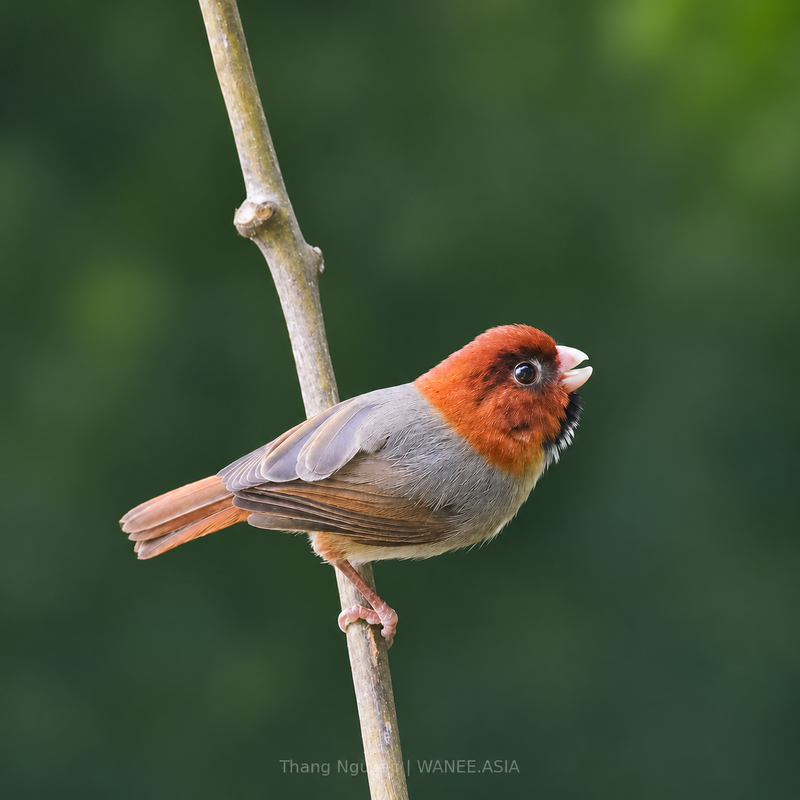
(Suthora davidiana)
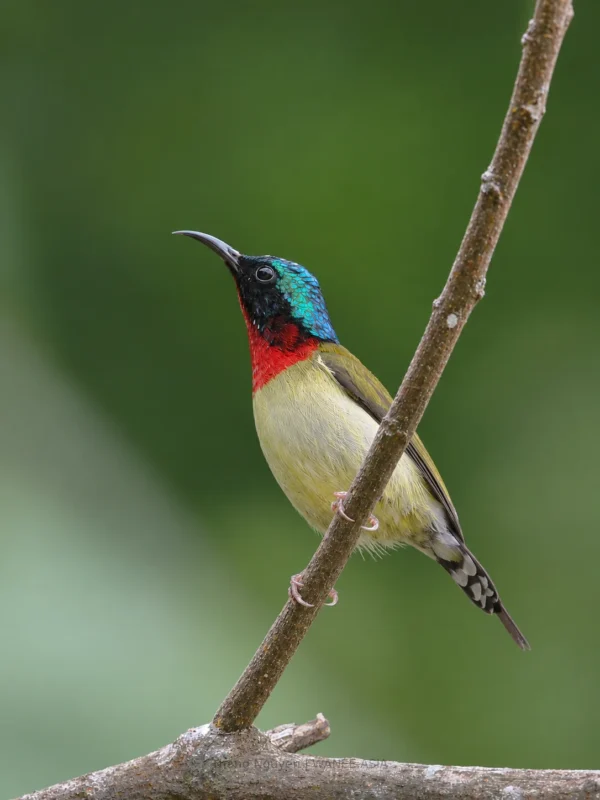
(Aethopyga christinae)
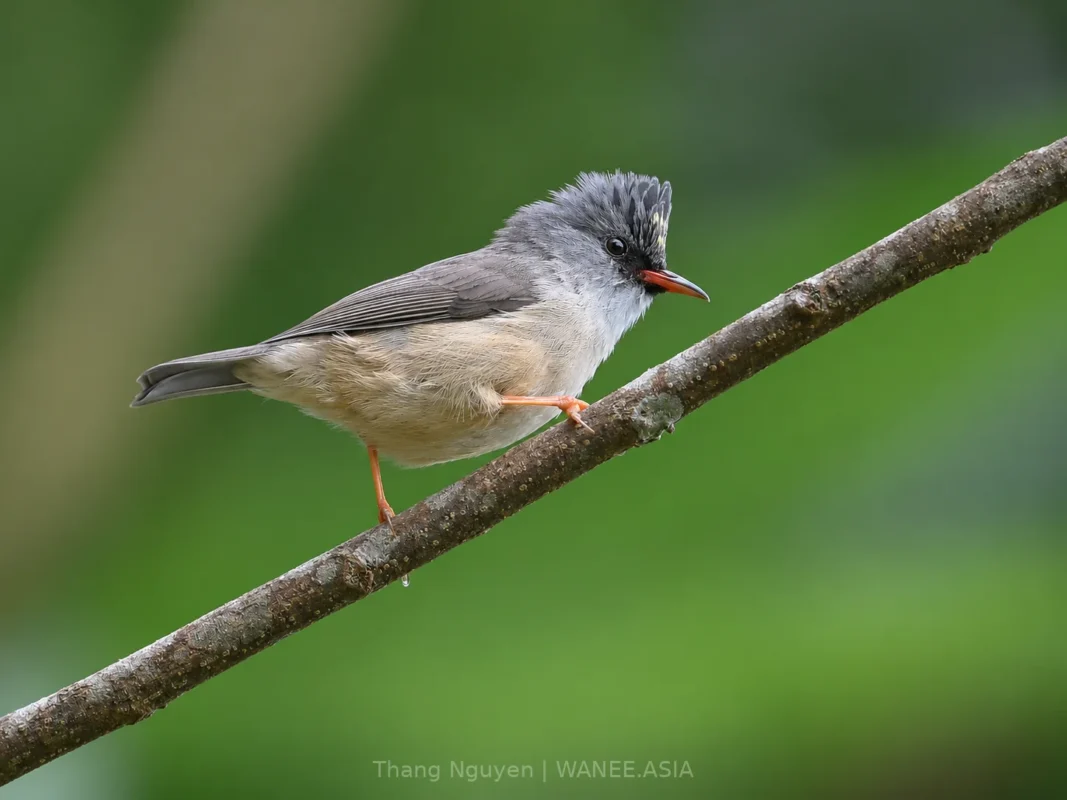
(Yuhina nigrimenta)
Then the mixed feeding flocks finally arrived.
After the previous day’s difficult searching, it was a pleasure to follow the birds as they moved together through the forest.
Chew focused on finding good photography angles. I spent much of the time simply watching them.
Eventually, it was time to leave.
I dropped Chew off for his flight, but still had a little time before my own departure to Ho Chi Minh City. So I made one more stop in the surrounding fields to look for migrating birds.
And there they were.
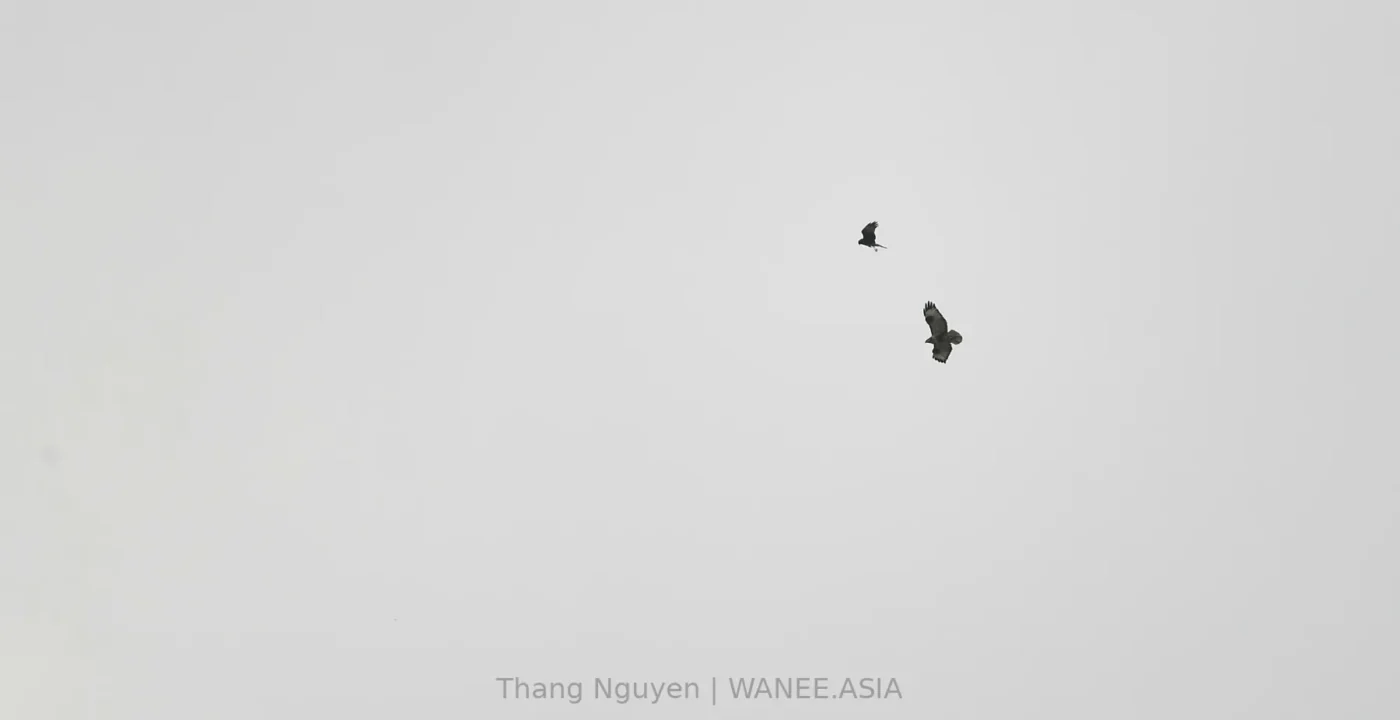
Small groups of newly arrived migrants were feeding and calling, while several migrating raptors passed through. I was particularly pleased to find Yellow-breasted Bunting.
Only then did I head for the airport.
What Stays With Me
I began writing these notes on my flight back to Ho Chi Minh City.
I thought about the five Black-faced Spoonbills, the parrotbills among the bamboo, and the lively forest on our final morning.
But my thoughts also returned to Chew’s stories, the cup of tea with Truong, and the homestay owner who was so eager to tell visitors about birdwatching.
None of those moments had been written into our itinerary.
After all these years, I still enjoy the excitement of finding a bird, especially when it has made us work a little harder than expected. Yet somewhere along the way, I have come to appreciate the quieter parts of these journeys just as much.
The conversations between destinations. The people we meet. The occasional pauses when there is nothing particular to do except sit and enjoy where we are.
Perhaps that is what I mean by Touch of Travel.
Four days, two very different landscapes, many birds, and a few conversations I will remember for a long time.
Written on the flight back to Ho Chi Minh City.
Extend This Field Note into a Birding Journey
Northern Vietnam offers a rewarding combination of coastal wetlands and mountain forests, even within a short journey.
This four-day route connects Xuan Thuy’s migratory waterbird habitats with Tam Dao’s forest birding opportunities, making it a suitable extension for birders and wildlife photographers visiting Hanoi.
WANEE Go-Wild can tailor the journey around your travel dates, target species, photography interests, and preferred pace, with private transport and specialist guiding.
Plan your private Northern Vietnam birding journey with WANEE Go-Wild.