

How to photograph birds in Cat Tien is a common question for wildlife travelers, because Cat Tien National Park is one of Vietnam’s best lowland forest destinations for bird photography. With more than 350 bird species, diverse habitats, and steady year-round activity, the park attracts amateurs, enthusiasts, and serious photographers from around the world.
Photographing birds in Cat Tien, however, is very different from shooting in open wetlands or grasslands. Light shifts quickly, the forest is dense, many species stay high in the canopy, and rare birds like pittas or pheasants require a more targeted approach.
This guide gives you a clear understanding of how to photograph birds in Cat Tien by helping you choose the right style, equipment, timing, and strategies for your goals.
This difference is not accidental. It is rooted in the ecological structure of Cat Tien’s lowland forest system.
Strategy Matters More Than Equipment in Cat Tien’s Forest System
In Cat Tien’s dense lowland forest, bird photography is not a gear-driven activity – it is an ecological reading exercise.
Unlike open wetlands where visibility creates spontaneous shooting opportunities, Cat Tien’s layered canopy, vertical forest structure, and seasonal humidity shifts limit exposure windows. Birds appear briefly, often partially obscured, and frequently at unpredictable heights.
Because of this, success depends less on lens length and more on the ability to anticipate movement, understand microhabitats, and position yourself before the moment unfolds.
In this forest system, prediction consistently outperforms reaction.
These shifting conditions are part of broader natural cycles that constantly reshape the forest experience for wildlife observers. See: Why Cat Tien Feels Different Every Visit: 4 Natural Cycles That Shape the Forest
Understanding Yourself: Amateur vs Serious Bird Photographers
Choosing your approach – casual exploration or focused species targeting – directly affects how you photograph birds in Cat Tien, especially in dense forest environments where behavior and light change fast.
A. Amateur / Casual Bird Photographers
“I love birds and want good photos, but not too technical.”

Typical profile:
- Traveling with family or friends
- Using a bridge camera / 100–400mm / 200–600mm lens
- Happy with any species
- Enjoys walking, exploring, and taking photos spontaneously
Best approach:
- Stick to easy-access trails: Botanical Garden, Tung Tree, Heaven’s Rapids
- Combine morning walks + mid-morning scanning along the river
- Book a half-day or full-day birding tour to increase sightings
- Accept that forest birding requires patience and silence
Pros:
- You will enjoy a big variety of species—bulbuls, drongos, woodpeckers, broadbills, sunbirds
- Easy, relaxing experience
- Great introduction to forest birding
Limitations:
- Harder to get clean shots of shy species (pittas, pheasants, trogons)
- Forest background and low light may limit image quality
B. Serious / Dedicated Bird Photographers
“I travel specifically for bird photography and I have target species.”

Typical profile:
- 400mm–600mm f/4 or f/5.6 lenses
- Full-frame mirrorless or DSLR
- Comfortable with low-light shooting, manual exposure, tracking
- Has a target list or focuses on certain families:
- Pittas
- Broadbills
- Kingfishers
- Hornbills
- Pheasants (rare)
- Forest raptors
Best approach:
- 3–5 days focused on specific trails
- Spend early mornings on target-site stakeouts
- Use bird hides for pittas and skulkers
- Combine forest-edge scanning with inside-forest searching
- Go with a specialized bird guide for call detection & microhabitat knowledge
Pros:
- High-quality shots
- Higher chance of rare species
- Deep forest immersion
Limitations:
- Requires patience
- Weather-sensitive
- Best results require early starts & long days
Why Forest Bird Photography Works Differently Here
Cat Tien is a dense lowland dipterocarp forest system. This ecological structure shapes bird visibility in several ways:
- Layered canopy limits light penetration, forcing higher ISO and strategic positioning.
- Vertical stratification means many species remain mid- to upper-canopy.
- Edge effects increase activity along rivers and clearings.
- Seasonal humidity shifts influence vocal activity and breeding behavior.
- Leaf litter depth determines ground bird detectability (pittas, partridges).
Because birds are rarely exposed for long periods, photographers must anticipate perching patterns, feeding routes, and call responses rather than reacting passively.
In Cat Tien, prediction beats reaction.
Three Bird Photography Styles in Cat Tien
Each style suits different personalities and goals.
A. Walk-and-Shoot (Exploration Style)
Ideal for beginners learning how to photograph birds in Cat Tien casually
This relaxed approach is great for travelers who simply enjoy photographing birds while exploring Cat Tien’s easy trails. It’s also a comfortable entry point for anyone interested in forest bird photography in Vietnam.


What it looks like:
- Walk slowly along trails
- Stop when hearing bird calls
- Photograph what appears naturally
Best trails:
- Botanical Garden
- Giant Tung Tree Loop
- Heaven’s Rapids / Thac Troi
- River Trail (near HQ)
Expected species:
Bulbuls, barbets, drongos, woodpeckers, flowerpeckers, trogons (if lucky), broadbills.
Strengths:
- Relaxed, flexible
- Great for landscape + bird combos
- Plenty of variety
Weaknesses:
- Hard to get rare species
- Forest cover means difficult lighting
B. Bird Hide Photography (Waiting Style)
Perfect for serious photographers & people targeting specific species
Bird hides offer the best chance to capture shy forest species at close range. This method is ideal for photographers who want cleaner backgrounds and better control of light – two major advantages when working in Cat Tien’s dense forest.

Best for:
- Pittas
- Pheasants (rare)
- Partridges
- Ground babblers
- Kingfishers
- Some forest pigeons & doves
Why hides work:
- These species avoid open trails
- They move quietly in leaf litter
- Light is controlled
- Background is clean and predictable
- You can get full-frame shots
Requirements:
- 400mm–600mm lenses
- Tripod or monopod
- 2–4 hours of patience
- Silence & camouflage
- A guide who knows active locations
Example Species (possible with hides):
- Blue-rumped Pitta
- Bar-bellied Pitta
- Germain’s Peacock-Pheasant (rare, seasonal)
- Orange-breasted Trogon
- Banded Kingfisher
C. Target Species Approach (Professional Strategy)
This strategy suits photographers with a clear target list. It combines short walks, stakeouts, and hides to maximize encounters with harder species. Knowledge of local habitats and behavior plays a key role in successful bird photography here.


How it works:
- Create a target list (3–10 species)
- Map microhabitats where each species occurs
- Plan daily schedule around light + behavior + weather
- Combine:
- hides
- short walks
- stakeouts
- call identification
- forest-edge scanning
- Modify plan hourly based on real-time conditions
Example target lists:
List A (Forest Classics):
- Orange-breasted Trogon
- Banded Kingfisher
- Black-and-red Broadbill
- Dusky Broadbill
- Blue-rumped Pitta

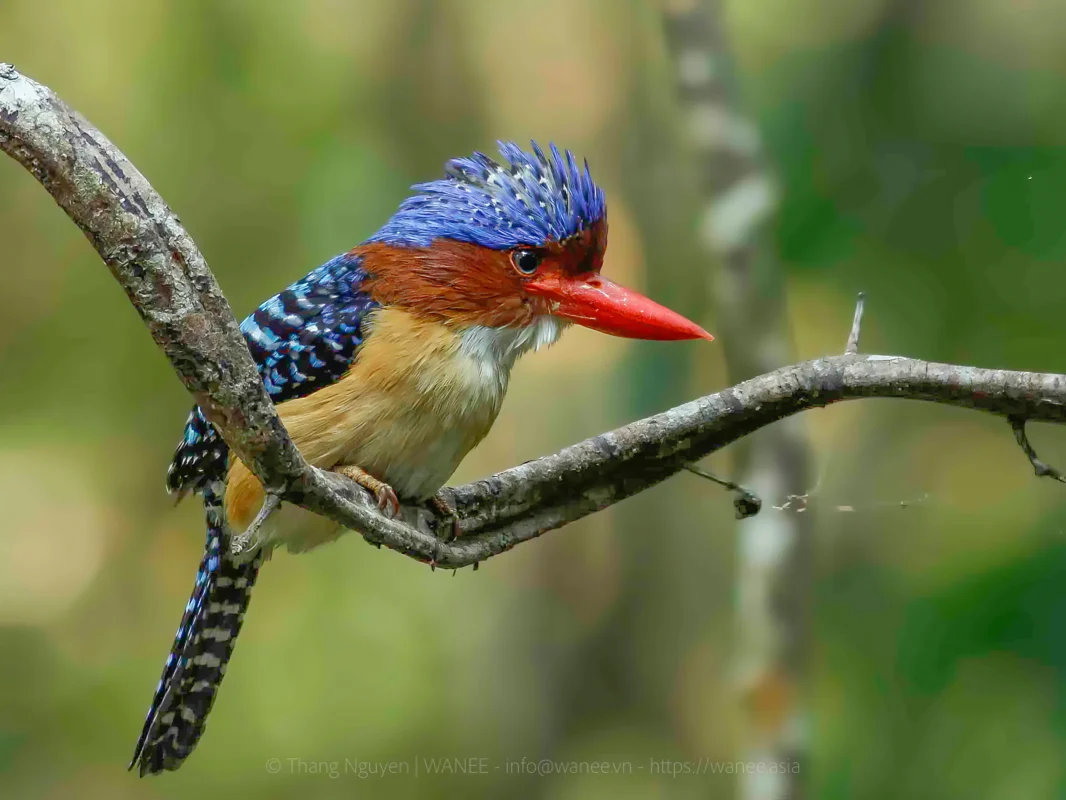
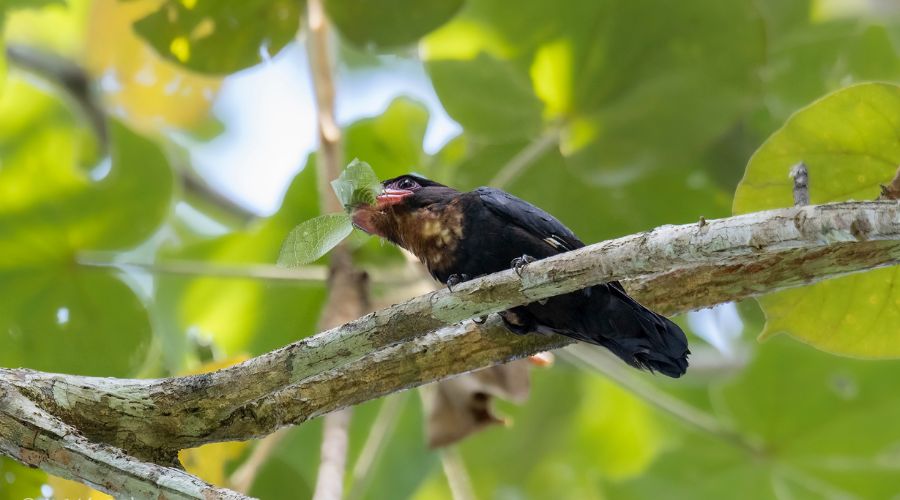
List B (Hard Targets):
- Bar-bellied Pitta
- Black-and-red Broadbill nest (seasonal)
- Germain’s Peacock-Pheasant
- Forest raptors
- Orange-necked Partridge


Why guides matter:
Forest bird photography relies heavily on:
- Knowing active territories
- Understanding seasonal calls
- Reading weather patterns
- Predicting perching behavior
- Locating hide-friendly sites
A professional bird guide increases your hit-rate dramatically.
For a complete overview of recorded bird species in the park, see Birds of Cat Tien NP – Full Bird List.
Understanding Cat Tien’s Light, Weather, and Seasons
☀️Dry Season (Dec–Apr) → Best overall for bird photography in Cat Tien
- Clean visibility
- Less canopy drip
- Birds more vocal
- Better morning light
- Great for hornbills, broadbills, and gibbons (bonus subjects)
🌧️Early Wet Season (May–Jul) → Peak activity for some species
- Excellent for kingfishers
- Good pitta activity
- Wet vegetation makes colors vibrant
- Afternoon storms can limit shooting windows
🌧️Late Wet Season (Aug–Oct)
- Bird activity mixed
- Trogons and broadbills improved
- Forest is lush → beautiful backgrounds
🌦️Transition (Nov)
- Good balance
- Less rain
- Forest still green
- Great for general birding
To better understand how the forest transforms structurally between wet and dry periods, explore Rainy Season vs Dry Season: Two Completely Different Forest.
How Many Days Do You Need?
Amateurs:
2–3 days
- Enough for casual walks, river trails, and a birding morning
Serious photographers:
3–5 days minimum
- Forest birding needs time
- Pittas require patience
- Weather can change quickly
Photographers targeting rare species:
5–7 days
- Peacock-pheasant
- Forest raptors
- Multi-hide portfolio
Best Locations for Bird Photography in Cat Tien
1. Botanical Garden Trail (HQ)

- Easy, quiet, many perching birds
- Good for beginners
- Broadbills & trogons possible
2. Heaven’s Rapids & River Edge


- Great morning light
- Kingfishers, hornbills, woodpeckers
- Ideal for walking photographers
3. Forest-edge Grassland


- Raptors
- Bee-eaters
- Drongos & bulbuls
4. Specialized Bird Hides


- Pittas, partridges, deep forest species
- Best light control
- Clean backgrounds
5. Gibbon Habitat Area

- Combines primates + birds
- Good morning calls
- Broadbills possible
Technical Tips for Forest Bird Photography in Cat Tien
Camera Settings
- Shutter: 1/1000 for moving birds, 1/500 for perched (special for pitta with low light condition could be 1/50-1/100)
- Aperture: f/4–f/5.6 to blur background
- ISO: 1600–6400 (forest is darker than you think)
- AF: Eye AF or Zone AF
- Drive: High-speed burst
Techniques
- Stay low & silent
- Move slowly, avoid sudden movement
- Always shoot toward open canopy gaps for better light
- Prioritize perching moments after feeding
- Use back-button focus in cluttered backgrounds
- Bring lens hood for rain protection
Limits & Ethical Considerations
Forest bird photography in Cat Tien must prioritize ecological responsibility over portfolio goals.
Important limitations:
- Dense forest conditions reduce visibility; guaranteed sightings are unrealistic.
- Weather shifts quickly during wet season.
- Rare species such as pheasants and pittas are highly disturbance-sensitive.
Ethical responsibilities:
- Avoid excessive use of playback calls, especially during breeding season.
- Limit time spent at nests or active territories.
- Do not pressure birds repeatedly in hides.
- Avoid flash photography for nocturnal or ground species.
- Maintain silence and minimize vegetation trampling.
- Follow park regulations and guide instructions strictly.
Professional photography should never compromise wildlife welfare.
WANEE Bird Photography Tours
WANEE offers specialized bird photography programs designed specifically for serious birders:
- 3D2N Birding & Pitta Hide Program
- 4D3N Deep Forest Target Species Program
- Private Bird Photography Expedition
- Broadbill + Kingfisher Focus Trip
- Birding + Gibbon Combo
Professional guides help with:
- Target species strategy
- Hide setup
- Understanding bird calls
- Finding the right light windows
- Adjusting itinerary around weather
View all Cat Tien tours:
https://wanee.asia/cat-tien-tours/
Final Advice
Bird photography in Cat Tien is incredibly rewarding but requires the right mindset:
- Patience matters more than gear
- Silence wins more shots than speed
- Morning and late-afternoon is everything
- Target-based planning beats random walking
- Guides multiply your success rate
Whether you are a casual birder or a serious wildlife photographer, Cat Tien offers a rich, immersive experience—one of the best in Southeast Asia for forest bird photography.