
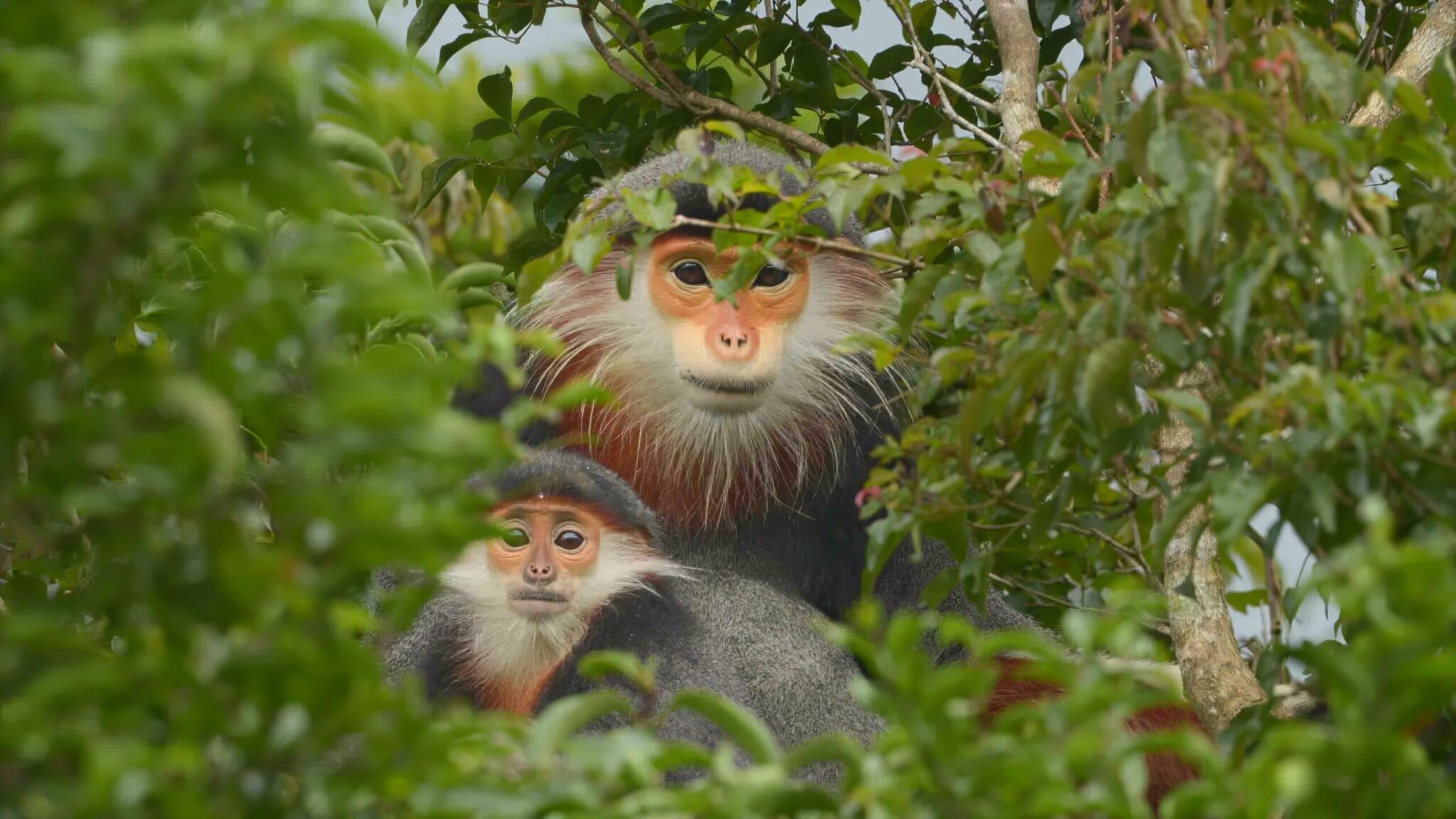

The steep, forested slopes of Son Tra rise above the coastal roads, offering exceptional views for Red-shanked Douc watching in Son Tra. Whenever the WANEE Go-WILD team heads up the winding slopes of Son Tra, our team knows that a meaningful encounter isn’t about getting close—it’s about interpreting the weather, understanding animal behavior, and knowing when to stay still, give them space, or let the moment pass.
The Strategy of Roadside Observation
In Son Tra, our experience shows that the best place to observe doucs is often the road rather than the forest.

The established road network creates a natural viewing corridor, allowing our groups to look into the canopy without moving directly through the habitat. In our fieldwork, we have seen that entering narrow forest trails can cause doucs to become silent, retreat deeper into vegetation, or avoid the area altogether. For this reason, our Go-WILD field trips approach Son Tra as a guided canopy observation experience from carefully selected, safe positions.
To us, the important part is not getting closer. It is allowing the animals to decide whether to stay or move away.
Timing, Access, and the Morning Barrier
Our morning field trips can begin early, but wildlife activity is only one part of our plan. We usually target key observation windows around 06:00–08:30, and another period during the cooler afternoon, broadly 15:30–17:30.
Access can shape what we can achieve in the field. The main-route barrier may remain closed until approximately 07:30. Before then, we can still conduct observations from accessible lower sections, while continuing through the primary route requires us to wait for the barrier to open.


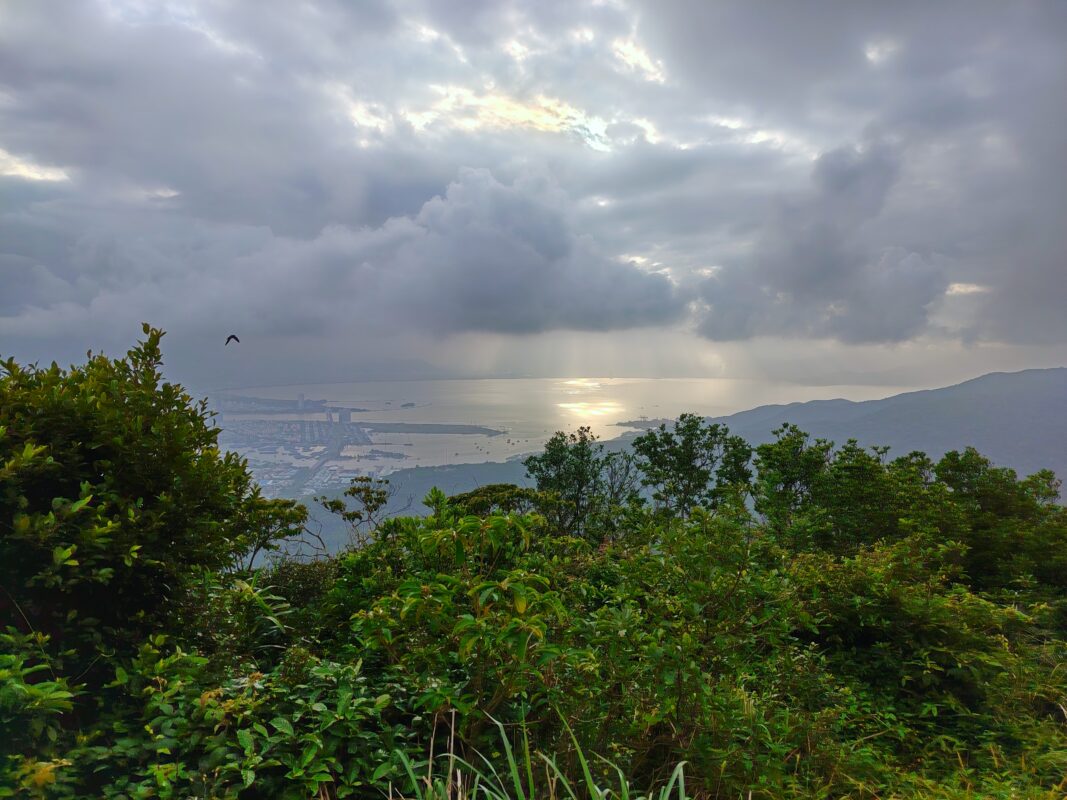
Other routes can have different conditions and may, in some cases, only be suitable for motorbikes. Weather, road safety, management decisions, temporary closures and environmental conditions can also affect access. Before we even step out into the field, our team constantly monitors shifting weather patterns and gate access to adapt our route for the day. To help us anticipate these shifting conditions, our guides rely on the detailed climate notes found in our WANEE seasonal wildlife guide.
When Weather Shapes the Encounter
Weather on the Son Tra Peninsula is notoriously unpredictable, constantly testing the patience of anyone stepped into the field. At around 08:00, just as our group began focusing on the first movements in the canopy, the sky suddenly darkened. Heavy gray clouds rolled in, bringing a rain shower that reduced visibility and forced the doucs to seek shelter deep within the dense foliage. Yet, the magic of Son Tra lies in how quickly conditions can shift. As soon as the rain passed, the air remained refreshingly cool—ideal conditions that prompted the animals to emerge, resume feeding, and travel across the branches once more.
Before we could celebrate the gentle weather, strong gusts swept up from the coast. The sudden wind set the entire canopy in motion, making it challenging for our guides to distinguish between swaying branches and moving primates. Knowing the troop would retreat to protected, leeward valleys to escape the exposure, we quickly adapted—shifting our search to a more sheltered slope on the other side of the peninsula to continue the observation.

As a result, a Red-shanked Douc quietly settled into a sheltered spot, taking advantage of the moment to nibble on fresh leaves for breakfast before a heavy downpour suddenly broke out. The weather therefore affects both sides of the encounter: where the doucs choose to remain and how easily our team can find them.
Listening to the Forest’s Signals
A roadside encounter is still a wild encounter. The proximity of doucs to the road does not mean they are tame or dependent on people. Some groups may tolerate calm roadside observation, but their response can change from one encounter to another.
The animals themselves provide our team with the most reliable guide to distance. Persistent staring toward people, alarm calls, sudden movement, interruption of feeding, increased vigilance or rapid retreat can indicate discomfort. When we spot these signs, our team immediately stops moving, lowers noise levels, lowers cameras, and when necessary, steps back or leaves the area.
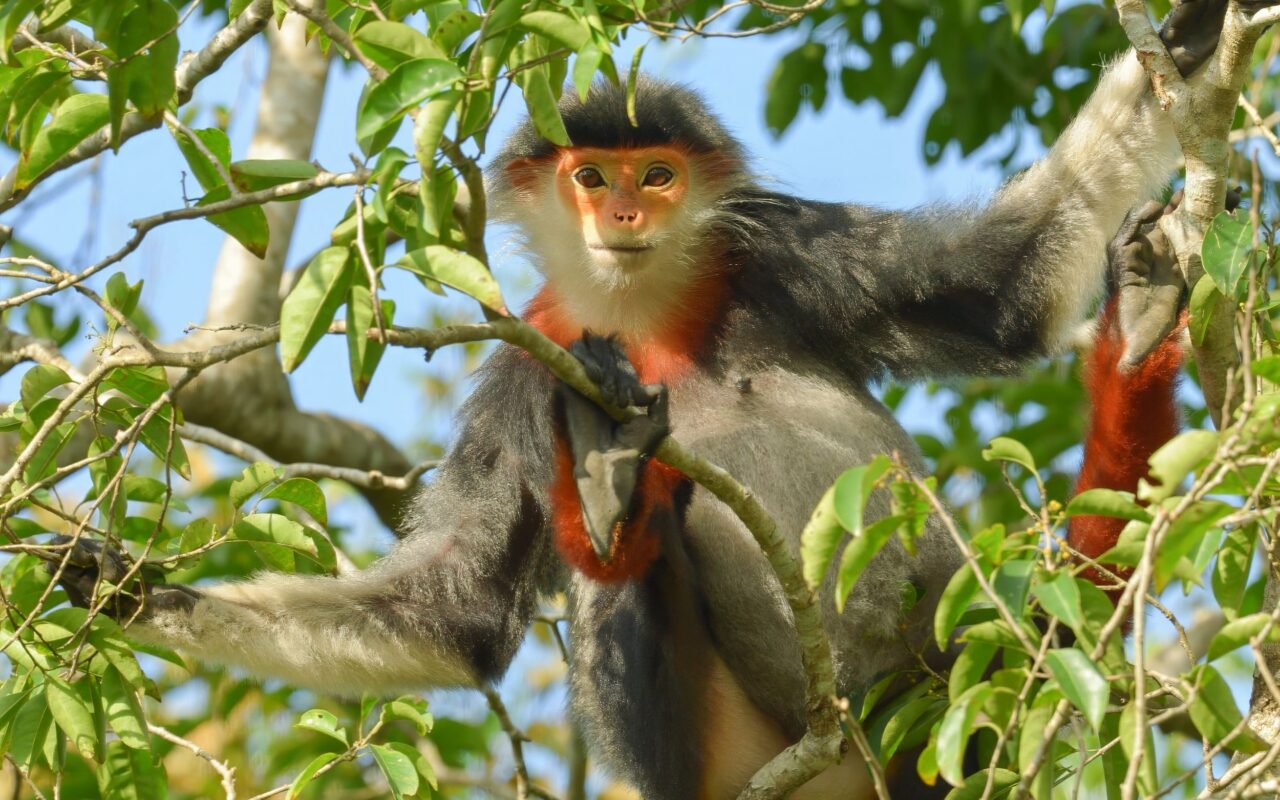


There is no single viewing distance that works for every situation. Roads, slopes and canopy angles vary, so we rely on animal behaviour rather than a fixed number of metres. If the doucs move beyond clear visibility from the road, we consider the encounter over. We never follow them into forest trails simply to regain the view. The eye-level perspective may make a close approach tempting. But to our team, the strongest encounter is one in which the animals remain comfortable enough to continue their natural behaviour on their own terms.
Road Crossings and Group Dynamics
A troop crossing the road is often one of the most memorable moments in Son Tra. The doucs usually pause to scan their surroundings before venturing across, sometimes one by one. In these moments, getting a better photo or a closer view takes a back seat. We immediately bring our group to a halt, lower our voices, and give the animals full right-of-way across the canopy. Where possible, we hold back approaching vehicles to keep the corridor clear until the entire troop has passed safely.

A typical group we encounter may include around four to ten individuals, although several smaller groups can sometimes come together, creating associations of around twenty animals. During an encounter, we may observe feeding, grooming, resting, travelling between trees, social play, mothers caring for young, adult males monitoring the group or individuals crossing openings and roads. To us, the value of these behaviours lies in observing them naturally, without trying to push the animals into a better position.
Photography Challenges in the Canopy
The viewing angles in Son Tra can be exceptional, but we know that good visibility does not guarantee an easy photograph. Dense foliage, backlighting, mist, uneven canopy light, fast movement, distance and short observation windows can all affect the result. Traffic and road safety, as well as other visitors sharing the same viewpoint, can add further challenges.
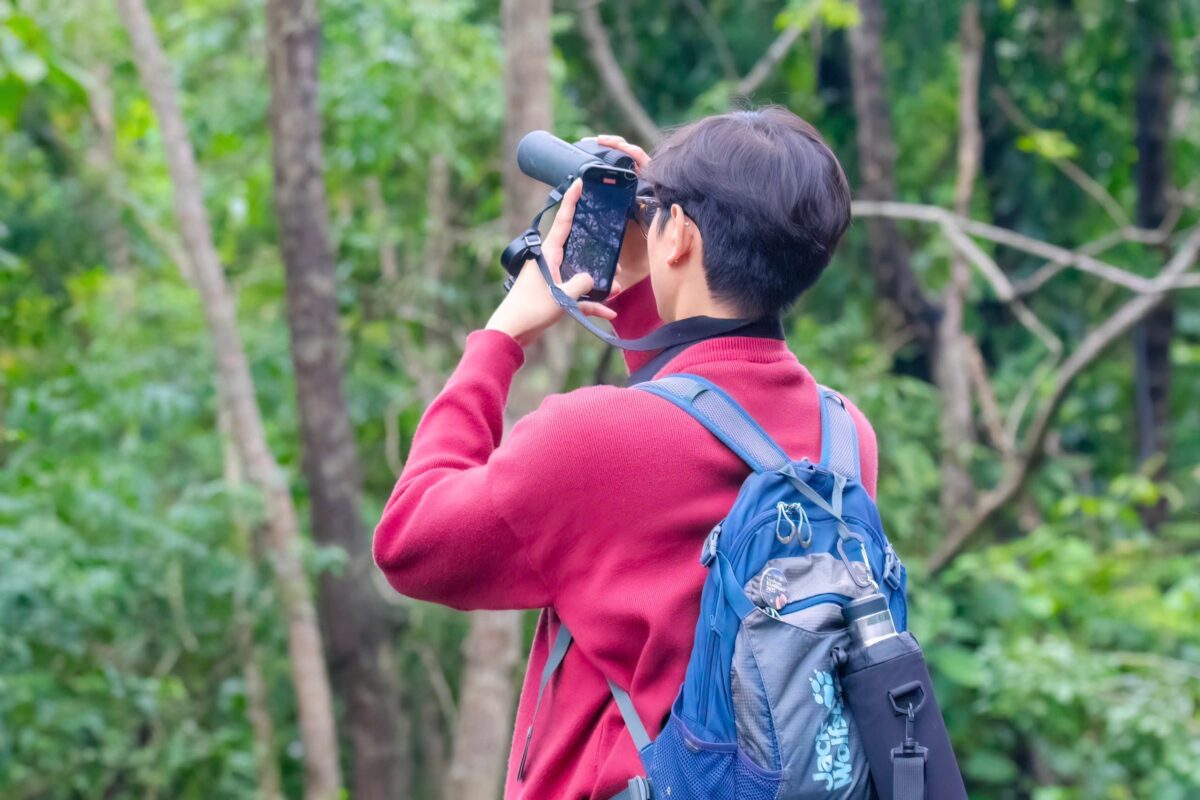
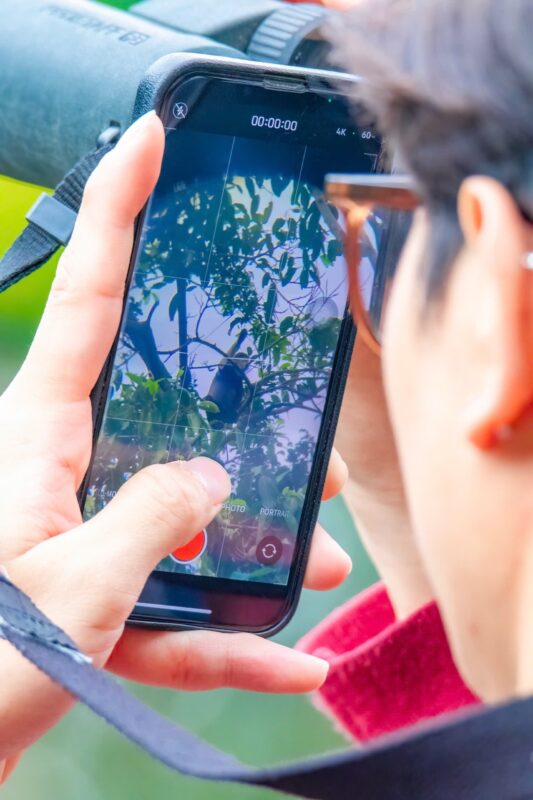
For guests interested in wildlife photography, we find that a 400–600 mm zoom lens is generally the most practical option. A zoom provides flexibility when an animal moves closer or farther away, while a fixed focal-length lens can become restrictive as the group changes position. We remind our guests that while a long lens provides flexibility, it does not control the light, foliage or movement of the animals.
For photographers seeking dedicated setups and optimal light conditions, a specialist Vietnam wildlife photography tour can provide additional focus and expert positioning.
For guests who are not photographing, we strongly recommend binoculars. Doucs may be visible to the naked eye, but binoculars reveal the facial patterns, body colour and social behaviour that make the encounter more meaningful.
The Wider Conservation Narrative
The accessibility of Red-shanked Doucs in Son Tra should not lead to complacency. Our team always highlights that while the local population is relatively well protected and may number up to approximately 2,000 individuals (pending the most recent credible published surveys), Red-shanked Doucs remain Critically Endangered across their broader range.
This contrast is important: a population that we can observe from a road may appear secure, while the species as a whole continues to face serious threats from illegal capture, trapping and habitat loss. Cases of doucs being injured or killed by wire traps remain particularly distressing evidence of this wider pressure. For those wanting to understand the broader landscape of gibbons, doucs, and langurs across the country, we highly recommend our in-depth guide to Primates of Vietnam: Where to See Them Responsibly.
In our operations, we enforce strict boundaries for responsible tourism: no feeding, no baiting and no harassment. We also advocate against purchasing wildlife products and encourage reporting harmful activities through appropriate local channels. For our team, the accessibility of Son Tra must serve to strengthen awareness of why intact forest and responsible visitor behaviour matter.
Expert Takeaway
The strongest encounter in Son Tra is not necessarily the one where you get closest. It is the one where the doucs remain comfortable enough to continue feeding, grooming, resting or moving through the canopy on their own terms.
Sometimes that means staying beside the road. Sometimes it means waiting through mist or changing conditions. And sometimes it means accepting that once the animals disappear into the forest, the encounter is over. In Son Tra, responsible primate watching is ultimately about learning to observe without asking the animals to change what they are doing.
Continue exploring
Plan Your Son Tra Primate Encounter
Share your travel dates, photography goals, comfort preferences, and desired field pace. We will design a realistic Son Tra observation window tailored to current weather and road access conditions.
