UX/UI

Grey-shanked Douc Langur

Pygathrix cinerea
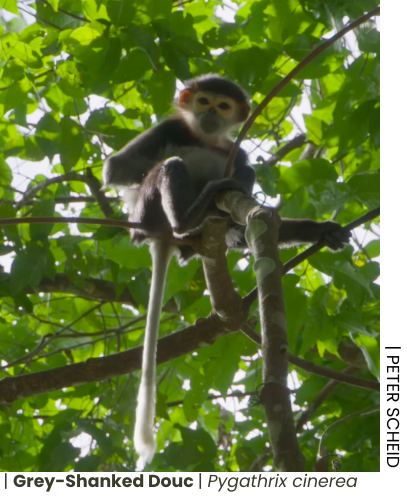
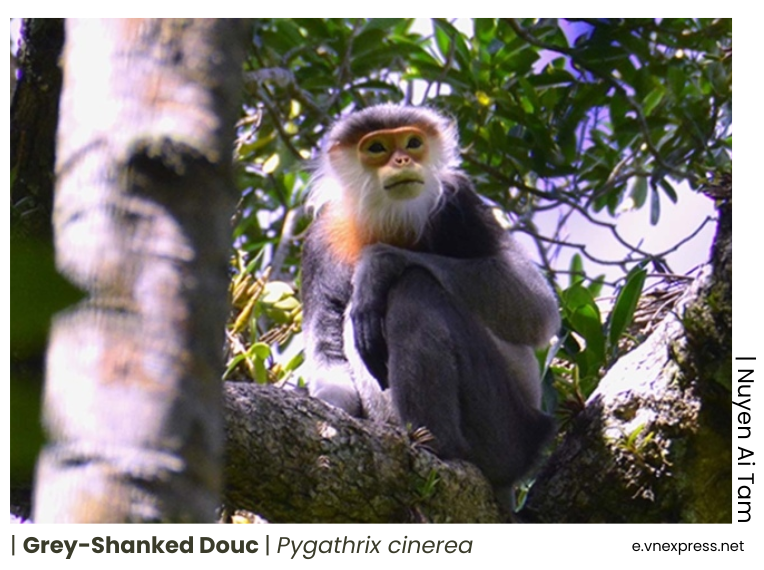
The Grey-Shanked Douc Langur (Pygathrix cinerea) is a rare, endangered primate discovered in 1997 in Vietnam. It inhabits tropical hill forests (200–1500m elevation) and is known for its striking grey fur with white markings. Threatened by hunting and habitat loss, this species urgently requires conservation efforts to survive.
IUCN: Critically Endangered
Diet: Herbivore
Group: primate
Size: Grey-shanked Douc Langur cm
Lifespan: 12 years
Sighting: Elusive

Regnum: Animalia
Phylum: Chordata
Class: Mammalia
Ordo: Primates
Familiar: Cercopithecidae
Genus: Pygathrix
Species: Pygathrix cinerea


Classified as Critically Endangered, these langurs share a close resemblance to P. nemaeus. They exhibit a light grey color with a pale underside, black hands and feet, and dark grey shins.


The face is brownish-orange on top, featuring a white chin, while the throat has a white base with an orange-brown collar. With males averaging 10.9 kg and females around 8.2 kg, the population faces severe threats such as deforestation and hunting for meat, 'medicine,' and the pet trade. The decline in population is estimated at over 80% over three generations, with predictions indicating a continued or slightly higher rate of decline in the next 36 years.


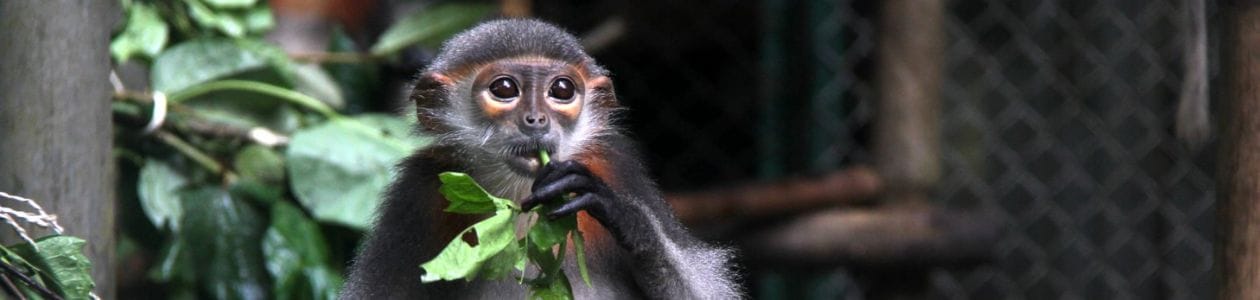
The Grey-Shanked Douc Langur, a terrestrial species, primarily inhabits evergreen and semi-evergreen forests, particularly in lower montane regions and highly degraded forests within the altitude range of 900 to 1,300 meters above sea level (asl) (Ha Thang Long 2004, 2007, 2009). Displaying arboreal tendencies, the species is predominantly folivorous, with a diet comprising young leaves (49.5%), mature leaves (9.3%), and fruits, seeds, and flowers (40%) (Nadler et al. 2003; Ha Thang Long 2009)

Noteworthy seasonal variations in diet and activity have been observed, with a higher consumption of fruit during the wet season. Activity budgets also differ, with increased resting and socializing during the wet season and more movement during the dry season.

Grey-shanked douc langur

Much like their Red-Shanked counterparts, the Grey-Shanked Douc Langur exhibits diurnal behavior and thrives in arboreal environments, showcasing agility in traversing the forest canopy through jumping and brachiating. Historically, they formed sizable groups of up to fifty individuals, but contemporary observations reveal reduced group sizes ranging from 4 to 15 members. Males take on dominant roles within these groups, with observed hierarchies, especially in captive settings. The lifestyle of the Black-Shanked Douc Langur encompasses an arboreal, zoochoric, scansorial, and terrestrial nature, lacking the migratory patterns seen in some species.

Related Species

Related tour

No related tours yet...

Ready for your adventure in Vietnam?

Send us your ideas and let’s start crafting your unforgettable Vietnam Wildlife experience today.

UX/UI