

Southern Yellow-cheeked Gibbon seed dispersal is a foundational process shaping the long-term regeneration of Cat Tien National Park, one of the last lowland tropical forest systems in mainland Indochina where a complete primate assemblage still functions ecologically intact.
Seven primate species inhabit this landscape – lorises, macaques, langurs, and gibbons – each occupying a distinct niche within the vertical architecture of the forest.
To an untrained observer, these species may seem randomly distributed. Ecologically, however, the forest is strictly partitioned. Some primates specialize in leaf digestion high in the canopy. Others forage opportunistically across strata. The structural organization of this community reflects dietary specialization, digestive physiology, and locomotor adaptation.

Among them, the Southern Yellow-cheeked Gibbon occupies a uniquely consequential position. It is the dominant canopy frugivore. Through that role, it shapes forest regeneration, canopy stratification, and the long-term structural stability of this lowland tropical ecosystem.
Understanding the future composition of Cat Tien’s canopy requires recognizing how Southern Yellow-cheeked Gibbon seed dispersal links primate movement, spatial redistribution of seeds, and long-term forest regeneration across this lowland tropical landscape.
Ecological Irreplaceability in a Stratified Primate Community
Fruit consumption is common among tropical mammals. Effective seed dispersal is not.
In Cat Tien, several primates feed on fruit. Yet their ecological outcomes differ sharply. Some act primarily as seed predators. Others function as dispersers but over limited distances. The gibbon, however, combines diet, gut physiology, and locomotor range in a way that produces measurable structural consequences for the forest.
Field research conducted within Cat Tien demonstrates that gibbons are the most effective dispersal vector for several large-fruited canopy species. One of the clearest examples is the Pacific Walnut (Dracontomelon dao), a hardwood tree whose fruits are large, energy-rich, and seasonally abundant.
The challenge facing such trees is not seed production. In a structurally layered canopy system, successful recruitment depends on dispersal distance, light access, and genetic mixing across spatially separated stands. It is seed survival.
When fruits fall directly beneath a parent canopy, seedlings face intense competition for light and nutrients. Soil pathogens accumulate near adult trees. Density-dependent mortality increases sharply. This zone of suppression – often described as the “parent shadow”- limits successful recruitment.
By transporting seeds horizontally across the canopy before defecation, gibbons enable those seeds to escape lethal density zones. In doing so, they convert fruit consumption into forest renewal.
The architecture of tomorrow’s canopy depends on this spatial redistribution of seeds across strata, a process that underpins both biodiversity persistence and canopy complexity.
Diet, Digestion, and Movement
The effectiveness of Southern Yellow-cheeked Gibbon seed dispersal rests on three interacting biological factors: dietary composition, gut passage, and locomotor capacity.
Fruit-Dominant Feeding Strategy
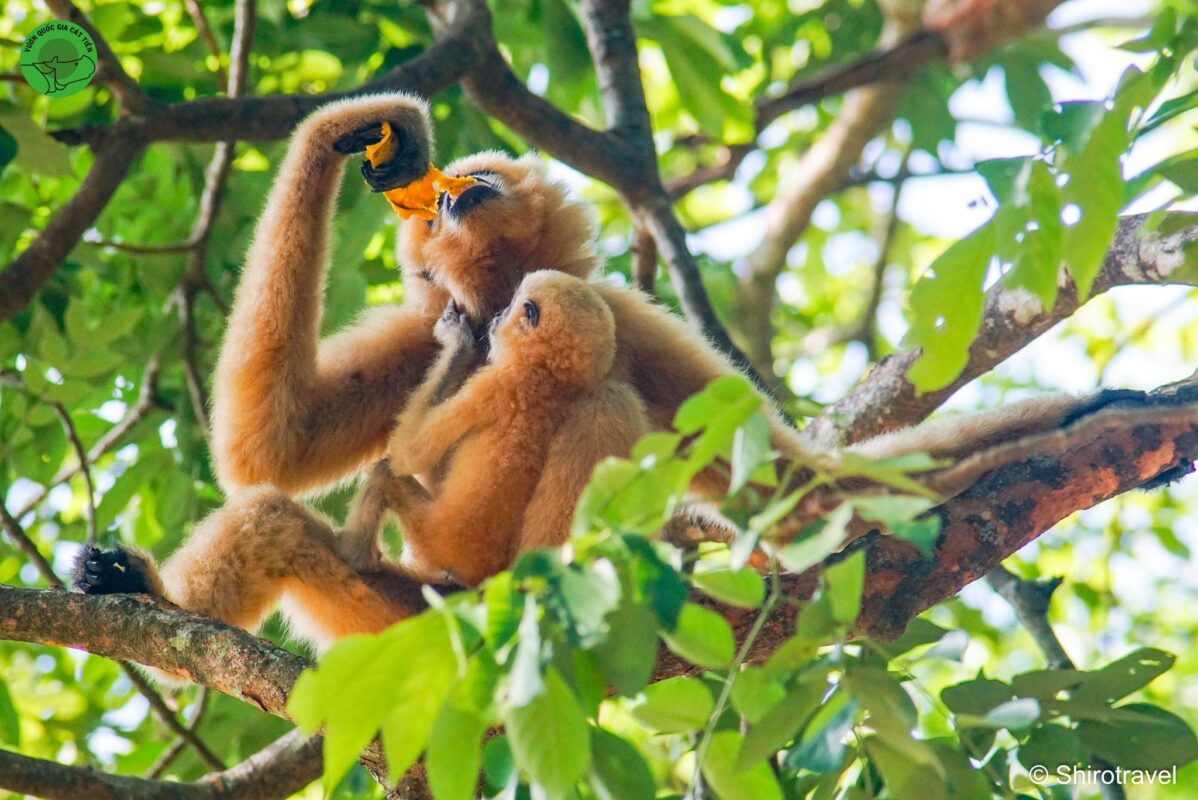
Long-term observations indicate that fruit constitutes roughly 43 percent of the gibbon’s diet, followed by leaves and flowers. Unlike leaf-specialist langurs that rely on complex stomach fermentation, gibbons track ripening cycles of canopy fruit trees.
This dietary pattern positions them repeatedly at the crowns of reproductively mature hardwoods. Their foraging routes are structured around fruiting sequences that shift across seasons. In effect, their movement maps the reproductive calendar of the forest.
Because many canopy hardwoods produce large-seeded fruits, effective dispersal requires an animal capable of swallowing and transporting those seeds intact. The gibbon fulfills that requirement.

In ecological terms, Southern Yellow-cheeked Gibbon seed dispersal begins not at defecation, but at fruit selection – at the precise moment a ripened canopy fruit is chosen and consumed.
Gut Passage and Germination Enhancement
The distinction between seed predator and seed disperser lies in handling.
When macaques consume fruit, seeds are often spat beneath feeding branches. Dispersal distance remains minimal. Seeds accumulate in already crowded zones.
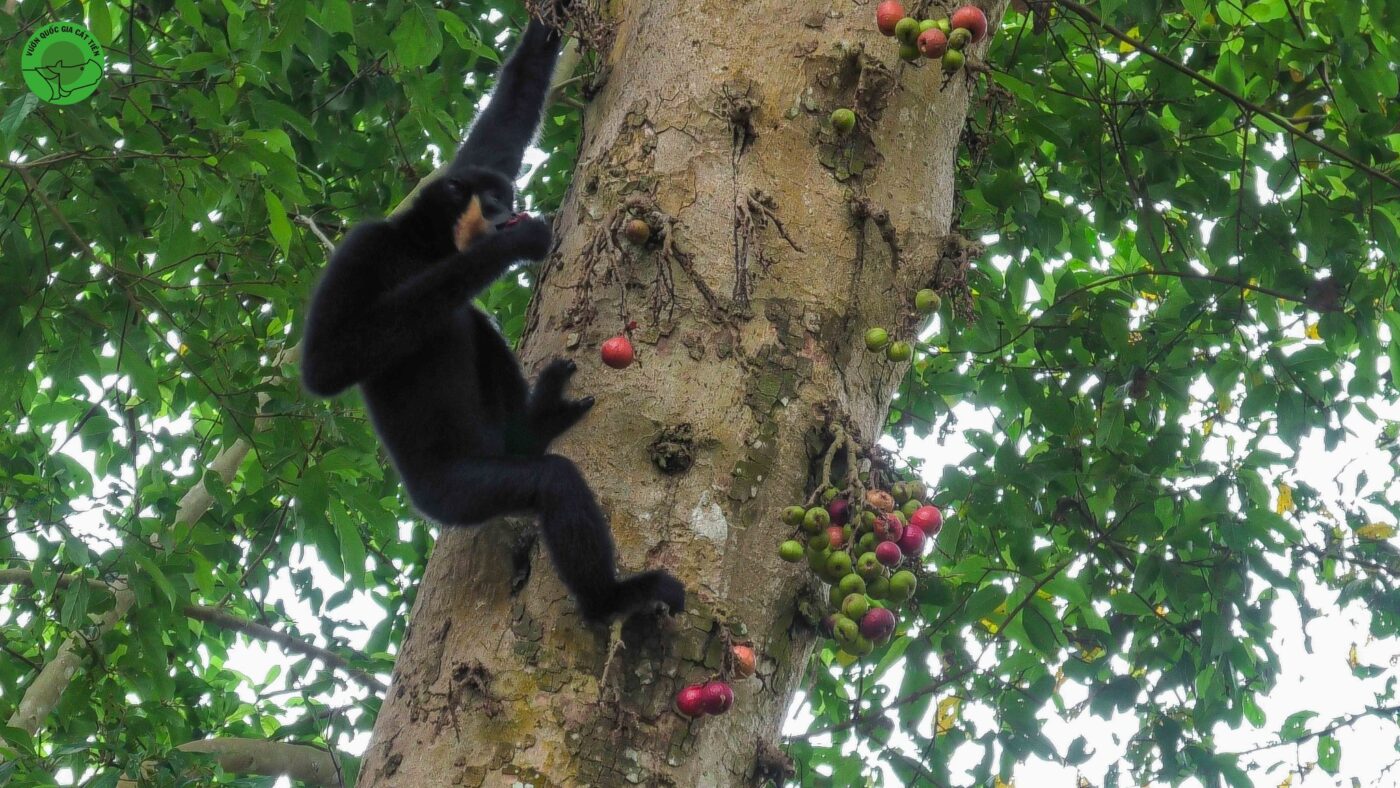
Gibbons frequently swallow seeds whole. Passage through the digestive tract exposes the seed coat to mechanical abrasion and chemical processing. Studies indicate that seeds passing through gibbons exhibit higher germination rates than those that simply fall to the forest floor.


Thus, the process involves two simultaneous effects: spatial transport and physiological enhancement. The seed is moved away from competition and conditioned for growth. By extending dispersal distance and improving germination probability, Southern yellow-cheeked gibbon seed dispersal supports genetic exchange between canopy clusters and reduces localized recruitment bottlenecks.
This dual mechanism elevates Southern Yellow-cheeked Gibbon seed dispersal from incidental feeding behavior to ecological engineering.
Brachiation and Spatial Range
Locomotion amplifies impact.
Gibbons move through brachiation – swinging arm-over-arm across continuous canopy corridors. This adaptation allows rapid horizontal travel without descending to the ground, minimizing predation risk and maximizing canopy connectivity.
Observed dispersal distances frequently exceed 20 meters from the parent tree, with average transport distances approaching 180 meters. Such range significantly expands the genetic mixing zone for canopy species.
Through brachiation, Southern Yellow-cheeked Gibbon seed dispersal extends beyond feeding behavior and becomes a structural force, redistributing forest potential across space.

The forest does not regenerate evenly. It regenerates along the routes traced daily by brachiating pairs. These movement corridors maintain canopy connectivity within the lowland tropical forest matrix, ensuring that regeneration occurs not in isolation, but as part of an integrated ecological network.
A Case Study in Canopy Regeneration
The Pacific Walnut illustrates the broader structural pattern.
Its fruits are too large for many smaller arboreal mammals to swallow intact. Where large frugivores decline, seedlings cluster beneath adult trees and suffer high mortality. Where gibbons persist, recruitment occurs across broader gradients.
Large-fruited hardwoods contribute disproportionately to canopy height, shade regulation, and habitat complexity. They influence microclimatic stability and provide structural platforms for other arboreal species.
If dispersal collapses, canopy simplification follows. If canopy simplification occurs, biodiversity contracts.
The role of the gibbon therefore extends beyond individual tree species. It influences long-term forest architecture. In this way, Southern yellow-cheeked gibbon seed dispersal contributes to vertical stratification, habitat heterogeneity, and the resilience of the broader primate community.
Observing Ecological Function
Understanding mechanism changes observation.
Gibbons are most reliably detected by sound. Territorial duets begin shortly after dawn, often around 05:10 AM. These vocalizations mark territory boundaries structured around fruit resources. Hearing them indicates active canopy occupation.
Seasonality further shapes movement. During the rainy season, fruit abundance increases and travel distances expand. Dispersal intensity rises accordingly. In the dry season, fruit scarcity leads to dietary shifts toward leaves and reduced travel.
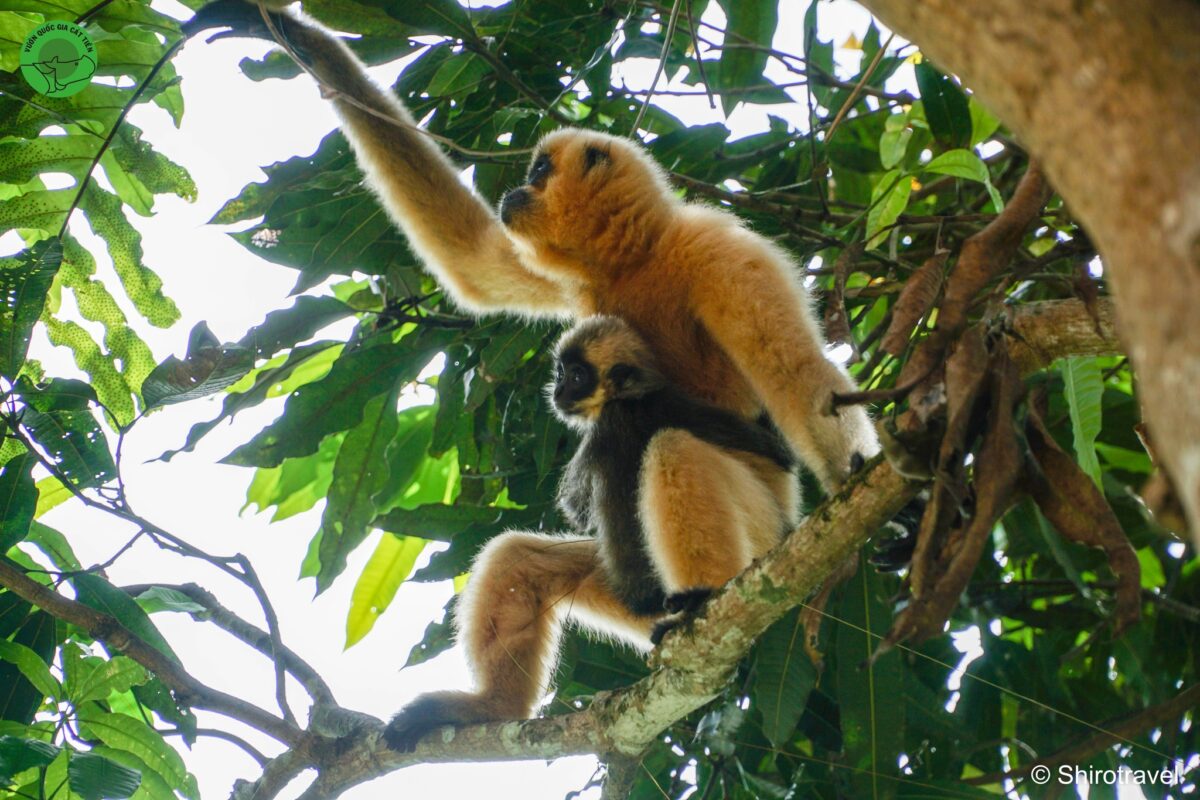
Sexual dimorphism assists identification: adult males are black with yellow cheek patches; adult females are golden. Juveniles transition through color phases before maturity. The easiest way to identify them is usually based on the fur coloration of adult individuals.

More important than color, however, is feeding behavior.
If you observe a primate in a Ficus or Dracontomelon tree, note the feeding style. A gibbon swallowing fruit whole is actively planting the forest through seed transport. A macaque spitting seeds beneath feeding branches consumes pulp but contributes little to effective dispersal.
Field interpretation therefore shifts from species recognition to functional understanding.
Constraints and Ethical Boundaries
Observation is limited by structure.
Canopy height in Cat Tien often ranges from 30 – 50 meters. Gibbons remain strictly arboreal and rarely descend. Clear visual confirmation requires patience, physical comfort with prolonged upward viewing, and adequate binoculars (8×42 or 10×42 recommended). Visitors with neck issues may find sustained canopy observation physically demanding.
No sighting can be guaranteed in a wild forest. Hearing their morning duets is common; seeing them depends on positioning, light conditions, and timing. Unlike semi-wild populations on Dao Tien Island, fully wild individuals remain elusive.
Ethical boundaries are strict. The use of playback – recording gibbon songs and playing them back to attract animals – is prohibited. Artificially triggering territorial responses increases stress and disrupts energy allocation essential for reproduction and daily foraging. Responsible observation requires silence, distance, and tracking individuals only through their natural calls.
This experience is not designed for checklist tourism. Visitors interested only in “checking off” a species may find the effort of canopy-focused observation frustrating. It is better suited to those interested in behavioral ecology and ecological function.
Responsible observation protects the very dispersal processes observers seek to witness.
Structural Implications for the Future Forest
Tropical forests regenerate through interaction, not isolation.
Rainfall triggers fruiting. Fruit attracts frugivores. Frugivores redistribute seeds. Seeds establish beyond competitive shadows. Canopy giants emerge decades later.
Remove the disperser, and the cycle weakens.
Southern Yellow-cheeked Gibbon seed dispersal operates as a stabilizing mechanism within Cat Tien’s lowland tropical forest system, maintaining spatial heterogeneity, genetic mixing, canopy regeneration, and long-term ecosystem resilience.
The gibbon does not simply inhabit Cat Tien. It engineers its future structure.
Without consistent canopy-scale seed dispersal, the structural integrity of the forest – from understory recruitment to emergent hardwood formation – would gradually erode.
Knowledge Links
• Phytosociological Analysis of Forest Ecosystems: To understand the specific tree species (Dipterocarps and Tetrameles) that form the gibbon’s habitat.
• Seasonal Rhythms: The Impact of Monsoons: To plan visits based on fruit availability and primate activity levels.
• The Role of Rescue Centers in Ex-situConservation: To learn about the rehabilitation of gibbons at the Dao Tien center.
Interpreting Forest Regeneration with the WANEE Team
Understanding ecological processes requires more than sighting wildlife. It requires contextual interpretation.
The WANEE team develops field programs in Cat Tien grounded in behavioral ecology, canopy structure, and ethical observation principles. Rather than focusing on checklist tourism, interpretation emphasizes how primates contribute to forest regeneration through movement and feeding strategies.


Early-morning tracking based on natural duets, seasonal fruit pattern reading, and silent canopy scanning form the basis of these guided experiences. Observers learn to connect behavior with long-term ecological consequences.
For those seeking to understand not only what lives in Cat Tien, but how the forest renews itself, further information about ecological tours and primate-focused interpretation can be found at: https://wanee.asia/cat-tien-tours/