

Cat Tien National Park is not simply a place where mammals still exist. It is one of the last functioning lowland forest landscapes in Vietnam where large mammals continue to live as part of an integrated ecological system. In a country where most lowland forests have been fragmented, simplified, or converted, Cat Tien remains exceptional.
Here, large herbivores still shape vegetation, primates dominate the canopy, carnivores patrol the night, and bats support forest ecology through pollination and insect control. Together, these processes define why the mammals of Cat Tien National Park remain ecologically functional rather than biologically symbolic.
This article provides a field-based, expert-level synthesis of the 46 recorded mammal species of Cat Tien, organized by ecological function rather than checklist enthusiasm. Its purpose is not only to document what lives here, but to explain why this landscape still matters within Vietnam’s rapidly diminishing lowland forests.
Cat Tien: A Last Stronghold for Large Mammals in Southern Vietnam
Lowland forests are the most biologically productive ecosystems in tropical Asia—and also the most heavily impacted by human activity. Roads, agriculture, settlements, and hunting pressure have removed large mammals from most of their historical range across Vietnam.
Cat Tien stands apart because it still supports the full ecological roles of large mammals:
- Megafauna-scale processes such as seed dispersal and vegetation shaping
- Continuous canopy structure essential for arboreal mammals
- Connected river systems, wetlands, and forest interiors
- Decades of legal protection and long-term conservation presence
This does not mean the ecosystem is complete. One absence defines the modern conservation history of Cat Tien more than any other.defines Cat Tien’s modern history more than any other.
The Shadow of the Javan Rhinoceros: A Necessary Truth
Cat Tien was once home to the last Javan Rhinoceros (Rhinoceros sondaicus) population in mainland Southeast Asia. Its extinction in 2010 was not only a national tragedy – it was a global warning.

The loss of the rhino reminds us of three uncomfortable truths:
- Protection without enforcement is insufficient
- Large mammals disappear silently before people realize the scale of loss
- Conservation must be proactive, not reactive
Although the extinction did not cause immediate ecological collapse, it left a functional void. The remaining mammals of Cat Tien National Park now carry even greater importance as the last large-bodied species maintaining lowland forest dynamics.
Ecological Grouping of Mammals in Cat Tien
This functional approach helps explain how the mammals of Cat Tien National Park continue to sustain one of Vietnam’s last intact lowland ecosystems. To understand mammal diversity in Cat Tien, we must abandon simple size-based thinking and focus on functional ecological groups.
A. Megafauna & Large Herbivores
The Structural Engineers of the Forest
Key species include:
- Elephas maximus (Asian Elephant)
- Bos gaurus (Gaur)
- Rusa unicolor (Sambar Deer)
- Sus scrofa (Wild Boar)
- Tragulus kanchil (Lesser Mouse-deer)
- Muntiacus vaginalis
- Muntiacus muntjak
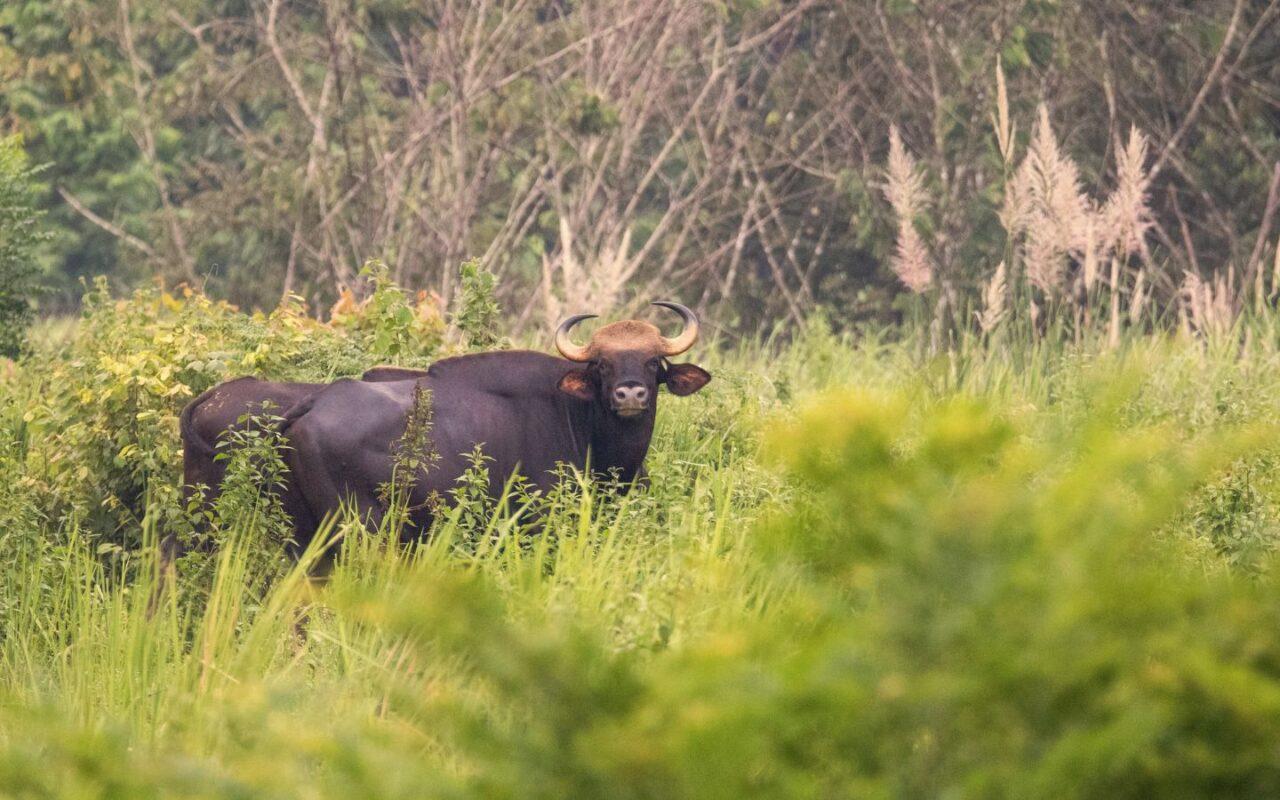


These species define forest structure from the ground up. Through grazing, browsing, trampling, and seed dispersal, they regulate plant composition and prevent ecological stagnation.
- Elephants act as ecosystem engineers, shaping forest openness.
- Gaur and sambar influence understory regeneration.
- Smaller ungulates fill fine-scale niches that maintain diversity.
Without these animals, forests become quieter, denser, and less resilient.
B. Primates
The Canopy Architects and Sentinels
Recorded primates:
- Nomascus gabriellae (Southern Yellow-cheeked Gibbon)
- Pygathrix nigripes (Black-shanked Douc Langur)
- Trachypithecus margarita
- Xanthonycticebus pygmaeus
- Macaca fascicularis
- Macaca mulatta
- Macaca leonina
![[Species_profile] - A-yellow-cheeked-crested-gibbon-swinging-gracefully-from-a-tree-branch-in-tropical-rainforest.](https://wanee.asia/wp-content/uploads/2025/09/Yellow-cheeked-crested-Gibbon.jpg "Mammals of Cat Tien National Park: 46 Recorded Species 5")
![Itinerary - [14 Days] The Best Vietnam Wildlife Photography Tour](https://wanee.asia/wp-content/uploads/2025/03/Black-shanked-Douc-4002-1066x800.webp "Mammals of Cat Tien National Park: 46 Recorded Species 6")

Primates are among the most sensitive indicators of forest health.
- Gibbons require continuous canopy and acoustic space
- Doucs depend on high plant diversity and mature trees
- Macaques reflect edge dynamics and human interaction
Cat Tien’s ability to support multiple primate guilds simultaneously—from nocturnal lorises to canopy-specialist doucs—demonstrates exceptional habitat integrity.
C. Carnivores & Civets
The Night-time Regulators
Species include:
- Paradoxurus musanga
- Viverricula indica
- Arctogalidia trivirgata
- Urva javanica
- Prionailurus bengalensis

Carnivores are rarely seen, but they are never absent.
They regulate:
- Rodent populations
- Bird and reptile prey dynamics
- Disease transmission pathways
In Cat Tien, carnivores persist not because they are abundant, but because prey networks remain intact—a rare condition in Vietnam.
D. Rodents, Squirrels & Gliding Mammals
The Connective Tissue of the Forest
Key taxa:
- Callosciurus erythraeus
- Tamiops rodolphii
- Menetes berdmorei
- Petaurista philippensis
- Hylopetes alboniger
- Hylopetes spadiceus
- Chiropodomys gliroides
- Genus Niviventer
- Bandicota indica

(Source: iNaturalist)


(Source: iNaturalist)
Often underestimated, this group is fundamental to:
- Seed dispersal
- Seed predation balance
- Canopy connectivity (especially gliding species)
The presence of multiple gliding squirrels confirms vertical forest complexity, something lost in simplified or secondary forests.
E. Bats (Chiroptera)
The Invisible Workforce of the Ecosystem
Recorded bats include:
- Cynopterus sphinx
- Cynopterus brachyotis
- Rhinolophus luctus
- Rhinolophus chaseni
- Hipposideros grandis
- Myotis rosseti
- Myotis ater
- Megaderma spasma
- Lyroderma lyra
- Saccolaimus saccolaimus
- Scotophilus heathii
- Tylonycteris fulvida

Bats are essential for:
- Pollination of forest trees
- Control of nocturnal insects
- Nutrient cycling
Cat Tien’s bat diversity reflects clean waterways, intact roost sites, and low pesticide pressure—conditions increasingly rare in Southeast Asia.
F. Other Mammals & Special Records
Completing the Picture
These include:
- Tupaia belangeri (tree shrew)
- Dendrogale murina
- Hystrix brachyura (porcupine)
- Lepus peguensis
- Order Dermoptera (colugo record)
- Felis catus (anthropogenic record)

(Source: iNaturalist)

(Source: iNaturalist)
While some reflect forest integrity, others remind us of human influence—both past and present.
Why Cat Tien Still Matters – Despite Loss
The extinction of the Javan Rhinoceros was a failure – but it was also a turning point.
Today, Cat Tien represents:
- The best remaining lowland refuge for large mammals in Vietnam
- A living laboratory for coexistence between humans and megafauna
- A place where conservation still has something left to save
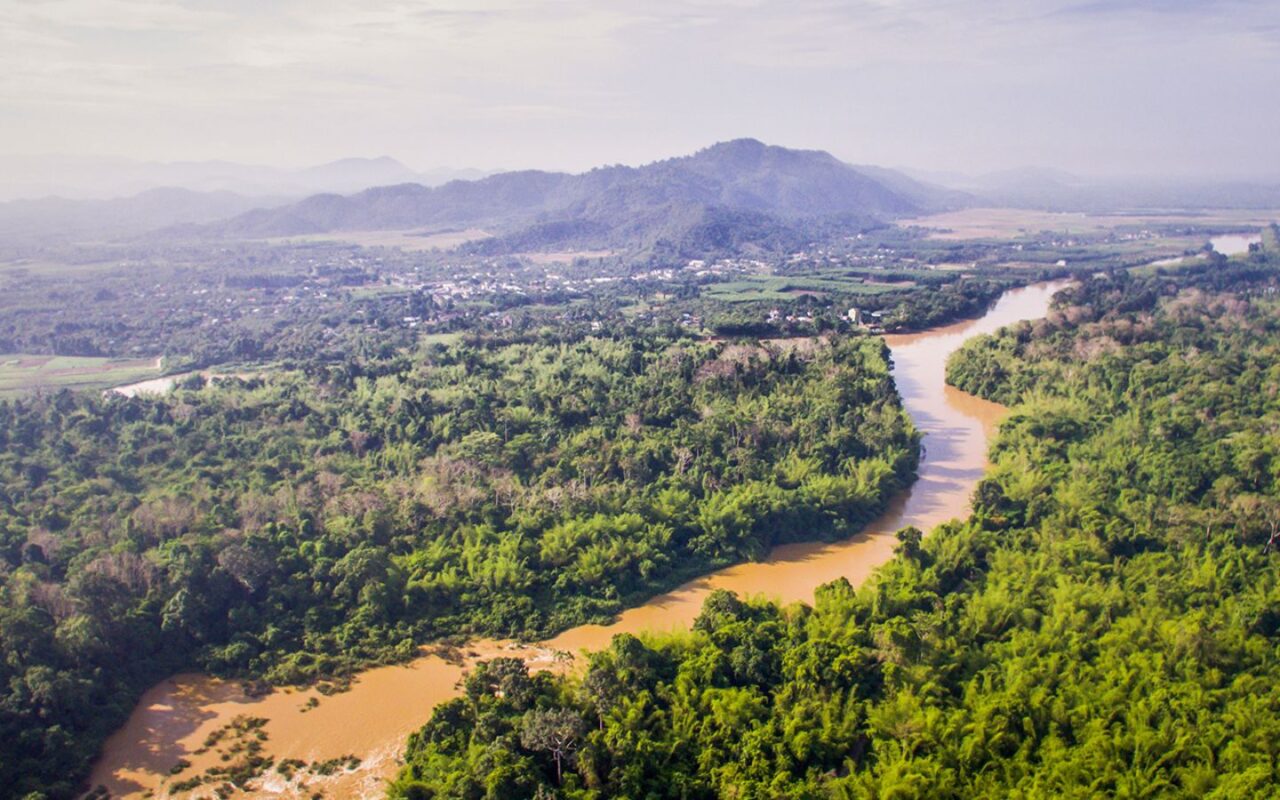
Protecting what remains is no longer optional – it is urgent.
Conservation, Tourism, and Shared Responsibility
Responsible wildlife tourism plays a supporting – but meaningful role in long-term conservation when it is designed around ecological limits rather than mass visitation.
In Cat Tien National Park, well-managed wildlife tours contribute by:
- Funding on-the-ground conservation presence, including local guides, trackers, and patrol-linked livelihoods
- Valuing intact ecosystems, encouraging protection of forest structure rather than short-term extraction
- Replacing extractive incentives with stewardship, where living wildlife holds greater value than harvested resources
WANEE’s wildlife and birding tours in Cat Tien are structured around this philosophy. By focusing on small-group experiences, field interpretation, and ethical wildlife observation, WANEE helps connect visitors directly with the ecological importance of Cat Tien’s mammals—without increasing pressure on sensitive habitats.
Learn more about WANEE’s responsible Cat Tien programs at:
https://wanee.asia/cat-tien-tours/
However, tourism alone is not the solution. Protection, enforcement, scientific research, and strong community partnerships must work together. Responsible operators can support these efforts, but lasting conservation success depends on coordinated action far beyond tourism itself.
Conclusion: A Forest Still Worth Defending
Protecting the mammals of Cat Tien National Park is ultimately about safeguarding ecological processes that have disappeared from most of Vietnam’s lowland forests. In Cat Tien, large mammals still shape vegetation, regulate forest dynamics, and maintain interactions that define a functioning ecosystem rather than a fragmented remnant. This remaining mammal diversity in Cat Tien represents not just survival, but ecological continuity in a rapidly altered landscape.
Cat Tien is not flawless. It bears scars, losses, and the absence of species that once defined its history. Yet it remains the strongest refuge for large mammals in Vietnam’s lowland forests, and one of the most important centers of Cat Tien biodiversity today. The story of Cat Tien National Park mammals is not only about what species persist, but about whether society chooses to remember what has been lost – and act decisively to protect what still lives.