

A Deep, Field-Oriented Overview of 67 Recorded Species
Cat Tien National Park is one of the most rewarding lowland rainforest landscapes in southern Vietnam for reptiles. While many visitors arrive dreaming of primates, birds, and night mammals, reptiles are often the wildlife group you end up seeing most consistently – because they are tightly linked to the park’s warm climate, abundant water, and layered forest structure. Together, these conditions make Cat Tien reptiles one of the most consistently observed and ecologically diverse reptile assemblages in southern Vietnam.

This article is designed as a high-information, field-oriented reference for nature travelers, photographers, and serious wildlife enthusiasts. It explains why Cat Tien is a reptile hotspot, how reptiles distribute across habitats and seasons, and how to interpret sightings responsibly.
Most importantly, this 2025-style reference includes the exact list of 67 reptile taxa recorded, with spelling preserved exactly as provided.
Why Cat Tien Reptiles Show High Species Diversity
Reptiles succeed in Cat Tien for three core reasons:
- Stable tropical temperatures
Reptiles are ectothermic. Warm nights and long humid seasons allow many species to stay active beyond short “peak windows.” - Strong habitat mosaic in a compact area
You can move from forest edge to deep evergreen forest, then to riverside and wetland habitats within a short travel radius – each supporting different reptile communities. - High prey availability
Insects, frogs, small mammals, and birds provide constant food sources for geckos, lizards, and snakes—especially during and after rain.
Main Habitats of Cat Tien Reptiles (and What to Expect)
If you want to understand “why this species appears here,” think in habitats:
- Buildings and lights (night): house geckos and hunting snakes that follow insect activity.
- Tree trunks and canopy layers (day): agamids and gliding lizards, plus arboreal snakes.
- Leaf litter and forest floor: skinks, burrowing snakes, and ambush hunters.
- Streams, ponds, wetlands: water monitors, turtles, and semi-aquatic snakes.
- Forest edge and sunny clearings: basking lizards and fast-moving daytime snakes.


How Seasonality Changes What You See
- Rainy season: more snakes and amphibian-linked predators become active; nocturnal searches become more productive.
- Dry season: reptiles can still be present, but detection often shifts to basking behavior in morning sun and water-associated sightings near remaining pools and streams.
Safety and Ethics (WANEE-style, calm and practical)
A high reptile diversity list always includes medically significant species. That does not mean the forest is “dangerous.” It means you need a clear approach:
- Observe at a respectful distance.
- Never attempt handling – especially snakes.
- Stay on established trails at night.
- Use controlled lighting (no constant high-beam scanning into vegetation).
- Photograph responsibly: minimal flash, do not block escape routes, and do not manipulate animals for a “better angle.”
This mindset protects both people and wildlife.
At WANEE, these safety and ethics principles are integrated into all guided wildlife experiences in Cat Tien. Our nature walks and herping activities are designed to prioritize animal welfare, visitor safety, and respectful observation, ensuring meaningful encounters without disturbance.
Learn more about our responsible Cat Tien programs at: https://wanee.asia/cat-tien-tours/
The 67 Recorded Reptile Taxa (Exact List)
Below is the full list of 67 recorded taxa, kept exactly as you provided (no corrections, no spelling changes, no re-ordering of names).
| No | English name |
| 1 | Gekko gecko |
| 2 | Calotes bachae |
| 3 | Hemidactylus platyurus |
| 4 | Eutropis multifasciata |
| 5 | Varanus nebulosus |
| 6 | Cyrtodactylus cattienensis |
| 7 | Calotes versicolor |
| 8 | Sphenomorphus maculatus |
| 9 | Hemidactylus frenatus |
| 10 | Eutropis macularia |
| 11 | Acanthosaura coronata |
| 12 | Draco indochinensis |
| 13 | Rhabdophis siamensis |
| 14 | Pareas berdmorei |
| 15 | Takydromus sexlineatus |
| 16 | Chrysopelea ornata |
| 17 | Gehyra mutilata |
| 18 | Bungarus candidus |
| 19 | Psammodynastes pulverulentus |
| 20 | Bungarus fasciatus |
| 21 | Ahaetulla prasina |
| 22 | Oligodon deuvei |
| 23 | Dasia olivacea |
| 24 | Lycodon davisonii |
| 25 | Trimeresurus albolabris |
| 26 | Lycodon laoensis |
| 27 | Physignathus cocincinus |
| 28 | Malayopython reticulatus |
| 29 | Lygosoma siamense |
| 30 | Fowlea flavipunctata |
| 31 | Draco maculatus |
| 32 | Calliophis maculiceps |
| 33 | Varanus salvator |
| 34 | Subsessor bocourti |
| 35 | Trimeresurus rubeus |
| 36 | Dendrelaphis pictus |
| 37 | Dendrelaphis ngansonensis |
| 38 | Boiga cyanea |
| 39 | Xenopeltis unicolor |
| 40 | Calotes irawadi |
| 41 | Lipinia microcerca |
| 42 | Oligodon taeniatus |
| 43 | Oligodon ocellatus |
| 44 | Oligodon fasciolatus |
| 45 | Calloselasma rhodostoma |
| 46 | Heosemys grandis |
| 47 | Scincella nigrofasciata |
| 48 | Boiga siamensis |
| 49 | Pareas margaritophorus |
| 50 | Gonyosoma oxycephalum |
| 51 | Coelognathus radiatus |
| 52 | Hemidactylus vietnamensis |
| 53 | Siebenrockiella crassicollis |
| 54 | Indotyphlops braminus |
| 55 | Crocodylus siamensis |
| 56 | Boiga guangxiensis |
| 57 | Ptyas mucosa |
| 58 | Ophiophagus hannah |
| 59 | Draco taeniopterus |
| 60 | Genus Hemiphyllodactylus |
| 61 | Eutropis longicaudata |
| 62 | Lygosoma angeli |
| 63 | Indotestudo elongata |
| 64 | Scincella reevesii |
| 65 | Cylindrophis jodiae |
| 66 | Scincella rufocaudata |
| 67 | Lipinia trivittata |
Understanding the List by Ecological Groups
To make a 67-species list usable in real life, it helps to interpret it in functional groups. This is not about “taxonomy for its own sake,” but about where to look, when to look, and what behaviors to expect.
1) Geckos and Wall-Associated Night Hunters
Geckos are often the most visible reptiles for first-time visitors because they overlap with human infrastructure and insect activity.
Typical encounter zones:
- lodge walls, lights, bathrooms and corridors (at night)
- tree trunks and low forest vegetation on night walks
Key taxa from the list:
- Gekko gecko
- Hemidactylus platyurus
- Hemidactylus frenatus
- Gehyra mutilata
- Hemidactylus vietnamensis
- Cyrtodactylus cattienensis
- Genus Hemiphyllodactylus

Field note: If you want consistent reptile photography, geckos are often the most predictable subjects—especially early evening when insects gather.
2) Agamids and “Dragons” of the Day
Agamids dominate day-watching reptile experiences. They like structure: trunks, branches, and sunlit edges.
Likely places:
- forest edge clearings
- sunny trail sections
- tree trunks in mixed light
Key taxa:
- Calotes bachae
- Calotes versicolor
- Acanthosaura coronata
- Physignathus cocincinus
- Calotes irawadi
- Draco indochinensis
- Draco maculatus
- Draco taeniopterus


Why they matter for tours: These are your “visual storytellers.” Guests immediately understand habitat, camouflage, and behavior through agamid sightings.
3) Skinks and Forest-Floor Specialists
Skinks are often underappreciated because they move quickly and blend into leaf litter. But high skink diversity is a good sign of intact microhabitats.
Common microhabitats:
- leaf litter edges
- fallen logs
- sunny patches after rain
Key taxa:
- Eutropis multifasciata
- Eutropis macularia
- Eutropis longicaudata
- Sphenomorphus maculatus
- Dasia olivacea
- Lipinia microcerca
- Lipinia trivittata
- Lygosoma siamense
- Lygosoma angeli
- Scincella nigrofasciata
- Scincella reevesii
- Scincella rufocaudata
- Takydromus sexlineatus

Field note: When guests ask “why we’re walking slowly,” skinks are a perfect teaching moment: speed, camouflage, and microhabitat dependence.
4) Monitors and Large-Body Indicators of Wet Forest Health
Monitors represent the “big presence” reptiles. Seeing one in the right habitat helps guests feel the ecosystem scale.
Key taxa:
- Varanus nebulosus
- Varanus salvator
Best places:
- wetlands and water edges
- river corridors
- Bau Sau-style habitats and muddy banks

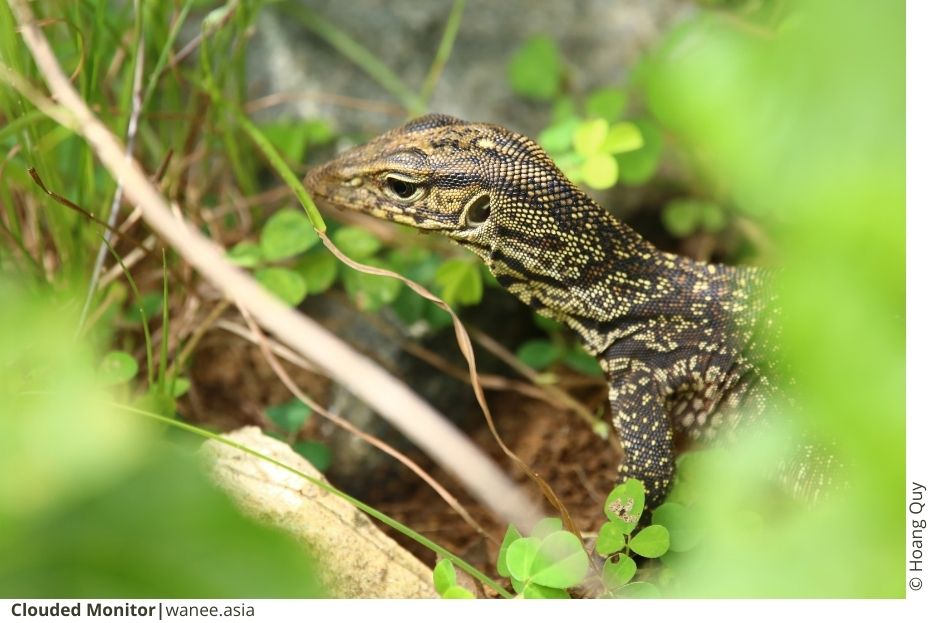
Important: Keep viewing distance. These animals are strong, shy, and easily stressed.
5) Snakes: The Most Diverse and Misunderstood Group
Snakes are a major reason Cat Tien is so interesting—and also why calm education matters.
Non-venomous and mildly-venomous species (common in forest interpretation and day sightings):
- Dendrelaphis pictus
- Dendrelaphis ngansonensis
- Boiga cyanea
- Boiga siamensis
- Boiga guangxiensis
- Ptyas mucosa
- Coelognathus radiatus
- Gonyosoma oxycephalum
- Lycodon davisonii
- Lycodon laoensis
- Oligodon deuvei
- Oligodon taeniatus
- Oligodon ocellatus
- Oligodon fasciolatus
- Xenopeltis unicolor
- Chrysopelea ornata
- Ahaetulla prasina
- Psammodynastes pulverulentus
- Pareas berdmorei
- Pareas margaritophorus
- Rhabdophis siamensis
- Fowlea flavipunctata
- Subsessor bocourti
- Cylindrophis jodiae
Medically significant species (not “common encounters,” but important for accurate biodiversity context):
- Bungarus candidus
- Bungarus fasciatus
- Trimeresurus albolabris
- Trimeresurus rubeus
- Calloselasma rhodostoma
- Calliophis maculiceps
- Ophiophagus hannah

Tone reminder: Having these species in the regional list does not mean guests “will see them.” It means the ecosystem supports them. For tourism content, we describe them factually, calmly, and with a strong safety ethic.
6) Turtles, Tortoises, and Crocodilians: Conservation Priority Signals
These species often connect directly to conservation narratives—illegal trade pressure, habitat loss, and slow reproduction.
Key taxa:
- Heosemys grandis
- Siebenrockiella crassicollis
- Indotestudo elongata
- Crocodylus siamensis


Field note: Even when guests do not see them, mentioning them (carefully) helps communicate why habitat protection and responsible tourism matter.
Together, these records highlight why Cat Tien reptiles are considered one of the most diverse lowland reptile assemblages in southern Vietnam.
Conclusion: Reptile Diversity and Biodiversity Value of Cat Tien
The recorded assemblage of reptiles in Cat Tien National Park highlights the park’s role as one of the most important lowland refuges for reptile diversity in Vietnam. From forest-floor skinks and arboreal lizards to semi-aquatic species and elusive snakes, these observations show how closely reptiles are tied to habitat structure, water availability, and seasonal dynamics.
For visitors interested in snakes and lizards of Cat Tien, careful habitat-based exploration often proves more rewarding than searching for individual species. Night walks, forest-edge surveys, and wetland margins all reveal different components of the reptile community, making Cat Tien herping both accessible and educational when conducted responsibly.
Taken together, these records reinforce the broader significance of Cat Tien biodiversity. Reptiles act as indicators of ecosystem health, linking amphibians, insects, birds, and mammals within the same forest system. Understanding and respecting this diversity allows wildlife travelers, photographers, and researchers to engage more deeply with Cat Tien while supporting long-term conservation goals.