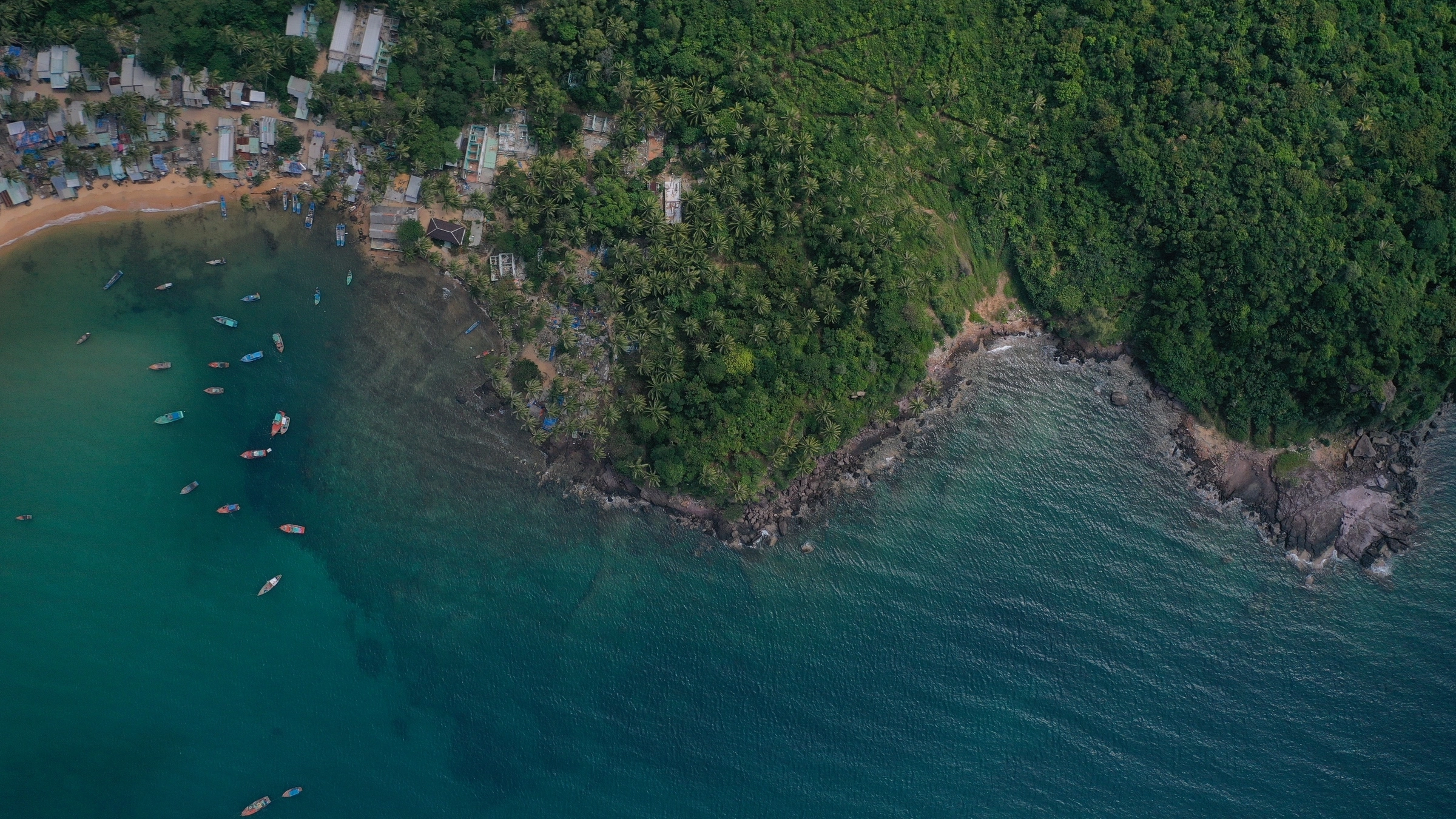
Important Biodiversity Area, UNESCO Biosphere Reserve
Spanning nearly 31,400 hectares, Phu Quoc National Park covers more than half of Vietnam’s largest island. This tropical sanctuary protects lowland evergreen forests, wetlands, mangroves, and coral reefs—making it one of Southeast Asia’s most diverse ecosystems. Recognized by UNESCO as a World Biosphere Reserve, the park is home to over 1,000 plant species, 200 bird species, and a wide array of mammals, reptiles, and marine life. Visitors may encounter rare animals such as the silver langur, slow loris, hornbills, and the endangered dugong in surrounding waters. More than just a protected area, Phu Quoc National Park serves as the “green heart” of the island, where wildlife thrives and local communities depend on its natural balance. For travelers seeking both discovery and reflection, the park offers a chance to experience nature in its raw, resilient beauty while supporting Vietnam’s long-term conservation efforts.
Phu Quoc National Park is not only a wildlife haven but also a retreat for those who want to reconnect with nature. For birdwatchers, the sight of oriental pied hornbills gliding over the canopy is unforgettable. For trekkers, jungle trails reveal orchids, towering dipterocarp trees, and streams that flow into hidden waterfalls. The park also protects rich coastal habitats, where mangroves and seagrass beds shelter marine life. Unlike many crowded tropical islands, Phu Quoc offers a balance of discovery and tranquility. A visit here supports conservation programs that protect fragile habitats and endangered species, while offering travelers an authentic, low-impact experience. Whether you are a researcher, a photographer, or simply someone who longs for silence under ancient trees, Phu Quoc National Park offers a chance to slow down and rediscover the natural rhythms of life.
Related species will be updated soon...
The park lies in the northeastern part of Phu Quoc Island, about 30–40 minutes by car from Duong Dong town, the island’s main hub. Access is easiest during the dry season (November–May), when trails are firm and skies are clear. Entrance fees are modest, and guided tours are recommended for deeper exploration. Local guides can help visitors identify wildlife, navigate jungle paths, and understand cultural ties between the forest and nearby fishing villages. Facilities are basic—expect small ranger stations, trailheads, and eco-lodges rather than large resorts. For responsible travelers, this is an advantage: the park remains authentic and relatively untouched. Visitors should bring water, insect repellent, sturdy shoes, and respect park rules, especially the “leave no trace” principle. Because conservation is the priority, some zones are restricted, while others are open for trekking, birdwatching, and research.