
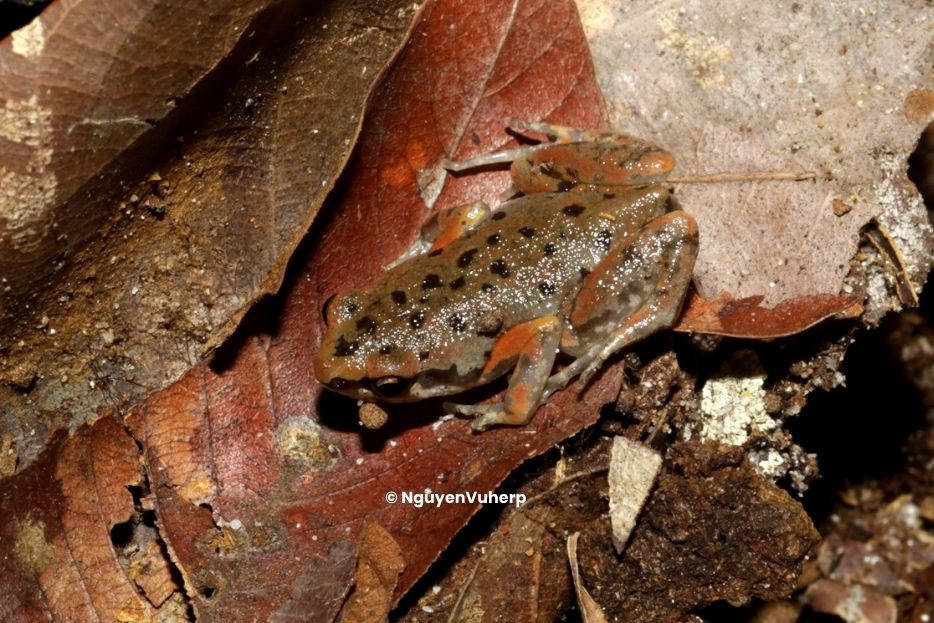
Cat Tien National Park is one of the few places in southern Vietnam where amphibians are not only diverse but also surprisingly accessible. During the rainy season, forest trails, wetlands, and small streams come alive with frog calls and movement, making Cat Tien an ideal destination for rainy season herping and beginner-friendly night herping in Vietnam.
Based on consistent field observations and real sightings shared by naturalists and local guides, the species below are among the amphibians you are most likely to encounter during a guided night walk or casual exploration in Cat Tien.
Why Cat Tien Is Ideal for Amphibian Watching
Cat Tien protects one of Vietnam’s largest remaining lowland evergreen forests. Combined with seasonal flooding, forest-edge ponds, and slow-moving streams, this environment creates perfect breeding conditions for amphibians.


Unlike highland forests or remote jungle areas, many amphibians here can be found along accessible trails and near accommodation areas – especially during humid evenings after rainfall.
Together, these habitats support a rich assemblage of amphibians of Cat Tien National Park, from tree frogs and narrow-mouthed frogs to stream-dependent species.
Best Time to Find Amphibians in Cat Tien
- Season: May to October (rainy season)
- Time: 6:30 PM – 10:30 PM
- Weather: Light rain or recent showers are ideal

Amphibian activity increases dramatically after sunset, when calls guide experienced observers to their locations.
8 Cat Tien Amphibians You Can Easily Find on a Night Walk
Common Southest Asian Tree Frog (Polypedates leucomystax)
This adaptable tree frog is one of the most frequently encountered amphibians in Cat Tien.


- Identification: Light brown to grey body, long limbs, strong toe pads
- Where to find: Vegetation near lights, ponds, forest edges
- Best time: Evening after rain
- Guide note: Often seen resting on walls or low branches near lodges
Asian Common Toad (Duttaphrynus melanostictus)
A familiar species across Southeast Asia, easily observed in disturbed areas.

- Identification: Stocky body, warty skin
- Where to find: Trails, open ground, near buildings
- Best time: After heavy rain
- Ethical note: Do not handle; skin secretions can be irritating
Asian Painted Frog (Kaloula pulchra)
Known for its distinctive call and rounded body.

- Identification: Dark body with lighter markings
- Where to find: Near puddles and temporary pools
- Best time: Rainy nights
- Guide note: Often heard before it is seen
Paddy Field Frog (Fejervarya limnocharis)
One of the most common frogs in wet lowland habitats.


- Identification: Medium-sized brown frog with strong hind legs
- Where to find: Wet grasslands, trail edges, ponds
- Best time: Evening and early night
Dark-sided Chorus Frog (Microhyla heymonsi)
A tiny frog with surprisingly loud calls.

- Identification: Small size, dark lateral stripe
- Where to find: Leaf litter near water
- Best time: After rain
- Guide note: Listen carefully — calls reveal their presence
Tubercled Pygmy Frog (Microhyla butleri)


Very active during peak rainy months.
- Identification: Compact body, smooth skin
- Where to find: Temporary pools and muddy ground
- Best time: Heavy rain evenings
Round-tongued Floating Frog (Occidozyga martensii)

Often visible even during the day.
- Identification: Flattened body, aquatic behavior
- Where to find: Ponds and still water
- Best time: Daytime and night
Annam Flying Frog (Rhacophorus annamensis)
One of the most visually striking frogs in Cat Tien.

- Identification: Bright green body, webbed feet
- Where to find: Low branches near water
- Best time: Rainy nights
- Guide note: A highlight species for photography
What a Night Herping Walk in Cat Tien Feels Like
As darkness falls, the forest becomes a chorus of calls. Headlamps reveal reflective eyes, moisture hangs in the air, and each step brings quiet anticipation. Guides move slowly, scanning leaves and listening more than looking, allowing the forest to reveal its amphibians naturally.


For many visitors, this gentle pace is what makes night herping Vietnam in Cat Tien both exciting and approachable.
Responsible Amphibian Watching Tips
- Use low-intensity headlamps
- Avoid handling amphibians
- Limit flash photography
- Stay on established trails and respect habitats
These practices help protect fragile amphibian populations while ensuring meaningful encounters.
Guided Night Herping Experiences in Cat Tien
While many amphibians of Cat Tien National Park are easy to find, experienced local guides add depth by explaining behavior, breeding activity, and conservation challenges. For travelers planning a Vietnam herping tour, guided night walks in Cat Tien turn simple sightings into educational and memorable wildlife experiences.
For a deeper understanding of Cat Tien amphibians, WANEE offers guided night walks in Cat Tien National Park led by experienced local guides. These low-impact walks are ideal for visitors interested in rainy season herping and ethical Vietnam herping tours, turning simple frog sightings into meaningful wildlife experiences.
Learn more at https://wanee.asia/cat-tien-tours/
FAQ – Amphibian Herping in Cat Tien
Is herping safe in Cat Tien?
Yes, with basic precautions and proper guidance.
Can beginners join?
Absolutely – Cat Tien is ideal for first-time herpers.
Is photography allowed?
Yes, when done responsibly.