
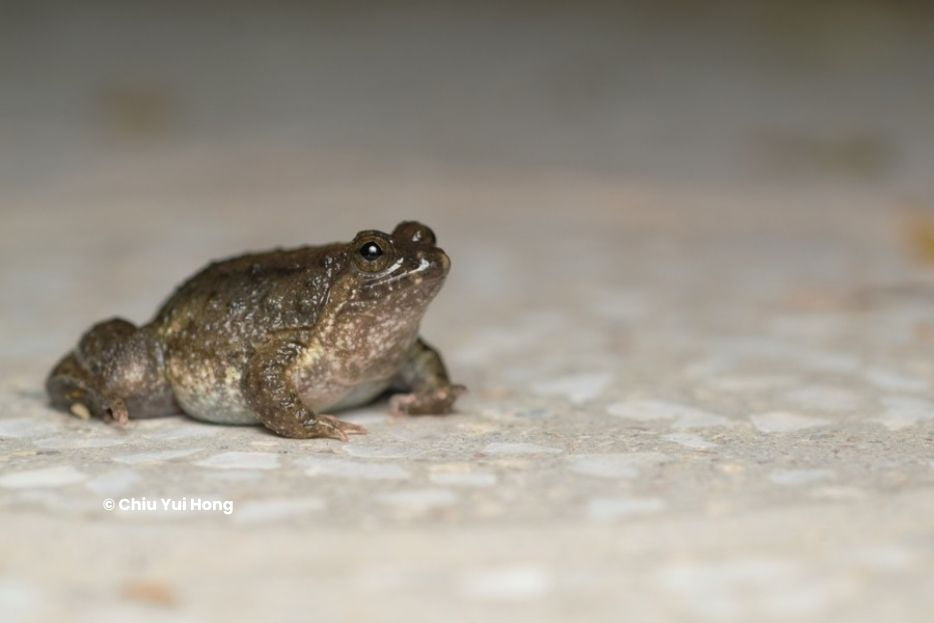
A Field-Based Overview of 31 Recorded Species
Cat Tien amphibian diversity represents one of the most ecologically important yet least discussed components of southern Vietnam’s lowland rainforest. Cat Tien National Park is one of the last strongholds of intact lowland tropical forest in the region. While the park is widely known for its primates, birds, and large mammals, its amphibians play an equally vital role in maintaining ecosystem health.
Amphibians are highly sensitive to environmental change, making them effective indicators of forest condition, water quality, and seasonal dynamics. In Cat Tien, the combination of evergreen rainforest, monsoon-driven rainfall, seasonal wetlands, and slow-moving streams creates ideal conditions for a surprisingly rich amphibian community.
This 2025 update provides a field-oriented overview of 31 amphibian species recorded in Cat Tien National Park, based on consistent observations, local surveys, and community biodiversity records. Rather than focusing solely on taxonomy, this article emphasizes habitat use, seasonal activity, and ecological significance – particularly for readers interested in responsible herping in Cat Tien National Park and rainforest biodiversity.
Why Amphibians Matter in Cat Tien
Amphibians play multiple critical roles within Cat Tien rainforest biodiversity:
- Natural pest control: Frogs and toads regulate insect populations, especially during the rainy season
- Energy transfer: Amphibians link aquatic and terrestrial food webs
- Environmental indicators: Changes in abundance often reflect habitat degradation or water pollution
- Biodiversity balance: Many snakes, birds, and small mammals rely on amphibians as prey
Because of their permeable skin and dependence on moisture, amphibians are among the first wildlife groups affected by climate change, hydrological alteration, and habitat fragmentation. Understanding frogs and toads of Cat Tien is therefore essential for long-term conservation planning.
Habitats Supporting Cat Tien Amphibian Diversity
Cat Tien’s amphibians are distributed across several key habitat types:
1. Seasonal Wetlands and Ponds
Temporary pools formed during the rainy season are crucial breeding sites for many frogs, especially narrow-mouthed frogs (Microhyla, Kaloula).
2. Forest Floor and Leaf Litter
Shaded forest floors with thick leaf litter support fossorial and ground-dwelling species that rely on humidity and cover.
3. Stream Edges and Riparian Zones
Clear forest streams and slow-flowing rivers provide habitat for stream-associated frogs, particularly ranid species.
4. Forest Edge and Human-Modified Areas
Some adaptable species thrive near park facilities, trails, and lodges, especially where artificial lights attract insects.


Seasonal Activity Patterns of Cat Tien Amphibians
- Rainy season (May–October): Peak amphibian activity, breeding, and vocalization.
- Early evening (18:30–22:30): Highest detection rates during night walks.
- Light rain or post-rain conditions: Ideal for observing calling males and surface-active species.
Dry season observations are possible but significantly more limited and species-specific.
Overview of 31 Cat Tien Amphibian Species (2025 Records)
The following species represent amphibians consistently recorded within Cat Tien National Park and adjacent forest areas. Species are grouped by ecological similarity rather than strict taxonomy to support field-based understanding.
Tree Frogs and Arboreal Species
These species are typically found on low vegetation, branches, and near water bodies.
- Polypedates leucomystax – Common Southest Asian Tree Frog
- Polypedates megacephalus – Spot-legged Tree Frog
- Rhacophorus annamensis – Annam Flying Frog
- Chirixalus nongkhorensis – Nongkhor Asian Tree Frog
- Feihyla vittata – Two-striped Bubble-nest Frog
- Feihyla hansenae – Hansen’s Bush Frog

Field note: Arboreal species are often easiest to spot during night walks when their eye shine reflects torchlight.
Toads and Narrow-Mouthed Frogs
This group includes burrowing species that emerge primarily after rain.
- Duttaphrynus melanostictus – Asian Common Toad
- Ingerophrynus galeatus – Bony-headed Toad
- Kaloula pulchra – Asian Painted Frog
- Kalophrynus interlineatus – Striped Sticky Frog
- Glyphoglossus guttulatus – Burmese Squat Frog


Ecological role: These species are important soil mixers and insect predators, often active for short but intense periods during heavy rain.
Paddy Frogs and Ground-Dwelling Species
Often encountered along trails, grasslands, and forest edges.
- Fejervarya limnocharis – Paddy Field Frog
- Hoplobatrachus chinensis – East Asian Bullfrog
- Occidozyga martensii – Round-tongued Floating Frog

These species tolerate a wide range of conditions and are frequently observed even outside pristine forest areas.
Narrow-Mouthed Frogs (Microhylidae)
Small-bodied but acoustically dominant during the rainy season.
- Microhyla heymonsi – Dark-sided Chorus Frog
- Microhyla butleri – Tubercled Pygmy Frog
- Microhyla minuta – Tiny Narrow-mouth Frog
- Microhyla berdmorei – Berdmore’s Narrow-mouthed Frog
- Microhyla pulchra – Beautiful Pygmy Frog
- Microhyla malcolmi – Malcolm’s Narrow-mouthed Frog
- Microhyla mukhlesuri – Mukhlesur’s Narrow-mouthed Frog


Field note: Many of these species are more often heard than seen; locating calling males requires patience and careful listening.
Stream and Forest Frogs (Ranidae & Allies)
Typically associated with flowing water and shaded forest streams.
- Hylarana taipehensis – Taipei Frog
- Hylarana erythraea – Green Paddy Frog
- Hylarana macrodactyla – Guangdong Frog
- Humerana lateralis – Kokarit Frog
- Sylvirana montosa – Forest Stream Frog
- Odorrana banaorum – Southern Big Eye


These frogs are particularly sensitive to water quality and forest disturbance.
Large-bodied and Conservation-Interest Species
Less frequently observed, often requiring targeted surveys.
- Limnonectes poilani – Poilane’s Fanged Frog
- Limnonectes dabanus – Annam Wart Frog
- Theloderma vietnamense – Vietnamese Bug-eyed Frog
- Micryletta erythropoda – Ma Da Paddy Frog

These species highlight the conservation value of Cat Tien’s remaining lowland forest.
Conservation Challenges Facing Amphibians in Cat Tien
Despite its protected status, amphibians in Cat Tien face ongoing threats:
- Habitat fragmentation at park boundaries
- Altered hydrology from upstream activities
- Climate-driven shifts in rainfall patterns
- Human disturbance near wetlands and streams
Long-term monitoring, research, and responsible ecotourism play an important role in mitigating these pressures.ures.
Responsible Amphibian Watching and Herping Ethics
Visitors interested in amphibians should follow basic ethical guidelines:
- Avoid handling frogs and toads
- Minimize flash photography
- Stay on established trails
- Do not disturb breeding sites or egg masses
Guided night walks help ensure minimal impact while improving understanding and safety.
Amphibians and Wildlife Tourism in Cat Tien
Amphibian diversity adds a unique dimension to wildlife experiences in Cat Tien, particularly during the rainy season. Night walks focused on frogs, reptiles, and nocturnal insects allow visitors to engage with the forest beyond daytime birding or primate watching.
When conducted responsibly, amphibian-focused tourism can support conservation awareness while offering meaningful, low-impact encounters.


For visitors interested in experiencing this side of Cat Tien responsibly, WANEE offers guided night walks designed around ethical wildlife observation. Led by experienced local guides, these tours emphasize amphibian behavior, habitat awareness, and low-impact exploration.
Learn more about WANEE’s Cat Tien programs at https://wanee.asia/cat-tien-tours/.
Looking Ahead: Amphibian Research and Monitoring (2025+)
Continued collaboration between park authorities, researchers, local guides, and citizen scientists is essential to:
- Update species records
- Track population trends
- Identify sensitive habitats
- Inform conservation priorities
Amphibians may be small, but their presence tells a powerful story about the health of Cat Tien’s forest ecosystem.