
Recognized by UNESCO as a World Biosphere Reserve, Cat Tien National Park is one of Vietnam’s most important wildlife havens. Its lowland tropical rainforest shelters rare plants and animals, offering visitors the chance to encounter iconic species such as Gaur, Asian Elephant, Sambar Deer, Barking Deer, Wild Boar, and more in their natural habitat.
Nestled in the lush lowlands of the Eastern Truong Son range, the park stands as a living portrait of Vietnam’s tropical biodiversity. With over 380 recorded species – more than one-third of the country’s total – Cat Tien is considered one of Vietnam’s top three birding hotspots.
Among its avian treasures, the park is especially celebrated for its remarkable diversity of Broadbills. These striking and charismatic birds are a true highlight for birdwatchers. Together with WANEE, let’s explore the fascinating world of Broadbills and discover why Cat Tien is such an exceptional place to observe them.
Overview of Broadbill Birds
Broadbills belong to the order Passeriformes, suborder Eurylaimi, and the family Eurylaimidae. There are four subfamilies of broadbills: Smithornithinae (typical distribution in Africa), Calyptomeninae (green broadbills in Asia), Eurylaiminae (diverse species distributed in Asia), and Pseudocalyptomeninae (Grauer’s broadbill). There are 9 genera and 14 species worldwide.
Broadbills are small-to-medium-size birds with large heads, broad bills, big eyes, wide gapes, and often vividly colored plumage (green, red, blue, etc.), helping them blend into their surroundings. They range in body length from 11.5 to 30 cm and weigh between 43 and 117 g. The structure of their bills depends largely on the feeding habits of the species.
They are primarily forest-dwelling birds found in the tropical rainforests of Asia and Africa. Most broadbill species are insectivores, with some occasionally feeding on fruits. They catch insects in flight, pluck them from foliage or quickly snatch them from resting places, similar to flycatchers (family Muscicapidae).
They are opportunistic feeders, often consuming Orthoptera (Grasshoppers and Relatives), Coleoptera (beetles), Hemiptera (bugs and relatives), Hymenoptera (bees, wasps, crickets, and ants), and Isoptera (termites). Occasionally, they also feed on Diplopoda (millipedes), Araneae (spiders), Gastropoda (Snails), Decapoda (Crabs), Anura (Tree Frogs), Sauria (Lizards), and Actinopterygii (Fish).
Fruit-eating broadbill species, despite not having the specialized insect-catching bills, still retain the broad, gaping bills. Due to this difference, they cannot easily manipulate fruits with their bills and therefore must consume relatively soft fruits or swallow the entire fruit. Figs are a preferred food source for fruit-eating broadbill species.
Broadbill Birds at Cat Tien National Park
Cat Tien Np. provides habitats for three broadbill bird species: the Red Broadbill, the Pink Broadbill, and the Black Broadbill. With its diverse landscape and rich biodiversity, Cat Tien has become an ideal place to observe and study the behavior and ecology of these bird species.
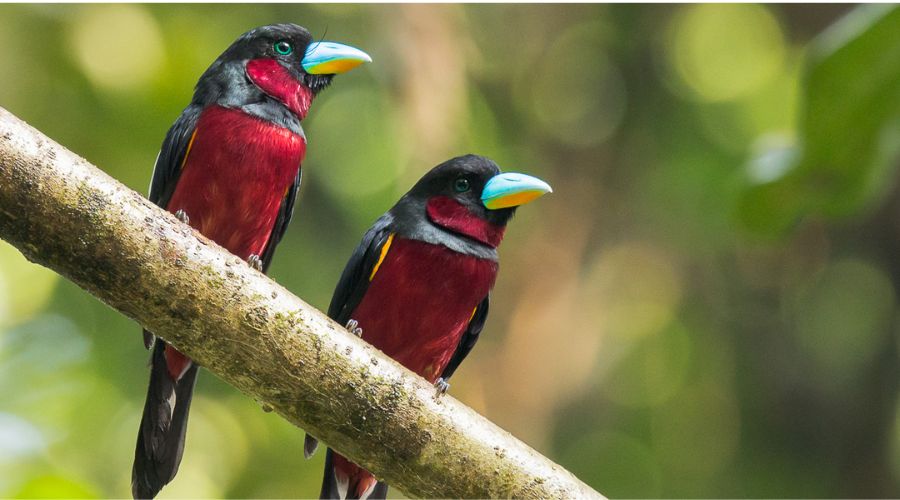
Black and Red Broadbill
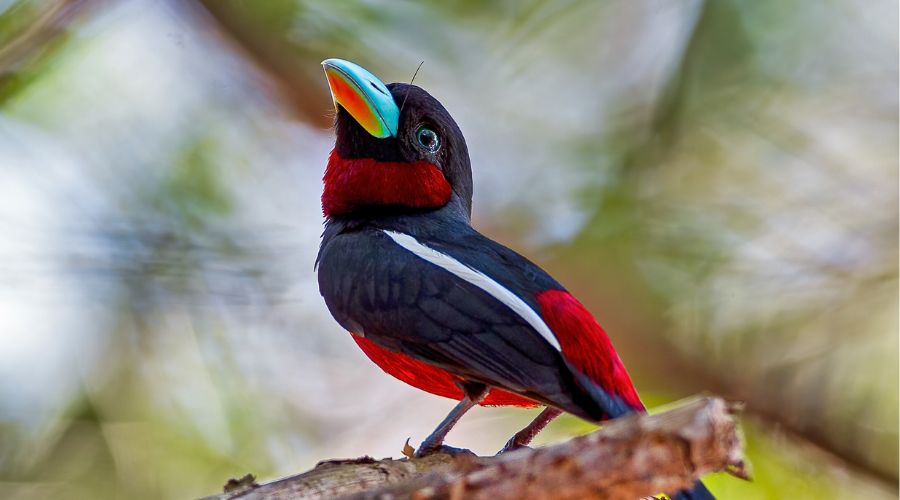
The Black and Red Broadbill (Cymbirhynchus macrorhynchos) is typically known for its bold colors and stands out with its deep red chest and belly, black upper body, and a distinct red band around the neck. It is the only species in its genus, with a body length of 21–24 cm and a weight of 51–65 g. White streaks on the wings add to its beauty, its large, glossy green-and-yellow beak makes it easily recognizable.
These birds are usually seen alone, in pairs, or in small groups, actively foraging for insects like ants, beetles, and caterpillars. While their beak is made for catching insects, they sometimes eat fruits, buds, and leaves.
Additionally, their diet includes small riverbank animals such as small fish, small crustaceans (Sheldon et al., 1992), and small crabs (Smythies, 1999).
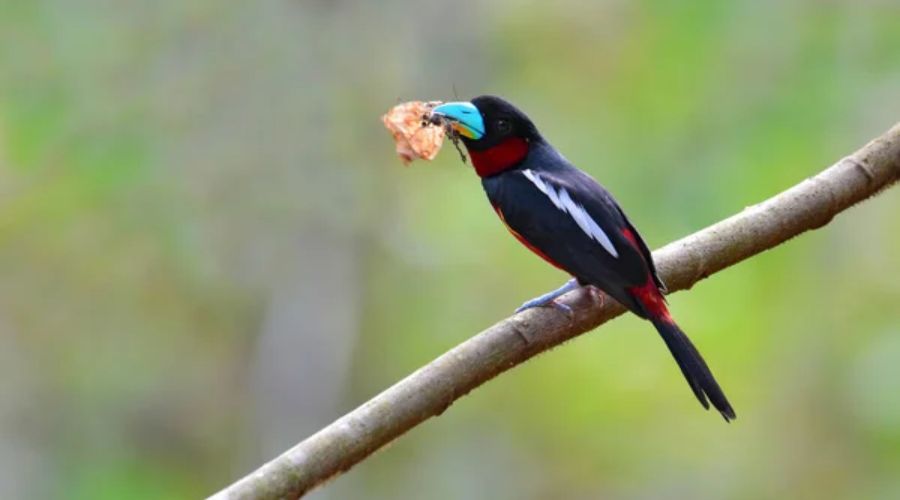
During the breeding season (from April to July), they often choose to build nests in open areas with good lighting in the forest. They construct discreet, suspended nests. In Cat Tien National Park, you can easily spot their nests hanging from branches as you move through. During nest building, they use unique techniques, securing construction materials on the claw, creating a nest frame, etc. (Zubkova, 2017). They typically lay 2-3 eggs per breeding cycle.
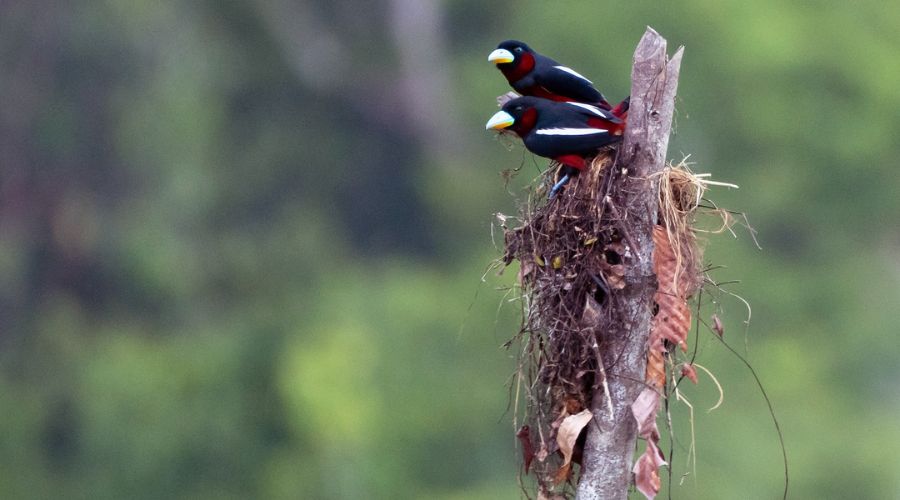
The conservation status of the Black and Red Broadbill, as categorized by the International Union for Conservation of Nature’s Red List (IUCN), is “Least Concern” (LC). However, the species is facing a decline in its population due to the gradual loss of its habitat caused by human activities in agriculture and logging.
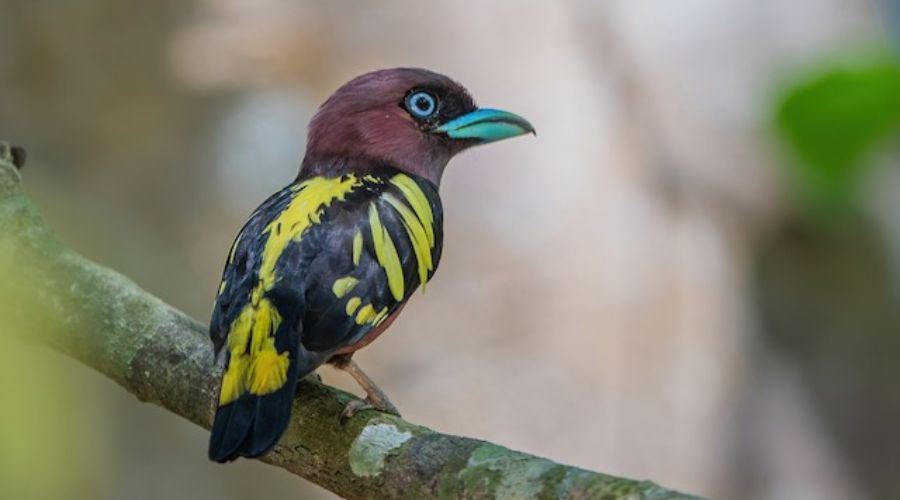
Banded Broadbill
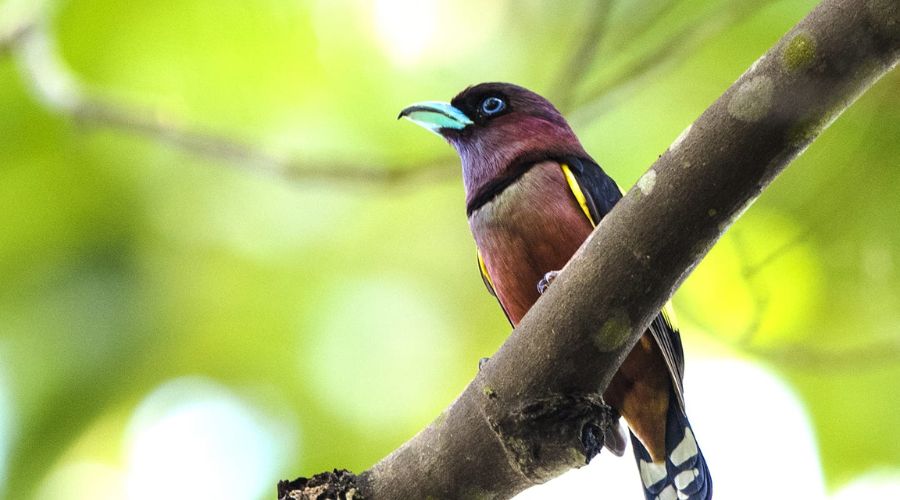
The Banded Broadbill (Eurylaimus javanicus) is a striking bird found in Southeast Asia and the Greater Sunda Islands, measuring 21.5–23 cm long. Its head is shiny reddish-purple, fading to black near the beak, with a black stripe across the throat and a lighter chin. The upper back is dark brown with a central yellow stripe, and the tail features dark feathers with white spots underneath and pale yellow-black patterns below. Its broad, hooked beak and eye ring are bright turquoise green, making this colorful species easy to recognize.
Although it looks similar to the Black-and-yellow Broadbill, the Banded Broadbill is larger and does not have a white band around its neck, making it easier to identify with a closer look.
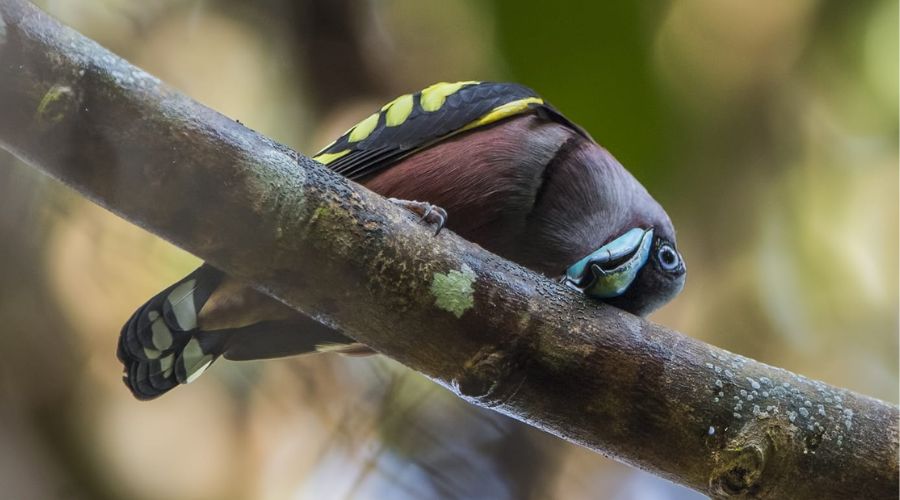
The Banded Broadbill has a diverse diet, including various invertebrates, small vertebrates, and fruits. Its primary food consists of insects like grasshoppers, butterflies, ants, beetles, and caterpillars. Occasionally, they may also consume small spiders, lizards, and frogs.
As primarily insectivorous broadbills, they rely on their specialized bill structure for insect consumption. However, at times, they will eat certain types of fruits, such as figs, often swallowing the entire fruit when feeding.
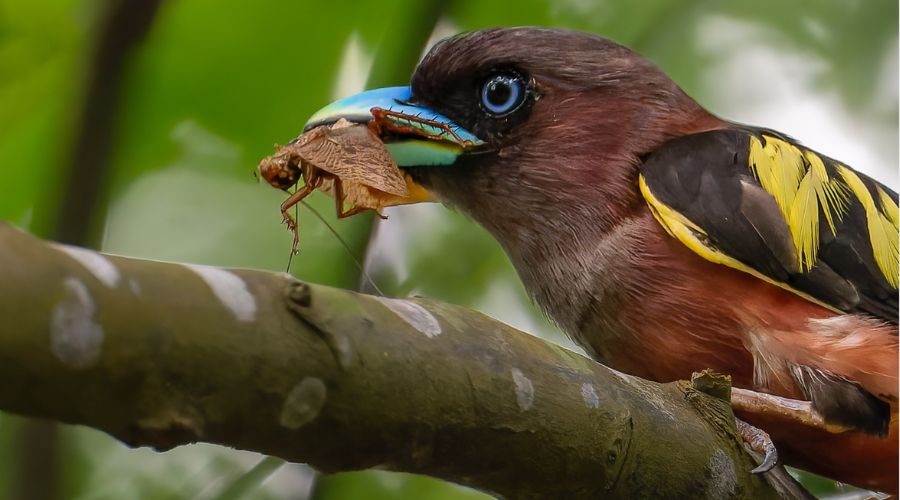
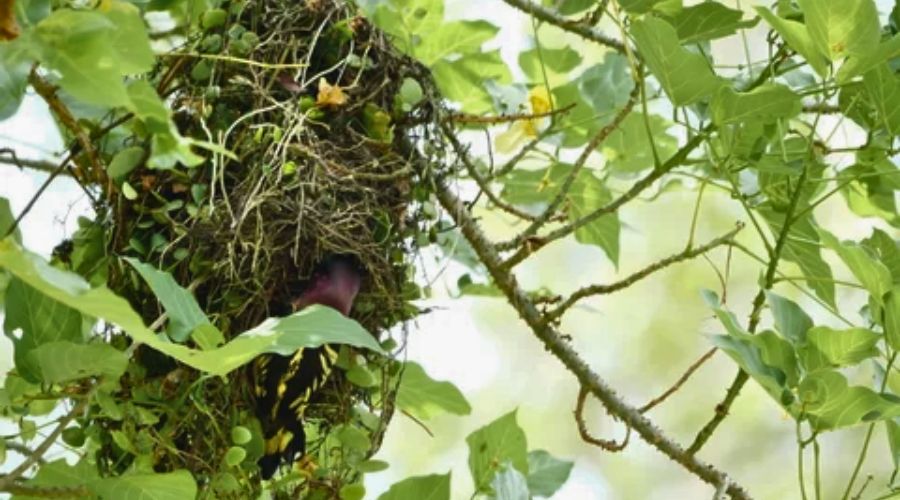
During the breeding season, mainly in the rainy season (from March to July), they often choose to build their nests on large branches or hanging structures that tend to lean downward. Their nest-building technique is similar to that of the Red-headed Broadbill, using primarily materials like thick grass, bamboo leaves, large leaves, and so on.
The conservation status of the Banded Broadbill, as categorized by the International Union for Conservation of Nature’s Red List (IUCN), is “Least Concern” (LC). However, the species is facing a decline in its population due to the gradual loss of its habitat caused by human activities such as agriculture and logging.
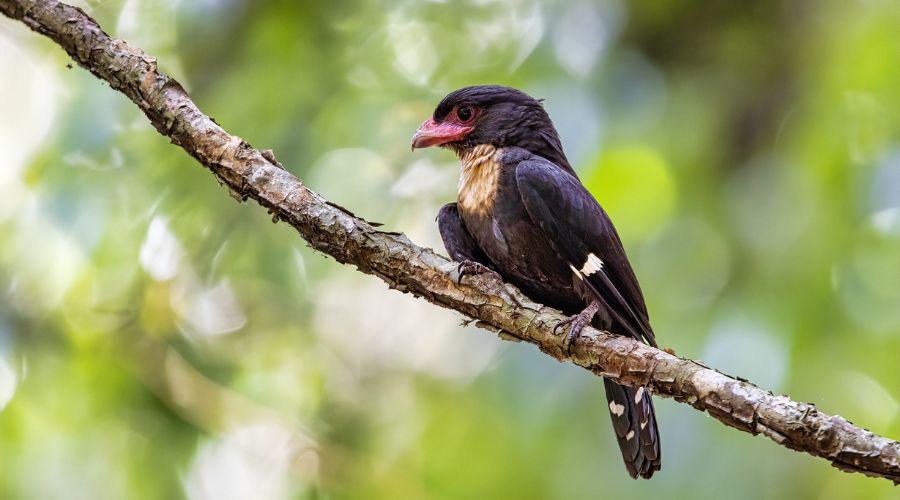
Dusky Broadbill
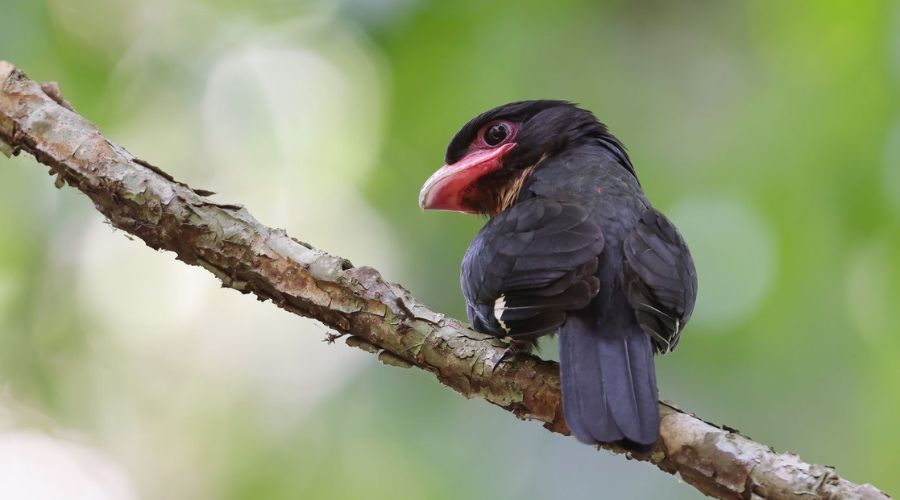
The Dusky Broadbill, scientifically known as Corydon sumatranus, is a medium-sized bird with a body length ranging from 20 to 24 cm. It inhabits lowland rainforests, moist tropical or subtropical mountain forests near rivers and streams.
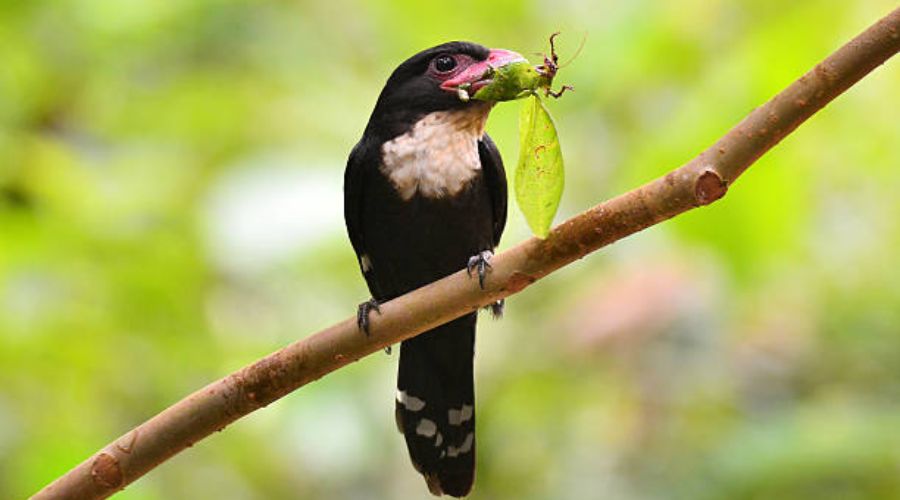
Its body is mostly covered in black plumage. The head is black, the throat to the chest is pale yellow and white. The bill is prominently red, with the upper mandible at the tip being bright green. The wings are light brown, and there is a small white patch on the primary feathers.
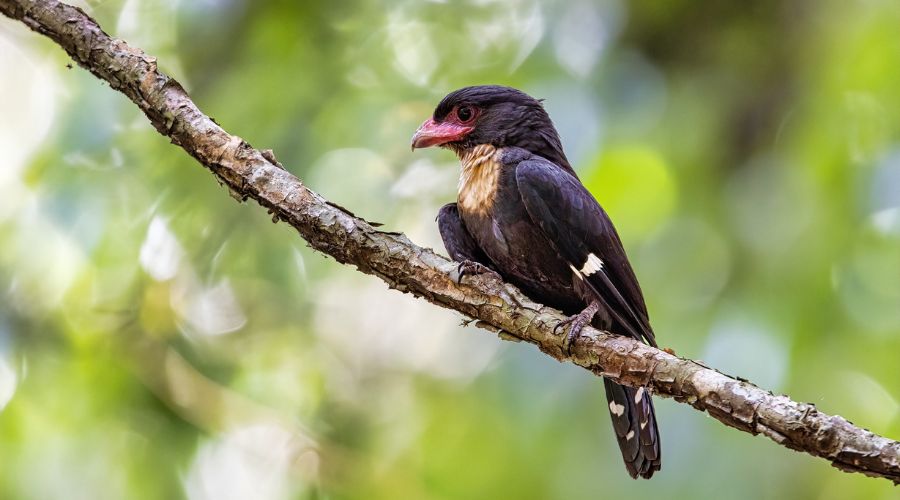
The Dusky Broadbill typically forages in pairs or occasionally solitary. Their primary diet consists of insects such as grasshoppers, beetles, butterflies, and ants. Additionally, they may consume small crustaceans, spiders, and frogs.
Moreover, they supplement their diet with plant matter, especially fruits like figs. They have also been observed eating leaves and fruits with large seeds.
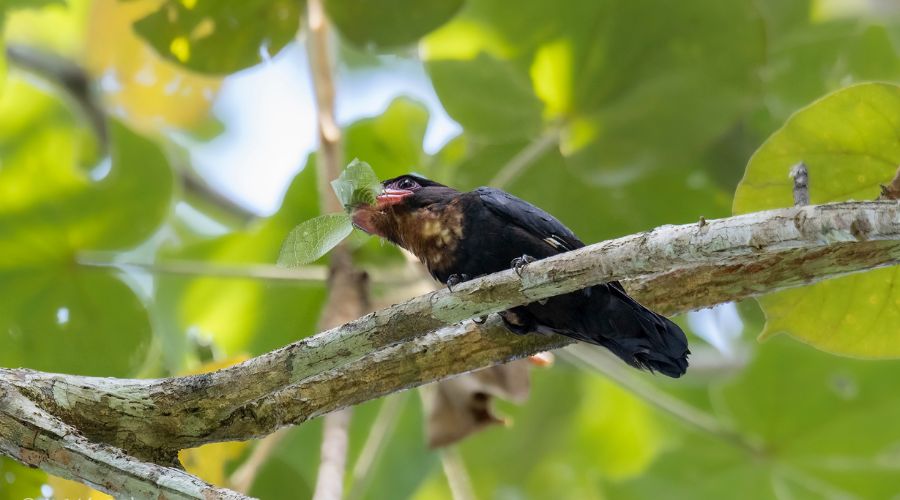
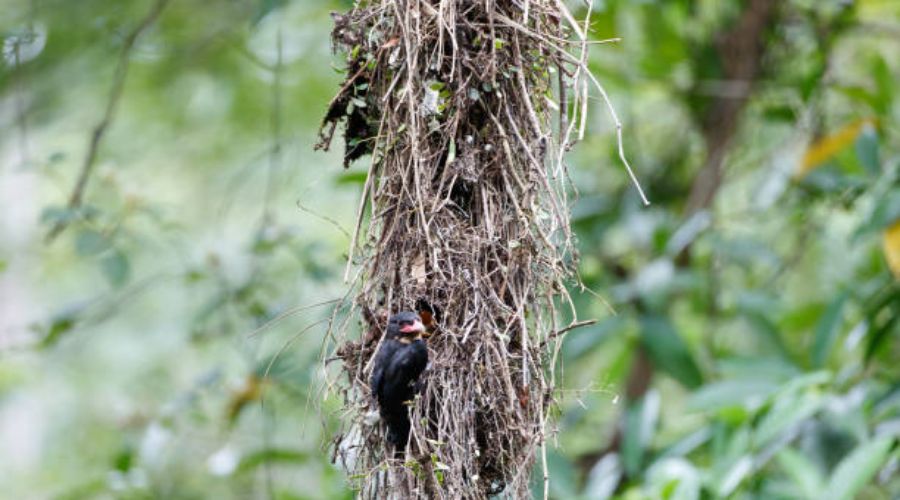
During the breeding season, Dusky Broadbills typically construct their nests in open and well-lit locations. Their nest-building technique is similar to that of the Black and Red Broadbill and Banded Broadbills. However, in terms of shape and size, their nests tend to be longer and bulkier.
The conservation status of the Dusky Broadbill, as categorized by the International Union for Conservation of Nature’s Red List (IUCN), is “Least Concern” (LC). However, the species is facing a decline in its population due to the gradual loss of its habitat caused by human activities such as agriculture and logging.
Conclusion
Through this article, we have learned about three broadbill bird species in Cat Tien National Park. WANEE hopes that this information will be valuable to you on your journey to explore Cat Tien NP. Additionally, WANEE aims to increase awareness about the importance of protecting birds and the ecosystems they inhabit through the sharing of information and images. Together, let us take steps to safeguard the natural heritage encapsulated within Cat Tien National Park for current and future generations.
Join Our Wildlife Adventures and Conservation Journeys!
Your visit to Cat Tien National Park isn’t just an adventure it’s a contribution to the ongoing conservation efforts that safeguard this ecological treasure. To stay connected with us, learn more about our conservation initiatives, and witness the latest wonders of Cat Tien, follow us on our social media channels.
At WANEE, we offer more than tours; we provide immersive experiences that connect you with nature while promoting sustainable tourism. 👉 Explore upcoming tours: https://wanee.asia/cat-tien-tours/
Join our community of nature lovers and help ensure the magic of Cat Tien continues for generations to come.